
The Power of Automated Freight: How It Changes Logistics Operations
22 February 2023

You don’t have to spend long in a warehouse or at a transport depot to see how much the game has shifted.
Let's Get Straight To The Point
Automation is transforming freight by combining robotics, AI, and data systems to improve efficiency, safety, and accuracy.
AI-driven route optimisation, robotic handling, and digital freight platforms deliver measurable gains—faster throughput, fewer errors, and lower costs.
Workers aren’t being replaced but reskilled into supervisory and technical roles that support automation.
Challenges remain, including high upfront costs, legacy system integration, and cyber and regulatory risks.
The future is hybrid, with humans and machines working side-by-side, powered by predictive data and sustainable operations.
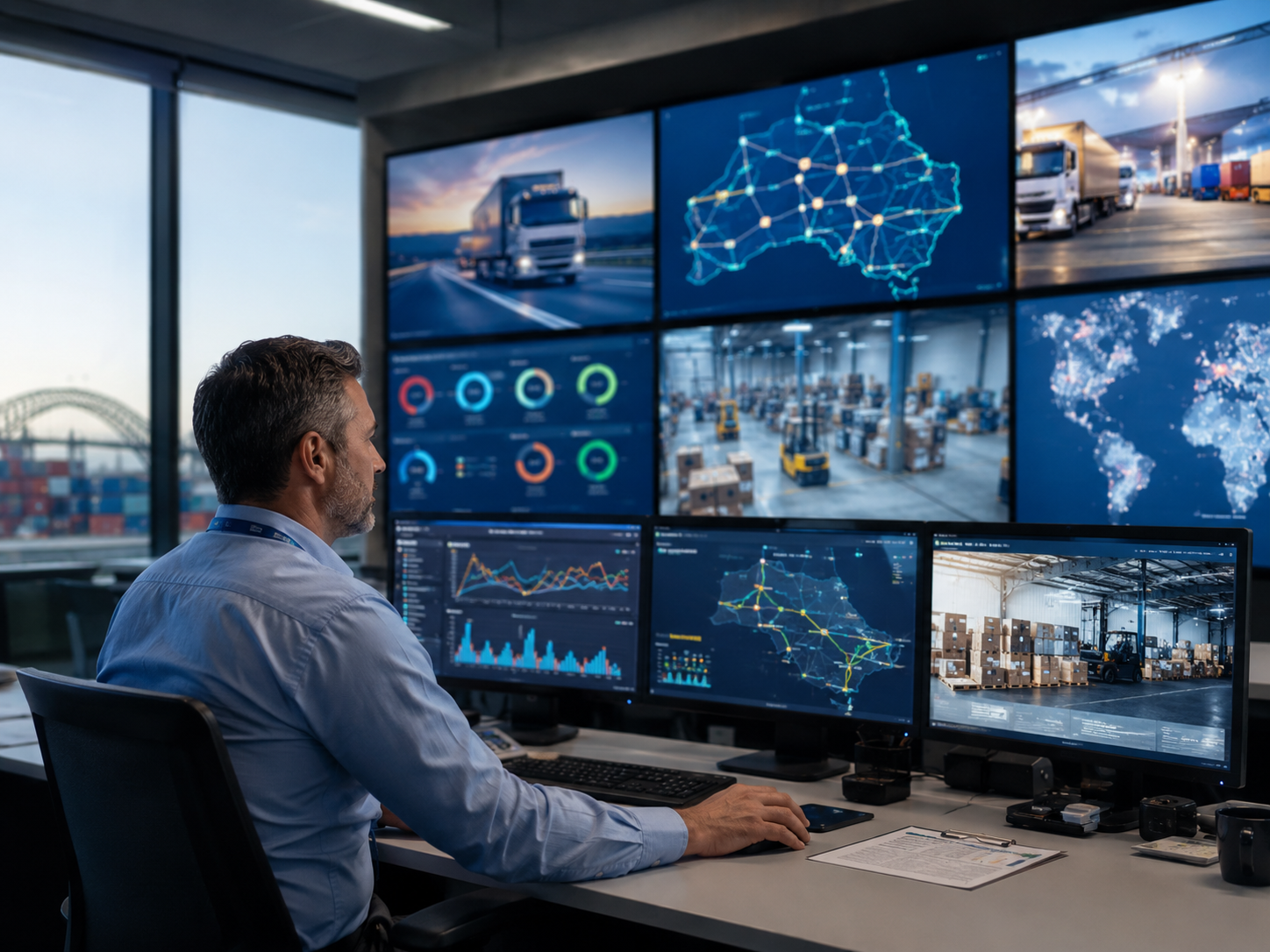
Not that long ago, I remember standing in a Sydney cross-dock where paper run sheets and manual pallet jacks ruled the day. Drivers would queue for hours waiting for dispatch slips to be printed, and one wrong digit in a consignment note could throw the entire delivery run off course. Fast forward to today, and those same sites are run by data, sensors, and automated workflows that make the old ways look prehistoric.
The move toward automated freight systems didn’t happen overnight—it was driven by necessity. E-commerce exploded across Australia, fuelled by consumers who now expect next-day delivery from Perth to Melbourne as if it were local. The pressure on carriers and warehouses to deliver faster, cheaper, and more accurately created a perfect storm. Rising fuel costs, an ageing driver workforce, and chronic warehouse labour shortages meant that businesses had to find smarter ways to stay competitive.
Automation offered that lifeline. It’s not just about replacing people with machines; it’s about making logistics systems smarter and more predictable. When your business moves hundreds or thousands of consignments a day, every delay or misrouted pallet adds up. Automated systems help remove those variables. They allow freight managers to see the big picture and react in real time, whether it’s rerouting a truck due to bushfire road closures or predicting the next stock shortage before it bites.
The E-Commerce Boom And The New Delivery Race
Over the past decade, Australia’s online retail market has grown by more than 50%, and that growth has exposed the cracks in traditional freight models. Customers now track their orders minute by minute and expect clear updates—no excuses about delays on the Nullarbor or warehouse bottlenecks.
To meet these demands, logistics operators began investing in logistics automation—from smart routing software to robotic picking systems. The results speak for themselves. One operator in Brisbane introduced automated sortation and saw order processing times drop by nearly 70%. That’s not a small operational gain; that’s a competitive edge.
But it’s not just about speed. Automation brings consistency. A digital freight platform doesn’t get tired after a 12-hour shift, and it won’t misread a postcode on a smudged delivery slip. It’s built for precision. That reliability is what customers now expect, and it’s what keeps freight operators profitable when margins are razor-thin.
From Manual To Machine – The Freight tech Revolution
The shift to automation—what the industry calls FreightTech—has changed every corner of the logistics landscape. In Australia, we’ve seen mid-sized transport firms adopt digital freight matching systems that automatically pair loads with available vehicles, slashing empty kilometres and improving sustainability. Out on the highways, autonomous vehicles are being trialled to tackle the middle mile—the long-haul segments between major distribution centres.
I worked with one regional operator who ran a pilot program integrating AI-driven load planning. Previously, they relied on dispatchers’ intuition to fill trucks efficiently. After automation, the system began optimising loads based on weight distribution, delivery zones, and driver hours-of-service compliance. Within six months, fuel usage dropped by 12%, and the dispatch team—who initially feared the tech—started calling it their “silent co-pilot.”
Australia’s geography adds another layer of complexity. Unlike Europe, where you can cross several countries in a few hours, our freight routes stretch across vast, empty landscapes. That’s where automation really shines. AI route optimisation can factor in road conditions, weather data, and rest stops, helping ensure drivers comply with NHVR fatigue management regulations while still hitting delivery windows. That combination of compliance and efficiency wasn’t achievable with manual scheduling.
Automation has effectively bridged the gap between data and decision-making. It’s turned freight management from a reactive process—waiting for problems to arise—into a proactive one, where systems anticipate and prevent them. And that’s why, for many in logistics, automation isn’t a luxury anymore; it’s survival.
Core Technologies Powering Automated Freight Systems
Automation in logistics isn’t a single piece of tech—it’s a network of innovations working in sync. From autonomous trucks to smart software and AI analytics, these systems collectively reshape how freight moves across Australia’s vast transport corridors.
Autonomous Vehicles And Robotics – The Muscle Of Modern Freight
A decade ago, the idea of self-driving freight trucks running up the Hume Highway sounded like science fiction. Now, several Australian trials are proving it’s closer than most realise. Autonomous Freight Vehicles (AFVs) are being tested on controlled routes, particularly for middle-mile haulage between distribution hubs. These vehicles use radar, LiDAR, and onboard AI to maintain safe distances and optimise driving patterns such as “platooning”—a method where trucks travel closely together to reduce drag and save fuel.
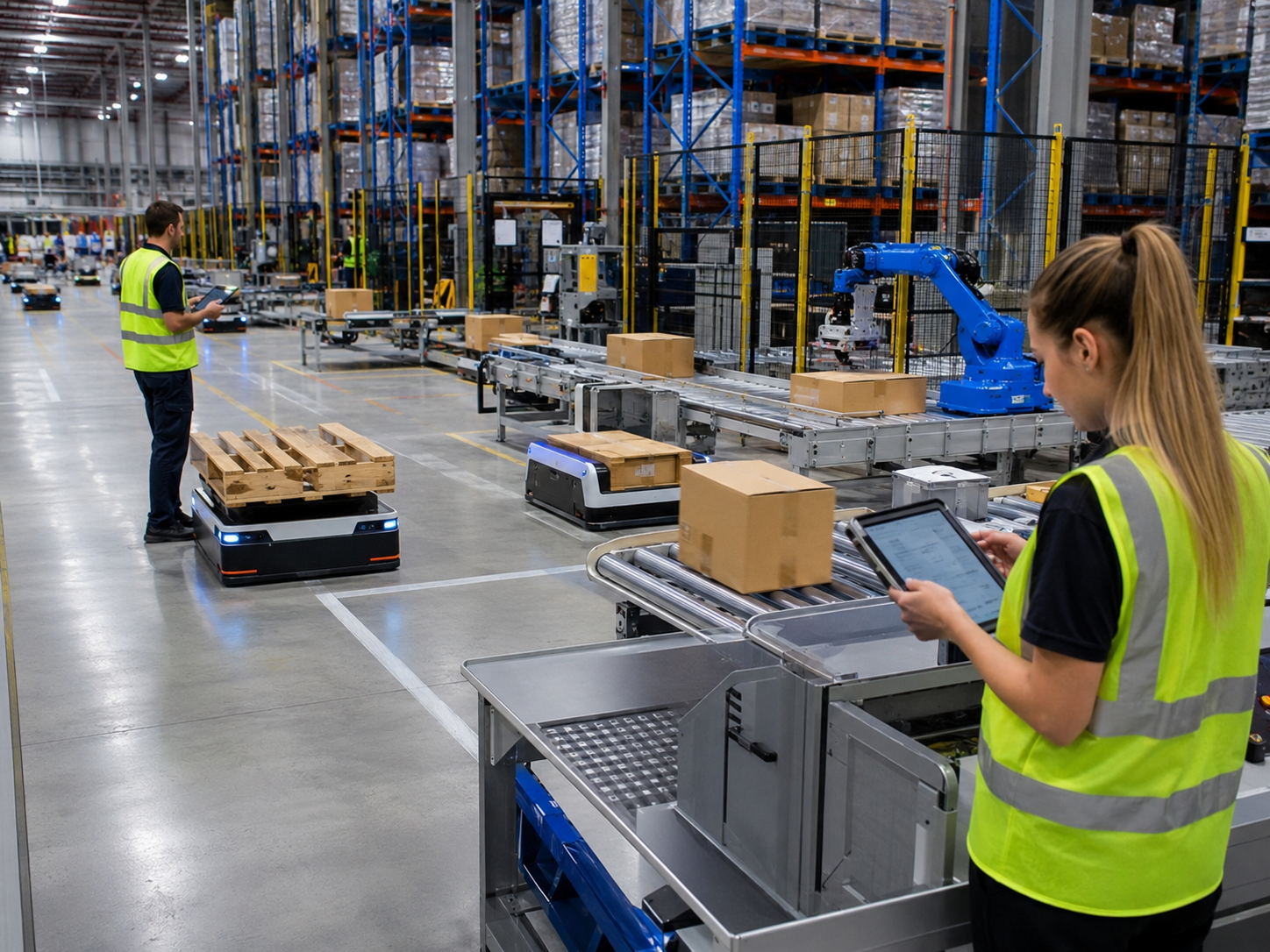
In warehouses, automation is already widespread. Automated Guided Vehicles (AGVs) and Autonomous Mobile Robots (AMRs) zip between aisles, moving pallets and cartons without human direction. Automated Storage and Retrieval Systems (AS/RS) make the most of vertical space, while robotic arms handle repetitive or risky lifting jobs. In one Melbourne fulfilment centre, integrating these systems reduced manual travel within the warehouse by over 60%, allowing staff to focus on quality control and system oversight rather than manual handling.
Here’s a quick view of the impact these systems have:
Automation Type | Key Function | Operational Impact | Example Outcome |
Autonomous Freight Vehicles (AFVs) | Self-driving long-haul freight | Fuel-efficient driving and reduced human error | Up to 20% fuel savings through platooning |
Warehouse Robotics (AGVs/AMRs) | Material handling and movement | Faster order fulfilment, fewer injuries | 60% less walking time for warehouse staff |
Robotic Palletising | Automated stacking and packaging | Consistent stacking and reduced strain | 99.8% picking accuracy in trials |
AS/RS Systems | High-density vertical storage | Improved space utilisation | 30% more storage capacity per square metre |
Automation here doesn’t remove people; it makes their roles safer and smarter. Workers become system supervisors, not load hauliers. As one warehouse manager told me, “The robots don’t replace my team—they just carry the heavy stuff so we can think about the bigger picture.”
Smart Software And AI – The Brain Behind The Network
Hardware alone can’t transform logistics. The real magic happens in the software layer—where AI, predictive analytics, and real-time data keep freight moving efficiently.
Modern Transportation Management Systems (TMS) and Warehouse Management Systems (WMS) now integrate with IoT sensors, GPS tracking, and digital twins to deliver visibility across every leg of the supply chain. Dispatchers can see, in real time, where every truck is, what it’s carrying, and whether it’ll hit the next delivery slot.
A practical example: a Perth-based freight operator recently implemented AI-driven route optimisation. Instead of relying on manual planning, their system recalculates routes automatically in response to traffic congestion, roadworks, or severe weather alerts. During last summer’s floods in northern New South Wales, the platform rerouted multiple consignments within minutes—preventing delivery delays that would have cost thousands.
Meanwhile, Robotic Process Automation (RPA) is quietly eliminating back-office inefficiencies. Tasks like freight invoice reconciliation, data entry, and load matching that once took hours can now be done in minutes. Staff who used to drown in spreadsheets now manage exceptions, not repetition.
These technologies form the backbone of a digital freight platform, capable of learning and adapting with every shipment. And as AI continues to mature, these systems will not only respond to disruptions—they’ll predict them before they happen.
How Automation Is Rewriting Logistics Efficiency
Automation has turned logistics from a reactive operation into a data-driven, precision business. Every pallet scanned, every route analysed, every delay predicted — it all feeds into a continuous loop of optimisation. In an industry where seconds and cents matter, these gains aren’t small—they’re game-changing.
The Numbers Don’t Lie – Operational Metrics Transformed
Automation’s impact on key operational metrics is measurable and dramatic. Across Australia, logistics firms adopting digital systems report faster throughput, greater accuracy, and improved space utilisation.
Operational Metric | Impact of Automation | Real-World Example |
Speed and Throughput | Picking, packing, and dispatch times cut by over 70% through robotic and data-driven systems. | A Sydney e-commerce warehouse achieved a 71% reduction in order processing time after installing smart conveyors and AI scheduling. |
Accuracy and Errors | Automation reduces human error and ensures order precision. | Automated picking systems in Brisbane achieved 99.8% accuracy—virtually eliminating returns due to mispicks. |
Space Utilisation | Vertical automation and compact aisles boost usable warehouse capacity. | An AS/RS setup in Melbourne increased usable storage by 30% without expanding floor space. |
Route Optimisation | AI-powered route planning cuts fuel use and improves punctuality. | A freight carrier using predictive routing saved 15% on fuel and increased on-time delivery by 22%. |
Data Visibility | Live data streams keep managers informed and proactive. | Real-time tracking tools improved on-time deliveries by 20% in multi-state distribution networks. |
These improvements don’t just look good on a performance dashboard—they directly affect profitability. Time saved on manual work becomes time spent on value-added tasks, like client management or service improvement.
Real-Time Visibility And Decision Making
In traditional logistics, managers often found out about a problem long after it occurred—usually when a customer called asking where their freight was. Automation changes that entirely. Now, real-time data visibility means operators can see and solve problems as they happen.
For example, an Adelaide freight forwarder adopted an AI-driven tracking platform that integrated with its TMS. When a shipment heading to Darwin was delayed due to a rail disruption, the system automatically flagged the delay, suggested alternative routes via road freight, and recalculated estimated arrival times. Within minutes, customers received updated ETAs, and operations adjusted without a single phone call.
This type of predictive insight is what separates automated logistics from the old manual processes. Instead of reacting, freight managers can now anticipate and prevent bottlenecks. During peak periods—like the lead-up to Christmas—this foresight can be the difference between smooth sailing and complete gridlock.
Automation doesn’t just make things faster; it makes them smarter. The freight network becomes more like a living organism—constantly learning, adapting, and optimising with every shipment moved and every byte of data analysed.
Counting The Dollars – Financial And Strategic Gains
Automation isn’t just about shiny tech—it’s about dollars and sense. The financial benefits are now too strong to ignore. For Australian freight businesses dealing with tight margins, automation is proving to be one of the most effective tools for cost reduction and scalability.
The Cost-Cutting Edge Of Automation
One of the biggest wins automation brings is a sharp drop in operating costs. Labour accounts for nearly half of most logistics expenses, so reducing manual input delivers immediate savings. Automated load planning, digital documentation, and AI-driven routing all trim wasted time and kilometres.
Take a mid-sized carrier running between Sydney and Brisbane. By introducing automated dispatch and digital load matching, they reduced empty trailer kilometres by 18% and saved roughly $240,000 per year in fuel and labour. It wasn’t about cutting staff; it was about removing inefficiencies that drained profit.
Automation also cuts indirect costs. Fewer manual errors mean fewer returns and customer disputes. Self-driving truck technology—though still emerging—promises future savings of up to 20% in fuel and 10% in insurance through safer, more consistent driving behaviour. It’s the kind of long-term gain that builds financial resilience in a volatile market.
Scaling Smarter, Not Harder
One of the toughest challenges in logistics is scaling up during peak seasons without blowing out overtime costs. Automation solves this elegantly. Digital systems can ramp up throughput without the same physical constraints—no need to hire dozens of temp workers or lease additional storage for short-term demand spikes.
A great example is a freight warehouse in Western Sydney that adopted AI scheduling and automated sortation just before the 2023 holiday rush. Instead of running 24-hour shifts, the business managed to increase throughput by 40% using the same headcount. Their operations manager told me, “We didn’t need more people—we needed better flow.”
This scalability also supports smaller carriers looking to grow. Cloud-based automation systems let them compete with national players by offering the same speed, tracking precision, and customer visibility, without huge capital outlay.
In short, automation transforms freight from a cost-heavy operation into a lean, data-led enterprise. It lets businesses spend less time firefighting and more time planning for growth.
People, Safety, And The New Workforce Reality
Automation has changed the face of logistics work, but not in the way many feared. It hasn’t wiped out jobs—it’s reshaped them. The warehouse of today looks more like a control room than a production line. Screens replace clipboards, and forklifts share the floor with robots. The real shift is in what people do, not whether they’re needed.
Redefining Jobs, Not Removing Them
When automation first entered warehouses, plenty of workers worried it would make them redundant. But the reality has been more balanced. Yes, repetitive roles like picking and sorting have declined, but new, higher-skilled jobs have emerged—roles focused on system oversight, maintenance, and data analytics.
Here’s how automation is transforming roles across logistics:
Role (Before Automation) | Role (After Automation) | New Skill Focus |
Manual Picker / Packer | Automation Supervisor | Systems monitoring and troubleshooting |
Dispatch Clerk | Data Analyst / Route Optimiser | Data interpretation, predictive decision-making |
Forklift Operator | Robotics Maintenance Technician | Equipment calibration and fault diagnostics |
Scheduler / Planner | AI Operations Coordinator | Algorithm tuning and demand forecasting |
For instance, a major distribution centre in Melbourne upskilled its warehouse crew instead of downsizing. Within six months, 60% of staff were retrained to manage robotic systems, resulting in smoother operations and higher job satisfaction. Workers said automation removed the “hard yakka” but not the pride in doing the job well.
This workforce evolution also attracts younger talent who prefer working with technology over manual labour. It’s breathing new life into an industry that’s long struggled to fill vacancies.
A Safer, Smarter Work Environment
If there’s one benefit everyone agrees on, it’s safety. Logistics is a high-risk industry, with thousands of injuries recorded every year—most from lifting, repetitive strain, or vehicle incidents. Automation is turning that around.
In automated warehouses, robots handle the heavy lifting, and people are kept clear of fast-moving machinery. Automated freight vehicles (AFVs) reduce road fatigue risks and almost eliminate driver error, which contributes to over 90% of heavy vehicle accidents according to the Australian Trucking Association.
Consider this: after installing robotic palletisers, one Queensland distribution centre reported a 75% drop in manual handling injuries within a year. Insurance premiums followed suit. Even simple digital upgrades—like automated load sensors that detect imbalances—prevent common on-road accidents before trucks even leave the yard.
Automation creates a proactive safety culture. Instead of reacting to incidents, businesses now use predictive analytics to identify risks early. For example, AI systems can flag when a driver is showing fatigue indicators based on braking patterns or speed variations.
In short, automation is making logistics work cleaner, safer, and more rewarding. It’s replacing the hard slog with smarter, safer tasks that still keep freight moving.
Barriers To Widespread Automation
While automation has proven its value, rolling it out across the logistics sector isn’t a simple plug-and-play exercise. Many Australian operators — particularly regional carriers and mid-tier warehouses — still face major hurdles in adopting automated freight systems at scale.
The Cost And Compatibility Challenge
The most obvious barrier is cost. Outfitting a warehouse with robotics or implementing an advanced Transportation Management System (TMS) involves a hefty upfront investment. For small and medium-sized freight companies, those six-figure setup costs can be a tough pill to swallow, especially when margins are already thin.
But the real problem often isn’t just the price tag — it’s integration. Many freight companies still rely on older systems that weren’t built for automation. Legacy Warehouse Management Systems (WMS) or Enterprise Resource Planning (ERP) platforms can’t easily handle the constant data flow generated by sensors, scanners, and IoT devices.
Here’s a quick comparison of the typical barriers faced:
Challenge | Impact on Operations | Possible Mitigation |
High Upfront Investment | Limits automation to large players; SMEs fall behind | Explore modular automation or staged implementation over 12–24 months |
Legacy Systems | Data silos and limited integration | Use APIs or middleware to bridge old and new systems |
Infrastructure Gaps | Outdated networks, poor Wi-Fi, or limited bandwidth | Upgrade connectivity before automation rollout |
Training Needs | Workforce unprepared for new tech | Invest in digital literacy and system training early |
An operator I worked with in Newcastle learned this the hard way. Their legacy WMS couldn’t process live IoT sensor data from their new automated conveyor system. The result? Bottlenecks and downtime. It wasn’t the robots that failed — it was the software bridge between old and new technology. The fix came six months later, after investing in an integration API that allowed the systems to finally talk to each other.
The lesson here is clear: automation isn’t just about machines — it’s about compatibility. Without the right digital foundation, even the most advanced hardware won’t deliver full value.
Legal, Ethical, And Cyber Risks In The Digital Freight Age
Another challenge comes from the regulatory and ethical side of automation. In Australia, autonomous vehicle laws vary between states and territories, creating uncertainty for transport operators. For example, what happens if a self-driving truck is involved in an accident on the Hume Highway — who’s liable, the operator or the manufacturer? Until clearer legislation is in place, many companies are cautious about deploying full autonomy.
Then there’s the issue of cybersecurity. The more connected the system, the greater the risk of attack. A single compromised sensor or TMS breach could halt an entire logistics network. That’s why forward-thinking freight companies are now treating cybersecurity as part of their operational safety protocols, not just an IT concern.
Ethical considerations are rising too. AI-based decision systems must be transparent and accountable. If a routing algorithm prioritises one delivery zone over another, businesses need to ensure that the decision isn’t based on biased data or flawed inputs. As one compliance officer put it, “Automation needs oversight — not blind trust.”
Despite these obstacles, the direction is set. The freight industry is learning that the key to safe and effective automation lies in planning, phased rollout, and continuous review rather than diving in headfirst.
Automation has moved freight from an era of paperwork and gut instinct to one driven by data and precision. Across Australia, transport and warehouse operators are proving that automation isn’t about replacing people—it’s about working smarter, faster, and safer. From robotic palletisers in Brisbane to predictive route optimisation in Perth, the evidence is clear: automated freight systems are redefining how logistics operates.
The challenge now lies in access. Smaller carriers and regional warehouses need affordable pathways to adopt automation without getting buried under costs or technical complexity. With modular systems, scalable AI tools, and improved interoperability between TMS, WMS, and ERP software, that barrier is gradually breaking down.
Automation is no longer a “future trend.” It’s the new backbone of logistics. Those who adapt early will set the pace; those who wait will find themselves left idling on the hard shoulder.
Frequently Asked Questions
How Is Automation Improving Freight Operations In Australia?
Automation reduces manual work, boosts accuracy, and improves delivery speed. Systems like AI routing, robotic palletisers, and smart TMS integrations allow freight operators to move goods faster and more reliably across vast routes like Sydney–Perth or Melbourne–Darwin.
Does Automation Mean Job Losses In The Logistics Industry?
Not necessarily. While repetitive tasks are automated, new roles are being created—technicians, data analysts, and automation coordinators. Most Australian operators are retraining staff rather than replacing them, focusing on digital literacy and system management.
What Are The Biggest Challenges To Implementing Automated Freight Systems?
The top challenges are high setup costs, system integration issues, and legacy technology. Smaller operators often struggle to fund large upgrades, but modular automation and cloud-based solutions are helping bridge that gap.
How Does Automation Improve Safety In Freight Operations?
Automated systems take over risky tasks such as heavy lifting, high stacking, and long-distance driving. They reduce human error, which accounts for over 90% of heavy vehicle accidents, and introduce predictive monitoring to prevent fatigue-related incidents.
What’s The Future Of Freight Automation In Australia?
The next phase will see deeper integration of AI, digital twins, and sustainability tools. Expect predictive logistics that can simulate entire supply chains, self-optimising routing for lower emissions, and greater use of drones and autonomous vehicles for last-mile delivery.