
Having Your Own Freight Booking Software
15 March 2023

As the logistics industry accelerates, companies must decide whether to build tailored freight booking software or implement a ready-made solution.

This decision could mean the difference between seamless operations and being held back by inefficient systems. For logistics companies, owning a freight booking platform is becoming more than just a luxury; it’s a strategic advantage that can streamline workflows, enhance scalability, and improve competitive positioning.
Having had the chance to work with both custom and pre-built systems, I've seen firsthand how a tailor-made freight booking platform can transform a business. From cutting down on manual processes to improving real-time tracking, the advantages are undeniable. But, like anything worthwhile, building your own freight software comes with its own set of challenges. Let’s explore both sides of the coin—custom solutions and off-the-shelf platforms—and break down the decision-making process.
The Growing Demand For Custom Freight Booking Solutions
With the logistics sector expanding at an exponential rate, the need for custom-built solutions has never been greater. The industry is evolving fast, and businesses that adopt digital platforms gain an edge in managing the complexities of freight booking. The key question then becomes—should you build your own system or go with a pre-built solution?
Tailored Freight Booking Software For Your Unique Needs
Imagine you're running a large freight company in Australia, handling everything from airfreight to multimodal trucking. You're dealing with multiple carriers, different regional regulations, and fluctuating freight costs. Off-the-shelf software, though reliable, doesn’t always cater to the intricate nuances of your operations. This is where custom freight booking software comes into play.
From my experience working with a local freight operator, their custom solution allowed them to integrate directly with the Australian government’s customs and border control system, making the entire import/export process smoother and far more efficient. It didn’t hurt that the software also integrated seamlessly with their existing ERP and warehouse management systems, ensuring no data was lost in transition.
Market Trends: Why More Freight Companies Are Going Custom?
Recent survey results indicate that nearly half of freight companies have developed their own freight booking software internally. The numbers don’t lie—custom systems are becoming a competitive necessity. A big reason for this trend is the growing push for automation and real-time data analytics, both of which are difficult to implement with generic software.
For example, an Australian-based freight forwarding company that I’ve worked with implemented a custom solution that allowed for automatic rate comparison and dynamic freight pricing based on real-time fuel costs and shipping demand. This gave them a huge edge over competitors who were still using manual methods for rate negotiations.
The Push For Automation And The Australian Advantage
With Australia’s vast distances and complex regulatory landscape, it’s crucial that freight companies operate with precision. Custom-built freight booking solutions provide the automation needed to handle booking confirmations, scheduling, and dispatching—all in real time. For businesses that deal with high volumes of freight, this can be a game-changer.
Key Benefits Of Having Your Own Freight Booking Software
When it comes to freight booking software, one size rarely fits all. Custom solutions offer unparalleled flexibility, giving businesses full control over how their system operates. But, beyond just control, owning your software offers numerous advantages that can directly impact your bottom line.
Increased Control And Long-Term Value
One of the standout benefits of having your own freight booking software is full control over your system. Unlike relying on a third-party provider, you own the code, the intellectual property, and most importantly, the ability to shape the software as your business grows.
For instance, I worked with a local Australian logistics firm that wanted to optimise its fleet management. After building a custom platform, they gained complete control over their fleet’s real-time location, fuel usage, and maintenance schedules. This level of control translated directly into cost savings and enhanced productivity. Their custom software allowed them to set alerts for low fuel levels or vehicle maintenance due dates, cutting down on downtime and improving route planning.
Table: Key Control Benefits Of Custom Freight Booking Software
Benefit | Description |
Full Control | You own the software, and can make changes when you need them. |
Tailored Features | Design and implement features that specifically suit your business needs. |
Autonomy from Vendors | No reliance on external roadmaps, prices, or services. |
Scalability To Meet Growing Demand
As your business grows, so too will the demands of your logistics operations. One of the most significant advantages of a custom solution is scalability. A well-designed freight booking system grows with your business—whether you’re adding new customers, new carriers, or even expanding internationally.
A case in point: One of the companies I assisted had been using a basic third-party freight management tool. While it worked fine for a small local operation, as soon as they began expanding into Asia, the limitations became evident. Their system couldn’t handle multi-modal freight booking or integrate with carriers outside of their region. They made the decision to build a custom platform that could accommodate multiple carriers and languages, while also scaling to handle more complex routes and logistics needs.
The result? A 50% reduction in operational bottlenecks during the busy holiday season, when volume spikes can cause significant delays for businesses relying on off-the-shelf solutions.
Streamlined Operations With Tailored Functionalities
Another key benefit of custom freight booking software is its ability to align perfectly with your business processes. Every logistics company operates slightly differently, whether it’s managing shipments, dealing with complex pricing structures, or communicating with customers. Off-the-shelf software often forces you to adapt to its way of doing things—custom software, on the other hand, adapts to you.
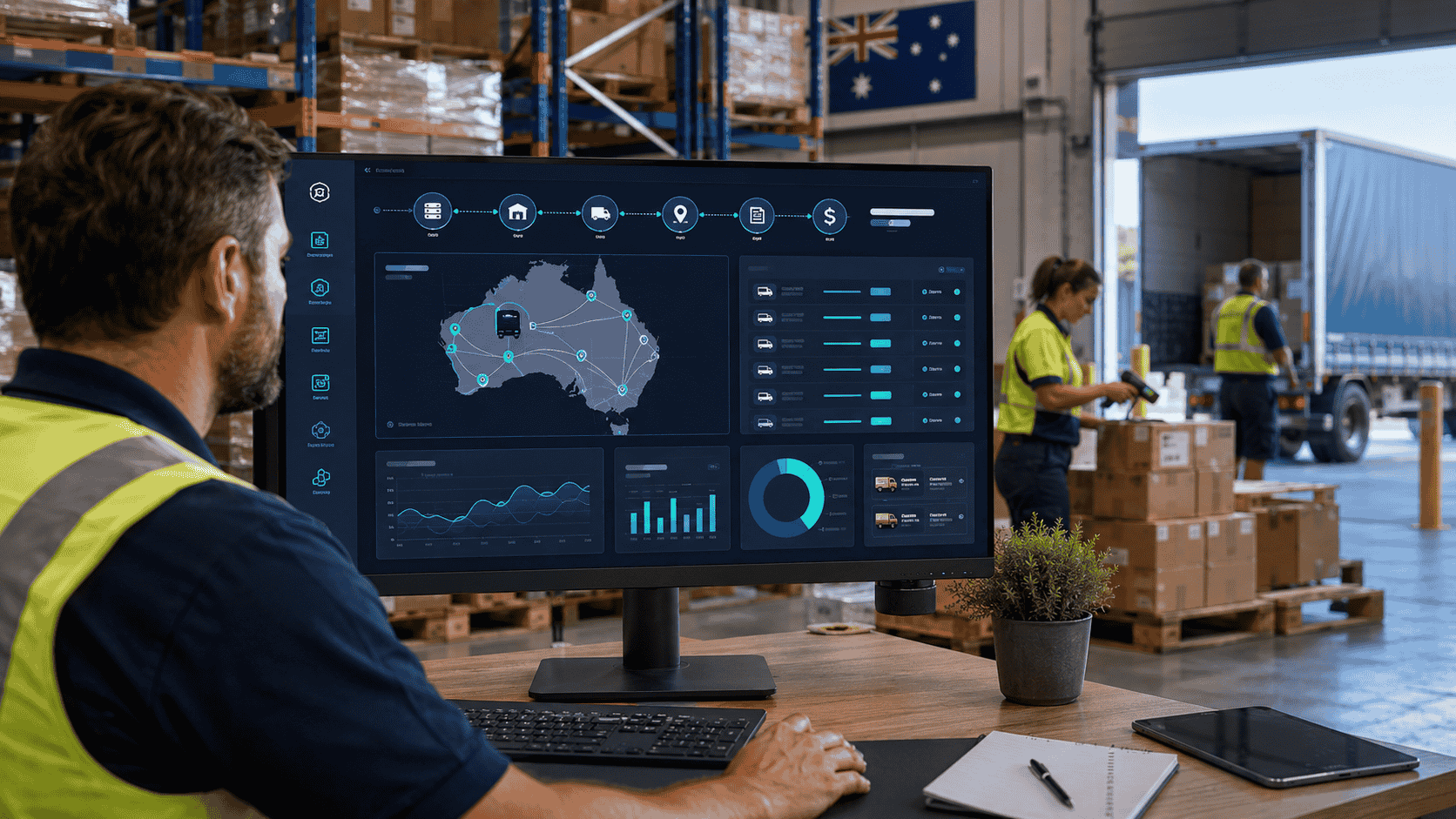
Optimised Workflows: A tailored system can automate time-consuming tasks such as booking confirmations, rate management, and customer notifications, freeing up valuable human resources. I’ve worked with clients who saw a 30% increase in booking efficiency after implementing a custom system designed specifically to reduce manual intervention.
Seamless Integration: Custom software can integrate with your existing systems like ERP, CRM, and warehouse management software, ensuring that all data flows smoothly across departments. The result? No more siloed information, and a more accurate decision-making process.
Unique Competitive Edge: A custom-built system doesn’t just serve your current needs—it can offer features that are unique to your business. Whether it’s an AI-driven pricing engine or custom freight route planning, these are features you’re unlikely to find in standard solutions.
Checklist: Key Advantages Of A Custom Freight Booking System
Tailored functionalities specific to your operational needs.
Ability to integrate seamlessly with existing business systems.
Full control over system updates and feature developments.
Scalable as your business grows and diversifies.
Enhanced Security And Compliance
One often-overlooked benefit of developing your own freight booking software is the ability to implement robust security protocols tailored to your specific needs. Security breaches in logistics systems can be costly—not only in terms of financial loss but also in terms of reputational damage.
When you build your own system, you can control access, enforce encryption, and ensure compliance with local and international regulations. This is particularly important in countries like Australia, where strict data protection laws (like the Australian Privacy Principles under the Privacy Act 1988) govern how customer data is handled.
For example, when I helped an Australian freight company build their custom platform, they were able to integrate advanced encryption protocols and ensure that all customer data was stored in compliance with local privacy laws. This level of security gave them peace of mind and helped build trust with their clients.
Key Functionalities Of Freight Booking Software
When evaluating freight booking software, whether it's custom-built or off-the-shelf, it's important to understand what features are truly essential for streamlining operations. A good freight management system not only automates the booking process but also integrates various functionalities to improve efficiency, customer service, and bottom-line results.
The Importance Of Real-Time Tracking And Freight Pricing Engine
Real-time tracking and a dynamic freight pricing engine are two of the most crucial functionalities for any freight booking system. With freight rates fluctuating based on a number of factors like fuel costs, supply and demand, and carrier availability, having a real-time freight pricing engine is essential.
Real-Time Visibility and Tracking: Imagine you're managing freight shipments across Australia, with deliveries in remote regions. You need to know where your shipments are at all times to proactively manage potential delays. A robust freight booking system with real-time GPS tracking enables you to track your cargo and provide live updates to customers, ensuring transparency and improving trust. I’ve seen businesses that integrated real-time tracking into their systems reduce customer complaints by over 40% because customers could simply check the status themselves.
Freight Pricing Engine: Dynamic pricing engines are another game changer. These tools allow freight companies to automatically compare rates across various carriers, taking into account current market conditions like fuel prices or capacity constraints. For instance, a logistics company I worked with used a dynamic pricing engine to adjust rates in real-time, allowing them to secure better pricing when demand was low and offer competitive rates when the market was saturated.
Table: Key Functionalities of Freight Booking Software
Functionality | Description and Benefits |
Rate Management & Comparison | Automatically compare freight rates across multiple carriers, factoring in distance, weight, volume, and market conditions. |
Booking & Tendering | Centralised system to automate the order-to-consignment process, reducing manual data entry and administrative overhead. |
Real-Time Visibility and Tracking | Track shipments across multiple carriers and modes of transport, offering proactive customer service with accurate updates. |
Route and Load Optimisation | AI-driven algorithms optimise routes based on real-time data, improving delivery speed and reducing fuel costs. |
Freight Audit and Payment Automation | Automates invoice reconciliation, ensuring discrepancies between carrier charges and negotiated rates are identified. |
Document Management | Automatically generate and store essential freight documents, such as bills of lading and invoices. |
API Integration Module | Provides seamless communication between your internal systems (ERP, WMS) and external carriers for efficient data exchange. |
Load Optimisation And Route Planning For Cost Savings
Efficient route planning and load optimisation are essential for any logistics operation, particularly in Australia, where vast distances between key shipping hubs can mean high transportation costs. A freight booking system that uses smart algorithms to plan the most efficient routes and maximise truck/container capacity is invaluable.
For example, I once worked with a freight forwarding company based in Melbourne, where the system integrated both AI-powered load optimisation and route planning features. By ensuring that each vehicle carried the maximum allowable cargo and by factoring in traffic patterns, weather conditions, and delivery windows, the company was able to cut fuel consumption by 18% and reduce delivery times by 12%. The impact on profitability was significant, especially during the busy holiday season when demand peaks.
Automated Freight Booking Process: Streamlining Operations
One of the most significant benefits of custom freight booking software is the ability to automate repetitive processes. Automation not only reduces the time spent on manual tasks but also minimises human error and enhances overall operational efficiency.
Booking Confirmation Automation: In a typical freight operation, the manual process of confirming bookings, verifying details, and updating customers can take hours. With automation, this process can be done in minutes. I’ve worked with a logistics firm where implementing booking confirmation automation reduced their booking cycle by 50%, allowing them to handle more shipments without increasing overhead.
Booking and Dispatch System Integration: A seamless integration between the freight booking system and dispatch system ensures that once a booking is confirmed, the dispatch process can be initiated immediately. This integration eliminates any manual transfer of data, further reducing the chance for errors and delays. A client I worked with reported a 30% reduction in dispatch errors after integrating their booking and dispatch systems.
API Integration For Seamless Data Flow
As logistics systems become increasingly complex, integration between various software tools becomes essential. A well-designed API integration module ensures that your freight booking software can communicate with both internal and external systems—like warehouse management systems (WMS), customer relationship management (CRM) tools, and carrier networks.
For instance, when I helped an Australian logistics firm develop its custom software, we integrated an API-based interface with a global carrier management system. This allowed them to book shipments and track real-time status updates directly from their software, eliminating the need for separate systems and the manual data transfer between them.
Risks and Challenges Of Building Proprietary Software
While the advantages of custom-built freight booking software are clear, it's also important to weigh the challenges that come with building and maintaining a proprietary solution. From high upfront costs to technical debt, the decision to develop your own system is not without its hurdles.
High Initial Costs And Ongoing Maintenance
Developing a custom freight booking system is a significant investment. The initial costs of software development—especially when building an in-house team to handle everything from coding to testing—can be substantial. These costs can run into the millions, particularly for large logistics companies with complex requirements.
I once worked with a prominent Australian freight forwarding company that decided to build its own solution. While they were able to tailor the system to their specific needs, the initial investment required not only for software development but also for hiring skilled engineers, data scientists, and project managers was well over $1.5 million. And that's just the beginning. The software required constant updates, troubleshooting, and refinements to stay up to date with new technologies and regulatory changes, leading to ongoing maintenance costs.
But, despite the hefty price tag, the long-term savings and operational efficiencies they gained—such as eliminating third-party licensing fees—more than made up for the initial investment.
Time To Market Challenges
One of the more significant challenges of building your own freight booking system is the time to market. Unlike off-the-shelf solutions that can be deployed in a matter of weeks, custom software takes time to develop. From the initial planning stages to the final testing and deployment, it can take several months, or even years, to get a production-ready platform.
For instance, one of the logistics companies I helped had to delay its platform launch by nearly six months due to unforeseen technical challenges and the need for more comprehensive testing. While the final product was tailored perfectly to their needs, they missed critical market opportunities because of the delayed deployment.
Need For Specialised Expertise
Building a custom freight booking software solution requires a specialised skill set—one that includes software development, data analysis, and even knowledge of the logistics industry itself. Finding the right talent is not always easy, especially in a competitive job market.
For example, when working with a client in Sydney, the company struggled to find experienced developers who understood both the technical requirements of building a robust freight booking system and the specific needs of their logistics operations. After months of recruitment efforts, they had to bring in consultants to bridge the knowledge gap, which added to their costs.
This is an issue many logistics companies face when building proprietary software: attracting and retaining the right talent to make the system work effectively.
Technical Debt And Obsolescence
Another risk of custom-built systems is technical debt—the eventual backlog of updates, bug fixes, and system improvements that inevitably accumulate over time. If not carefully managed, technical debt can quickly turn your once cutting-edge software into an outdated and inefficient system.
I’ve seen companies invest heavily in developing a custom freight booking system, only to see their platform become obsolete because they couldn’t keep up with emerging technologies or industry best practices. In one case, a company spent millions building their own system but neglected regular updates, leaving it vulnerable to cybersecurity threats and performance issues.
To avoid this, it’s essential to have a dedicated team in place to manage the software’s evolution. However, maintaining this level of continuous attention and investment can become costly and time-consuming.
Integration Headaches
Another challenge companies face when developing their own freight booking software is ensuring seamless integration with other systems. Whether it's integrating with third-party carrier networks, government databases, or other business systems (like warehouse or enterprise resource planning software), integration can be complicated.
For instance, a freight company I worked with experienced significant delays and cost overruns when integrating its new system with external carrier APIs. Despite initial promises from the carrier, the API documentation was incomplete, leading to months of troubleshooting and additional development work. This kind of integration headache is something that many companies don't fully appreciate when planning for a custom solution.
Alternative: Purchasing Software As A Service (SaaS)
For those who want the benefits of freight booking software without the headaches of building and maintaining their own, Software as a Service (SaaS) platforms offer a compelling alternative. SaaS solutions provide ready-to-use, cloud-based platforms with a lower initial investment and quicker deployment.
Benefits Of SaaS Solutions
Lower Initial Investment: SaaS platforms generally have lower upfront costs because they rely on subscription models instead of the hefty capital investment required for custom development.
Quick Deployment: One of the most attractive aspects of SaaS is the ability to deploy the platform quickly. This can be a huge advantage for companies looking to get started with freight booking automation in a short amount of time.
Vendor Maintenance: With SaaS, the vendor handles the technical side—updating the software, managing servers, ensuring security, and addressing any issues. This can significantly reduce the burden on your internal team.
Accessibility: As cloud-based solutions, SaaS platforms allow access from any device with an internet connection, making them particularly useful for businesses with teams spread across different locations.
Disadvantages Of SaaS Solutions
While SaaS platforms offer many benefits, they come with certain trade-offs that businesses need to consider:
Limited Customisation: SaaS solutions, by nature, cannot provide the same level of customisation as a custom-built system. Companies may need to adapt their processes to fit the available features of the software, which might not align perfectly with their operational needs.
Vendor Lock-In and Cost Scaling: Companies using SaaS platforms are often locked into the vendor's pricing model. As your business grows and requires more users or features, the subscription fees can increase significantly, which might make the long-term cost of SaaS higher than initially expected.
Lack of Control and IP: With SaaS, the provider controls the software, meaning you don't own the intellectual property or the underlying code. This can be limiting, especially if you require specific features or changes down the line.
Strategic Approach To Software Selection
When choosing between building proprietary software and purchasing an off-the-shelf solution, it's essential to carefully assess the following factors:
Cost: Consider the higher initial investment of building custom software versus the ongoing subscription and maintenance costs of SaaS.
Time: Think about the time needed for in-house development versus the quick deployment of a SaaS solution.
Expertise: Evaluate whether your team has the required skills to build and maintain a custom system or if you're better off leveraging a vendor's expertise.
Customisation: Determine if your unique needs require a fully tailored solution or if standard features are sufficient.
Competitive Advantage: Consider whether custom-built software offers the edge needed to stand out in a competitive market.
For businesses looking to scale and requiring unique functionalities, custom solutions may be the way to go. However, those prioritising quick deployment and lower initial investment might find SaaS solutions to be a suitable starting point.
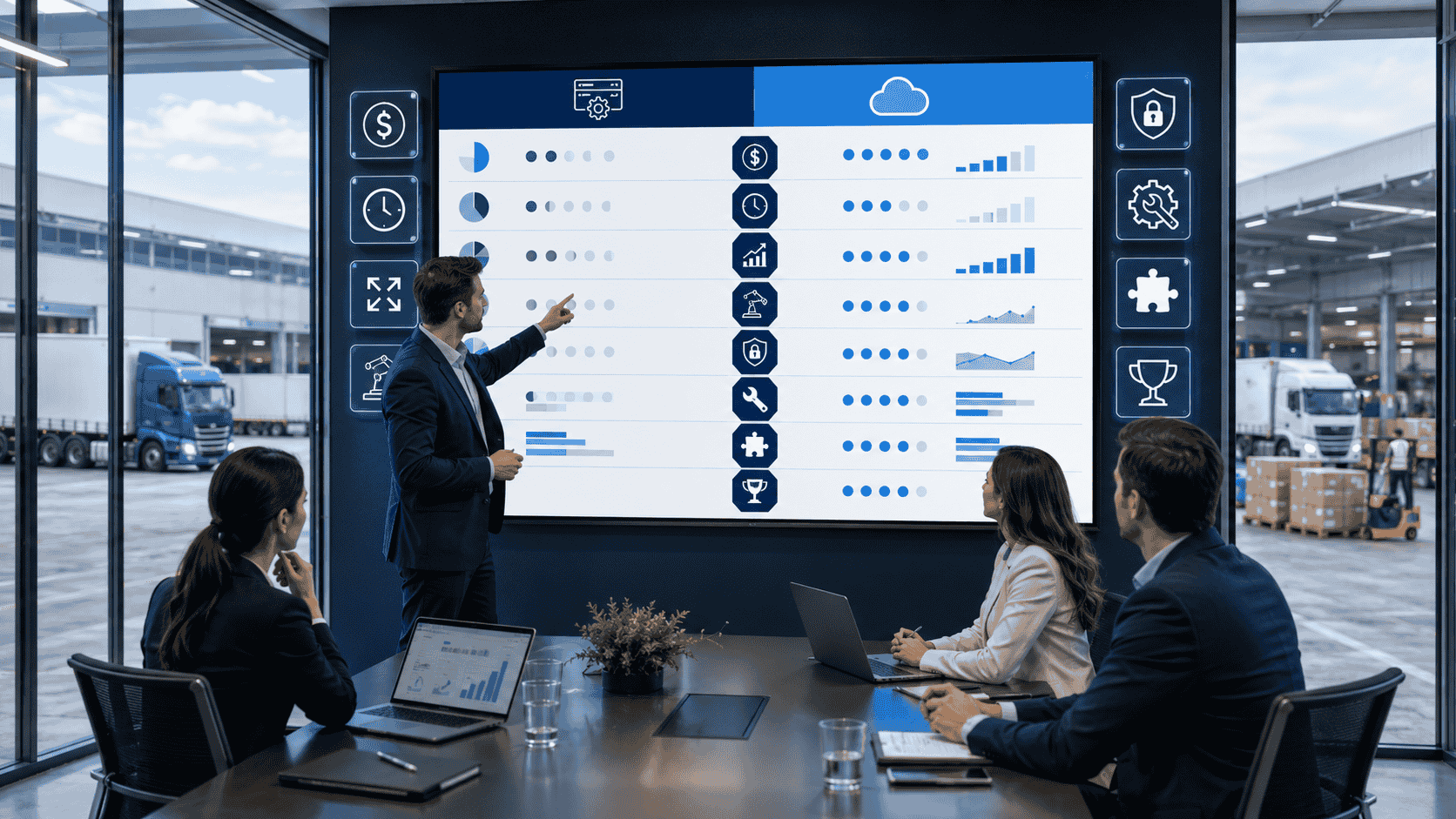
The decision to develop custom freight booking software or rely on a SaaS solution is a crucial one for logistics businesses. Custom software offers unparalleled control, scalability, and the ability to tailor features to your specific needs, providing a long-term competitive advantage. However, it comes with high upfront costs, technical challenges, and the need for specialised expertise.
On the other hand, SaaS platforms provide a quicker, more affordable solution with lower initial investment and less maintenance, but they may lack the customisation and flexibility that some businesses require. Ultimately, the right choice depends on your company's size, growth aspirations, and unique operational needs. For businesses focused on long-term scalability and unique features, custom-built software may be the way forward, while those prioritising speed, affordability, and simplicity might lean towards SaaS platforms.
In either case, choosing the right software is about understanding your priorities—whether that’s control, cost-efficiency, or ease of deployment—and selecting a solution that aligns with your business goals.
Let's Get Straight To The Point
Building custom freight booking software offers significant control, scalability, and operational efficiency. However, it comes with high upfront costs, longer development times, and ongoing maintenance challenges. SaaS solutions, while offering lower initial investment and quicker deployment, may lack the customisation that some businesses need. Choose between the two based on factors like cost, time, and the level of customisation required for your operations.
Frequently Asked Questions
What Are The Main Benefits Of Custom Freight Booking Software?
Custom freight booking software provides greater control over functionality, scalability, and security. It allows businesses to tailor features to their specific needs, integrate seamlessly with existing systems, and ensure compliance with industry regulations.
How Long Does It Take To Develop Custom Freight Booking Software?
The timeline for developing custom freight booking software can vary depending on the complexity of the system and available resources. Typically, it may take several months to a year to build and fully deploy a custom system, with testing and integration playing a crucial role in the timeline.
What Are The Costs Associated With Developing Custom Freight Booking Software?
The initial costs of building custom freight booking software can be significant, including expenses for software development, talent acquisition, and ongoing maintenance. However, these costs can often be offset over time through the elimination of subscription fees and greater operational efficiency.
Is SaaS A Good Alternative To Custom Software?
SaaS solutions are a good option for businesses seeking a quick and affordable freight booking system. They offer lower upfront costs, quicker deployment, and vendor-managed maintenance. However, businesses may face limitations in customisation and higher long-term costs as they scale.
How Can Freight Companies Ensure Their Custom Software Is Scalable?
To ensure scalability, freight companies should focus on building a flexible software architecture that can grow with the business. Working with experienced developers and designing modular systems that can be updated or expanded without major overhauls is key to future-proofing the system.