
Logistics in the FMCG Industry – Move Goods Quickly!
29 November 2022

If there’s one thing I’ve learnt from years in freight and logistics, it’s that speed makes or breaks the FMCG sector. In fast-moving consumer goods, every hour counts — sometimes every minute. Miss a delivery window, and supermarket shelves sit empty. Hit your mark, and those same shelves turn over faster than a Coles weekend special.
Back in my early days working with a national food manufacturer, I watched truckloads of chilled dairy struggle to clear Sydney’s M5 before the afternoon peak. One small delay — a vehicle breakdown, a paperwork hiccup — could send an entire batch past its use-by date. It taught me that FMCG logistics isn’t just about moving freight; it’s about precision timing and flawless coordination from factory floor to checkout aisle.
This industry runs on thin margins and high expectations. Products move quickly, margins are tight, and any lag can ripple across the whole supply chain. So how do businesses keep goods moving fast without letting quality slip? Let’s unpack how the smartest operators make speed a strategic advantage.
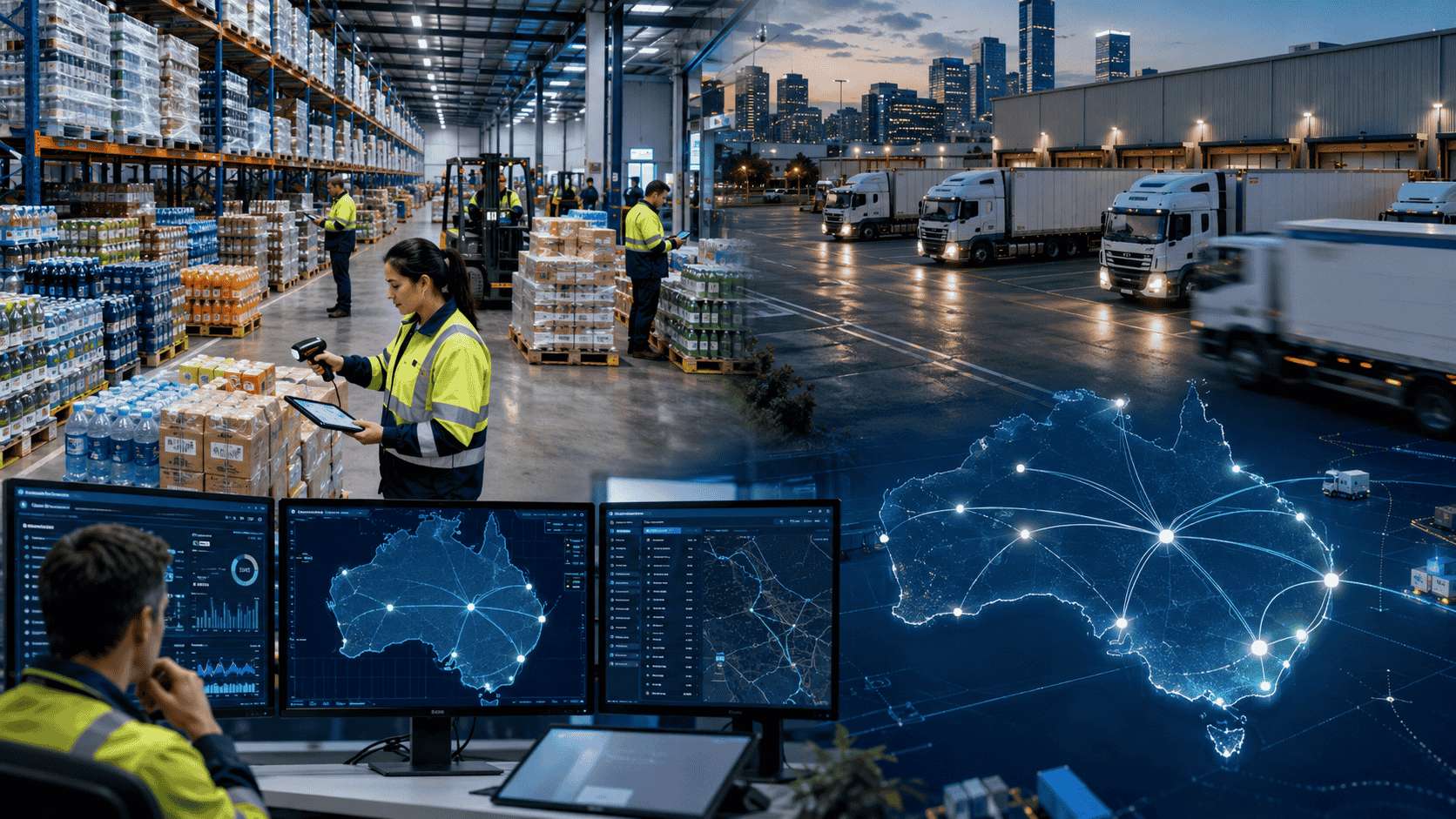
Let's Get Straight To The Point
FMCG logistics revolves around speed, precision, and reliability.
Last-mile delivery remains the biggest cost and performance battleground.
Cold chain management ensures perishable products arrive in perfect condition.
Challenges like forecasting errors, capacity swings, and labour shortages slow operations — but tech and collaboration can counteract them.
AI, IoT, predictive analytics, and automation are reshaping how goods move.
JIT logistics, micro-fulfilment centres, and shared networks improve agility.
Inventory management and batch tracking form the backbone of fast delivery.
Success comes from aligning people, process, and technology around one goal — moving goods quickly and consistently.
The Race Against Time: Why Speed Defines FMCG Logistics
Fast-moving consumer goods — from beverages and snacks to cleaning supplies — live up to their name. The real challenge isn’t just producing them; it’s getting them into customer hands before demand shifts or stock expires. Australian logistics networks, stretching from Melbourne’s industrial belts to far-flung regional supermarkets, face some of the toughest conditions around: long distances, unpredictable weather, and rising freight costs.
In this landscape, logistics isn’t a background process. It’s the heartbeat of the business. Here’s where the pressure for speed shows up most clearly.
1. Last-Mile Delivery: The Deciding Factor In Customer Satisfaction
Anyone in logistics will tell you the last kilometre is often the hardest. I’ve seen national retailers spend millions improving their warehouse tech, only to lose ground at the final step — getting goods from the distribution centre to store or doorstep.
Why it matters:
Cost: Last-mile delivery often eats up more than half the total logistics spend. One Sydney-to-Parramatta run with multiple drops can rack up surprising costs once tolls, fuel, and labour are added.
Customer expectations: These days, shoppers expect same-day or next-day delivery. Some even want live tracking updates down to the minute. Miss that mark, and they’ll switch brands faster than you can say “out of stock.”
Urban congestion: Anyone who’s tried delivering to the CBD during peak knows the drill — limited parking, tight time windows, and congestion that can double travel times. Add regional deliveries into the mix, and you’ve got a complex puzzle.
Checklist: How to Sharpen Last-Mile Performance
Step | Focus Area | Key Action |
1 | Route Planning | Use dynamic routing that accounts for live traffic and delivery zones. |
2 | Visibility | Give drivers and customers real-time tracking tools. |
3 | Load Optimisation | Group deliveries smartly to reduce dead kilometres. |
4 | Communication | Keep stores and customers informed of ETAs and delays. |
5 | Review | Audit routes monthly to identify wasted time and cost. |
For smaller operators, one trick I’ve seen work well is partnering with regional carriers who know the terrain. Local drivers understand shortcuts, quiet loading docks, and council restrictions — details that bigger networks sometimes overlook.
2. Cold Chain Management: Keeping Quality On Ice While Moving Fast
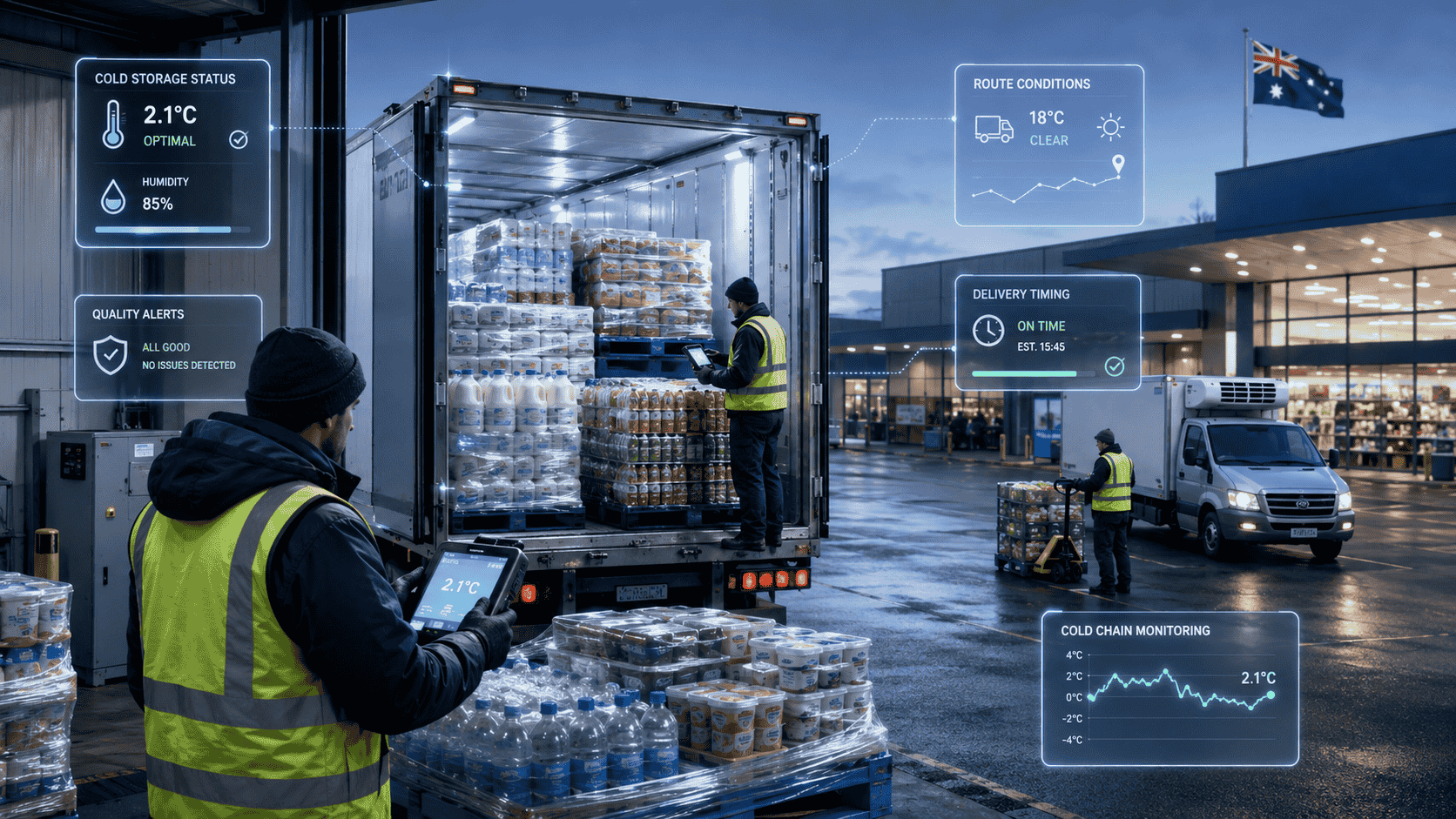
In FMCG, cold chain logistics is where the stakes climb highest. Food, dairy, meat, and beverages can’t afford delays — literally. One breakdown in temperature control can spoil an entire truckload before it even reaches the supermarket gate.
I remember a client in northern Queensland who shipped fresh yoghurt to stores across regional towns. One humid week, their refrigerated unit failed just south of Rockhampton. By the time the truck was opened, the product was gone — thousands of dollars down the drain. That’s when they realised speed means nothing without control.
Cold chain success rests on discipline and data. In Australia’s climate, where temperatures swing wildly — 42°C in western NSW one day, single digits in Victoria the next — maintaining constant refrigeration requires precision.
Here’s what separates top performers from those constantly chasing spoilage claims:
Table: Cold Chain Essentials for Fast and Reliable FMCG Logistics
Area | Key Action | Impact on Speed & Quality |
Temperature Monitoring (IoT Sensors) | Real-time data alerts for fluctuations | Prevents spoilage and reduces inspection delays |
Smart Route Planning | Avoids high-heat routes or long idle times | Maintains product quality and saves fuel |
Cross-Docking | Transfers chilled goods directly from inbound to outbound transport | Cuts dwell time and reduces refrigeration costs |
Automated Cold Storage | Uses robotics for picking and packing | Speeds up throughput, reduces manual handling errors |
Regular Maintenance Checks | Scheduled audits for refrigeration units | Minimises breakdowns mid-transit |
Cold chain isn’t just a logistics challenge — it’s a brand trust issue. Once a consumer experiences spoiled milk or thawed frozen food, confidence evaporates. Businesses that invest in well-managed temperature control systems and proactive maintenance not only keep goods fresh but also keep customer faith intact.
The Roadblocks To Moving Goods Quickly
Even the slickest logistics operation runs into snags. In FMCG, these roadblocks often come down to human limitations and market volatility. Here’s what’s slowing down Australia’s fastest movers — and what can be done about it.
Demand Volatility And Forecasting Errors
Forecasting in FMCG can feel like reading tea leaves. Promotions, weather, and viral social trends can send demand soaring overnight. One minute, you can’t move canned soup; the next, a cold snap has shelves stripped bare.
In one project I worked on with a large beverage supplier, a two-week heatwave in Sydney doubled soft drink demand. The factory couldn’t pivot fast enough, and for three weeks, trucks left the warehouse only half-loaded. Their planners now use AI-driven forecasting to flag demand surges before they hit — a lesson learnt the hard way.
Capacity Balancing
Balancing capacity is a constant juggle. Manufacturers can’t afford to idle machines or overextend their drivers. Seasonal products — think ice cream in summer, soup in winter — force operations to switch gears fast.
The best approach I’ve seen involves flexible contract freight arrangements and shared distribution assets. Partnering with other shippers to co-load freight helps spread costs and smooth out peaks. This is becoming common practice across Queensland and Victoria, where smaller FMCG producers share warehouse space to manage seasonal surges.
Labour Shortages And The Human Factor
No tech can make up for the shortage of skilled people. Australia’s logistics sector has felt the pinch — from forklift drivers in Sydney’s west to truck operators on the Hume.
With competition from mining and construction, logistics roles often struggle to attract long-term workers. That’s why many FMCG operators are offering flexible shifts, training pathways, and incentive-based programs to retain staff. I’ve seen warehouses that invested in automation but still found human reliability irreplaceable when quick thinking was required.
Strategies And Innovations To Increase Logistics Speed
Speed in the FMCG sector isn’t about cutting corners — it’s about working smarter. Australian businesses are increasingly blending digital innovation with operational adaptability to keep up with both supermarket and consumer demand. From AI-powered systems to micro-fulfilment hubs tucked into city fringes, the race for efficiency is on.
I. Digital Technology And AI: The Brains Behind Speed
Back in 2019, I worked with a regional food distributor in Melbourne that was losing time to outdated planning tools. Drivers relied on static route maps, meaning traffic snarls on the Monash could throw off the entire day. Once they adopted intelligent route optimisation software, they shaved hours off daily runs and cut fuel use by nearly 15%. The payoff was immediate — faster deliveries, lower costs, happier customers.
Table: Digital Tools Powering Faster FMCG Logistics
Technology | Function | Impact on Speed |
AI-Powered Demand Forecasting | Analyses sales trends and market triggers to predict demand | Prevents overstocking and stockouts |
Real-Time GPS & IoT Sensors | Tracks goods and conditions in transit | Enables instant rerouting and problem-solving |
Automation & Robotics in Warehouses | Automates picking, packing, and palletising | Reduces human error and boosts throughput |
Predictive Maintenance | Monitors vehicle and refrigeration performance | Prevents costly breakdowns during runs |
Data-Driven Dashboards | Consolidates performance data for managers | Speeds up decision-making on the fly |
Technology doesn’t replace human expertise — it amplifies it. The key is integration. When your WMS, ERP, and transport systems “speak” to one another, you remove bottlenecks that often slow down operations.
II. Structural And Operational Adaptations: Building Agility Into The Network
Digital tools are one thing; how a business is physically structured is another. Many FMCG companies are rethinking how their supply chains operate, from warehousing footprints to partnership models.
1. Just-in-Time (JIT) Logistics
Gone are the days of massive stockpiles gathering dust. JIT means receiving products when they’re needed — not before. This model cuts down storage costs but demands tight coordination. A hiccup in supplier timing can cascade quickly, which is why local suppliers and reliable carriers are crucial.
One Brisbane-based snack producer I worked with managed to trim storage costs by 20% by switching to a JIT model, supported by real-time supplier data. But they also learnt to keep “safety stock” buffers for fast-selling lines, especially during public holidays when freight slows.
2. Micro-Fulfilment Centres (MFCs) and Local Warehousing
In dense cities like Sydney or Melbourne, large distribution hubs struggle with delivery delays due to congestion and distance. MFCs — smaller hubs strategically located closer to customer clusters — help cut lead times from days to hours.
Think of them as neighbourhood depots: compact, automated, and data-driven. For FMCG players handling e-commerce and retail, they allow same-day delivery without overstretching linehaul fleets.
3. Omnichannel Integration
Shoppers don’t distinguish between online and in-store anymore — and neither should logistics. By unifying inventory across channels, companies can fulfil from the nearest location, whether it’s a warehouse, store, or micro-hub.
A Perth-based beverage distributor I spoke with earlier this year now uses an integrated inventory system that automatically reallocates stock between online and retail orders. The result? A 30% improvement in delivery times and far fewer “out of stock” notices.
4. Collaboration and Shared Networks
Smaller FMCG firms often struggle with scale, but collaboration changes the game. By partnering with 3PLs and other shippers, they gain access to larger transport fleets, consolidated routes, and reduced costs.
I’ve seen food manufacturers in regional Victoria share cold storage and linehaul contracts. It’s not just cost-effective — it reduces the number of half-empty trucks on the road, improving both speed and sustainability.
Inventory Management As The Foundation For Speed
Speed doesn’t start with the truck leaving the depot — it starts with how well inventory is managed before the order even hits the system. In the FMCG sector, quick logistics depends on having the right product in the right place at the right time. When inventory management falters, the whole chain slows down.
I’ve seen plenty of operations invest heavily in automation and route tech, only to find their true bottleneck sat back at the warehouse. You can’t ship what you don’t have in stock — and you can’t move quickly if you don’t know what’s sitting on the shelves.
Smart Stock Management: Balancing Supply And Demand
In FMCG, demand can fluctuate wildly. One day, a product’s barely moving; the next, a social media post sends it flying off shelves. To handle this, many Australian distributors now use a combination of Economic Order Quantity (EOQ), Minimum Order Quantity (MOQ), and safety stock modelling to maintain balance.
Here’s how these approaches fit together:
Method | Description | Benefit |
EOQ (Economic Order Quantity) | Calculates the most cost-effective order size to minimise holding and ordering costs. | Reduces excess stock while avoiding shortages. |
MOQ (Minimum Order Quantity) | Sets a base quantity that justifies production or purchase costs. | Ensures supply chain efficiency for bulk producers. |
Safety Stock | Extra inventory is kept to buffer against sudden demand spikes or supply delays. | Prevents lost sales and service gaps. |
When applied well, these methods transform chaos into clarity. I once worked with a dairy producer in Wagga Wagga who constantly battled stockouts of their top-selling yoghurt. After introducing EOQ and daily demand tracking, their on-time delivery rate jumped from 76% to 95% in just two months.
Batch Tracking And Quality Control
FMCG logistics lives and dies by product traceability — particularly for perishables. Batch tracking ensures every product can be traced from the production line to the point of sale. It’s not just about compliance; it’s about efficiency.
With electronic batch record systems (EBRS), logistics teams can instantly locate a batch in storage or transit, saving hours of manual checks. It also strengthens recall management — something Australian regulators keep a close eye on under the Food Standards Australia New Zealand (FSANZ) framework.
Example:
A Sydney-based beverage company introduced QR-based batch tracking that linked each pallet to its production date and best-before data. The system not only improved traceability but also cut their average warehouse retrieval time by 40%.
Agile Planning And Responsive Supply Chains
Speed requires flexibility. Agile supply chain planning enables businesses to respond to real-time data rather than static forecasts. For smaller and medium FMCG manufacturers — think local snack brands or beverage startups — this agility can be a lifeline.
Using cloud-based planning tools, they can reallocate production runs on short notice or switch suppliers when raw materials fluctuate. During the floods that hit parts of northern NSW last year, one confectionery company I worked with used agile scheduling to reroute its shipments through Victoria. They avoided two weeks of downtime while competitors were still waiting for their usual routes to clear.
Agility isn’t just about reacting — it’s about designing systems that can bend without breaking. Fast movers in this space don’t wait for disruptions; they plan for them.
In the FMCG sector, logistics speed isn’t a luxury — it’s survival. The race to move goods quickly defines how brands compete, how customers perceive value, and how profit margins are protected. Every part of the operation — from forecasting to delivery — must work like a well-oiled machine.
Australia’s geography and climate throw in their own challenges, from long-haul transport between states to heat-sensitive products in summer. Yet, the businesses that thrive are those that treat logistics as a strategic function, not a cost centre. They invest in visibility, data-driven planning, and strong partnerships to stay one step ahead.
After more than two decades in freight operations, I’ve learnt that speed doesn’t come from pushing harder — it comes from working smarter. When systems talk to each other, people have the right tools, and processes are built around the customer, speed becomes natural. FMCG logistics will always be a high-pressure game, but with the right mix of tech, timing, and teamwork, it’s a game you can win.
Frequently Asked Questions
What Makes FMCG Logistics Different From Other Industries?
FMCG logistics demands constant speed and agility. Products move fast, have shorter shelf lives, and often require temperature control. Delays can lead to spoilage or missed sales, so coordination and visibility are everything.
How Can Australian FMCG Businesses Improve Delivery Speed?
Investing in real-time tracking, route optimisation, and micro-fulfilment centres can drastically reduce lead times. Partnering with regional carriers familiar with local routes also helps overcome congestion and distance challenges.
Why Is Cold Chain Management Critical For FMCG?
Cold chain systems maintain safe temperatures for perishable goods like dairy, meat, and beverages. Inconsistent cooling can destroy entire shipments. Proper monitoring and automation protect both product quality and brand reputation.
What Role Does Technology Play In Modern FMCG Logistics?
Digital tools like AI forecasting, IoT sensors, and automation drive faster, more accurate decision-making. They help predict demand, optimise inventory, and prevent disruptions before they occur.
How Do Smaller FMCG Companies Stay Competitive?
Smaller players can compete through collaboration, shared warehousing, and 3PL partnerships. By pooling resources, they access advanced logistics capabilities without the heavy investment larger firms make.