
Cario Freight Management System And Netsuite Freight Integration
31 July 2023

Cario Freight Management System And Netsuite Freight Integration
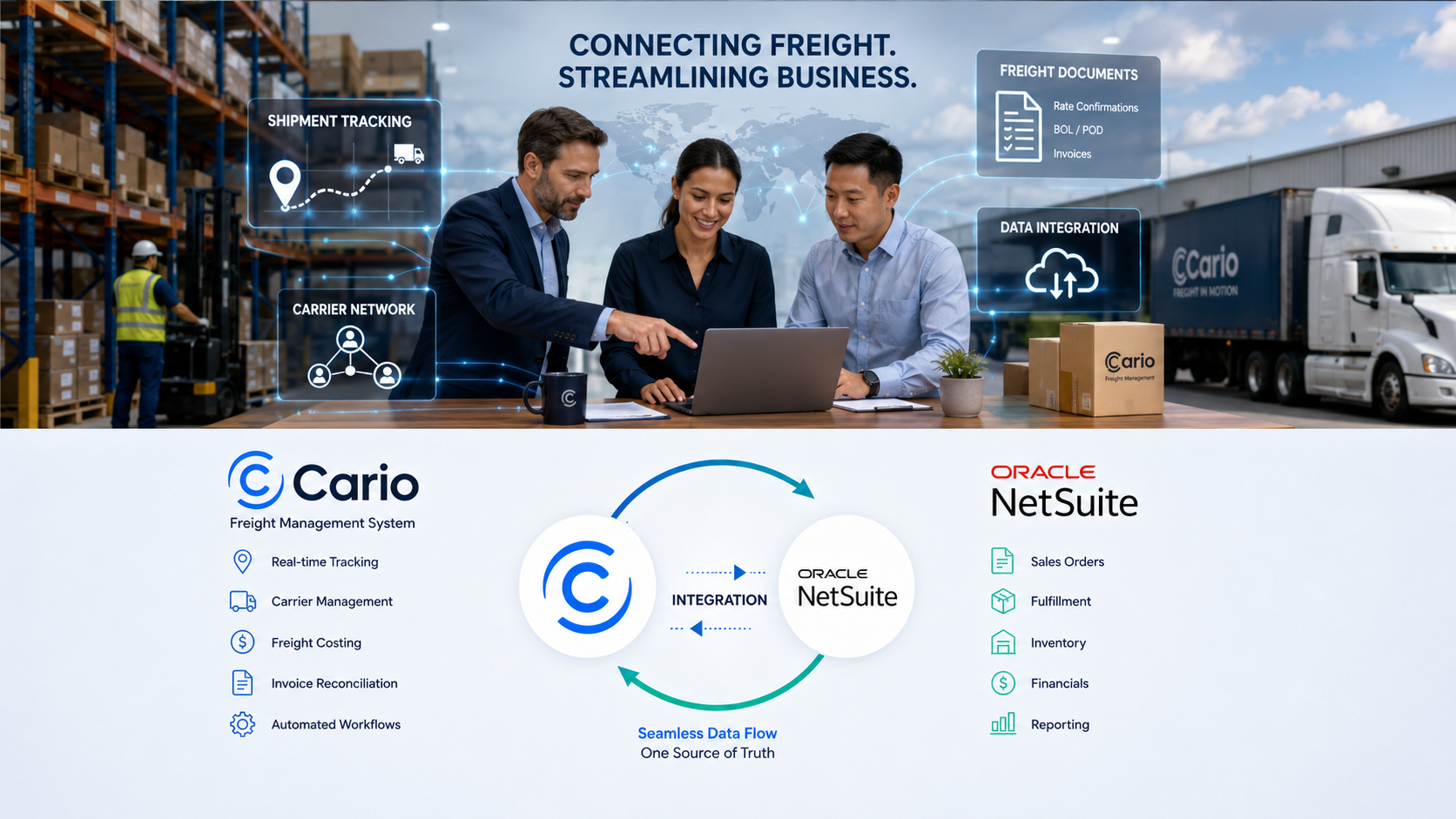
In today’s fast-paced logistics world, businesses can no longer afford to juggle multiple systems and rely on manual processes that slow down operations and introduce errors. The key to success lies in integrating cutting-edge freight management with ERP systems. Enter the world of Cario Freight Management System and NetSuite integration – a match made in logistics heaven that’s driving efficiency across the supply chain. From real-time data sync to automated freight cost allocation, this integration promises to revolutionise how businesses manage their freight operations.
As someone who’s been in the logistics space for a number of years, I’ve seen firsthand how crucial it is to streamline operations. In fact, I remember the days when we had to manually enter freight data into multiple systems – it was time-consuming, error-prone, and just plain frustrating. But integrating Cario with NetSuite? Now that’s a game-changer.
So, let’s unpack how this integration works and how it can help businesses save time, cut costs, and offer better visibility into their freight operations.
Unlocking Seamless Freight Management: An Overview Of Cario FMS
When it comes to managing freight operations, many companies face the challenge of dealing with complex and ever-evolving supply chains. From juggling multiple carriers to managing real-time tracking, the process can quickly become overwhelming. That’s where the Cario Freight Management System (FMS) comes in – a comprehensive, cloud-based solution designed to handle the intricacies of modern freight logistics.
What Is The Cario Freight Management System (FMS)?
Cario isn’t just another run-of-the-mill freight management system; it’s a powerful tool designed specifically for businesses that need to manage complex freight operations with ease. The system integrates over 300 carriers into one platform, allowing users to compare quotes, track shipments, and handle invoices all from a single dashboard.
Think of it this way: Imagine you’re running a distribution business in Sydney, and you need to send a consignment across state lines. With Cario, you can instantly compare rates from multiple carriers, select the best option for your budget, and track the shipment in real time – all without picking up the phone or dealing with endless paperwork. The system’s integration with AI ensures that you can automate these tasks based on predefined rules, which reduces the chances of errors and speeds up the entire process.
Key Features Of Cario Freight Management System
Let’s break down some of the standout features of Cario’s FMS:
Freight Management (FMS Functionality): This is the core of Cario’s offering. It’s designed to streamline everything from quoting and booking to tracking and carrier invoice reconciliation. With over 300 carriers integrated into the platform, it’s easy to compare rates and services to find the most cost-effective solution.
Transportation Management (TMS Functionality): Cario doesn’t just manage third-party carriers; it also handles your internal fleets. Whether you're using contracted drivers or managing your own fleet, Cario helps with route optimisation, job dispatch, and proof of delivery (POD) – keeping everything in one place.
Automation and Intelligence: By integrating business rules automation, the platform can automatically select the most cost-effective carrier for any given shipment. For example, if you're shipping a time-sensitive order, Cario can automatically select the quickest carrier option – saving you time and money.
Customer Experience: One of my favourite aspects of Cario is the customer-facing features. It offers branded self-service tracking options, where your customers can track their orders in real-time, receive automated alerts, and stay updated with Advanced Shipping Notifications (ASNs). These features keep your customers informed and enhance their overall experience, reducing inbound calls and boosting customer satisfaction.
Integrating Cario With Netsuite: A Game-Changer For Freight Operations
Integrating a Freight Management System (FMS) like Cario with a core Enterprise Resource Planning (ERP) system like NetSuite is the key to unlocking streamlined, efficient logistics operations. As a business owner or logistics manager, you’re well aware of the headache that comes with managing different systems for your freight and inventory. But imagine this: what if your ERP and FMS could work seamlessly together, exchanging real-time data to optimise every step of the freight process?
That’s precisely what Cario and NetSuite integration offers. By merging the power of freight management with ERP functionality, businesses can ensure that all logistics-related data flows effortlessly between systems, eliminating data silos and creating a unified platform for managing your entire supply chain.
How Cario And Netsuite Work Together?
At its core, the Cario-NetSuite integration works as a native integration – meaning that Cario seamlessly integrates within the NetSuite environment without the need for complex third-party tools or excessive custom development. It's a plug-and-play integration, designed to synchronise core logistics and order data directly within the NetSuite platform.
For example, let’s say you’re running a retail business in Melbourne, and your team is processing orders through NetSuite. As soon as an order is fulfilled, the integration pushes the relevant shipment details, including carrier selection, tracking numbers, and freight costs, from NetSuite into the Cario platform. Cario, in turn, pushes real-time tracking updates, estimated time of arrival (ETA), and freight costs back into NetSuite.
This seamless flow of information not only saves time but also reduces errors caused by manual data entry. It ensures that when the finance team in Sydney is reconciling invoices, they have access to accurate freight costs and shipping details without having to flip between multiple systems.
Key Data Exchange In Cario-Netsuite Integration
The beauty of this integration lies in the bi-directional data flow that ensures data is consistently updated across both platforms. This way, the NetSuite system becomes the source of truth for order management, while Cario enriches that data with logistics-specific details.
Here’s how it works:
Data Flow Direction | Key Data Fields Exchanged |
From NetSuite to Cario | Shipping/Receiving location, Item fulfilment numbers, Shipment item details (e.g., SKUs, boxes), Carrier and service details (if defined), Carrier account code (if defined) |
From Cario to NetSuite | Consignment note number, Tracking link, Freight costs, Estimated time of arrival (ETA), Dispatch date, Latest tracking event |
This integration covers everything from order creation in NetSuite to freight cost allocation, ensuring that business decisions are made using accurate, real-time data.
Integration Benefits: A Seamless Workflow For Logistics Teams
As someone who has witnessed the strain of managing freight operations in isolation, I can tell you that the Cario-NetSuite integration is a game-changer. Imagine you’re in your office in Brisbane and you’re preparing for a busy peak season. With the Cario-NetSuite integration in place, the logistics team can focus on optimising shipments, while the finance team ensures accurate invoicing – all within a single interface.
Here are some key benefits of this integration:
Real-time Freight Data: Forget waiting for manual updates from carriers. With this integration, you get live freight data, tracking updates, and delivery status directly within the NetSuite interface.
Cost Optimisation: The integration enables automated rate shopping, where the system can select the most cost-effective carrier, saving your business money during both peak and off-peak periods.
Better Order Management: By synchronising order fulfilment and shipment tracking, teams can better manage inventory and ensure on-time delivery, improving customer satisfaction.
Easy Invoice Reconciliation: The system automatically matches freight costs with the corresponding order, so your team can reconcile invoices quickly and without errors.
Real-World Use Cases Of Cario-Netsuite Integration
Now, let’s take a closer look at how businesses use the Cario-NetSuite integration in real-world scenarios. This isn’t just a theoretical discussion; it’s about the tangible benefits that come with combining your freight and ERP systems.
Quoting And Carrier Selection
One of the first things you’ll notice when using Cario alongside NetSuite is the real-time delivery quoting feature. For example, if you’re handling multiple shipments from Melbourne to Perth, the system can instantly compare least-cost routing options based on your pre-configured criteria (e.g., delivery time or freight cost). You can select the most efficient carrier option directly within the NetSuite Item Fulfilment screen, ensuring that freight costs are optimised at the point of order creation.
Consigning And Label Printing Made Easy
Gone are the days of manually entering consignment information into a separate freight management system. When an order is fulfilled in NetSuite, the system automatically pushes the relevant data to Cario, which generates the consignment note and prints the shipping labels – all within the NetSuite interface. This automation saves your team time and reduces the chances of making errors when printing labels.
Tracking And Freight Visibility
Tracking shipments is crucial to staying on top of deliveries. When you’re dealing with multiple freight carriers, it’s easy to lose track of where things are. But with the Cario-NetSuite integration, your team can access real-time tracking updates directly within NetSuite. This means that when a customer calls to ask about the status of their order, you can provide accurate, up-to-date information without having to log into multiple systems.
Why Cario-Netsuite Integration Is Essential For Businesses?
Now that we’ve explored how Cario Freight Management System (FMS) integrates with NetSuite, it’s time to look at the tangible advantages this brings to businesses. In the logistics and supply chain sector, efficiency and cost control are paramount. With Cario-NetSuite integration, companies can optimise freight management, reduce manual errors, and enhance visibility across the supply chain – all while using the data to make smarter, more informed decisions.
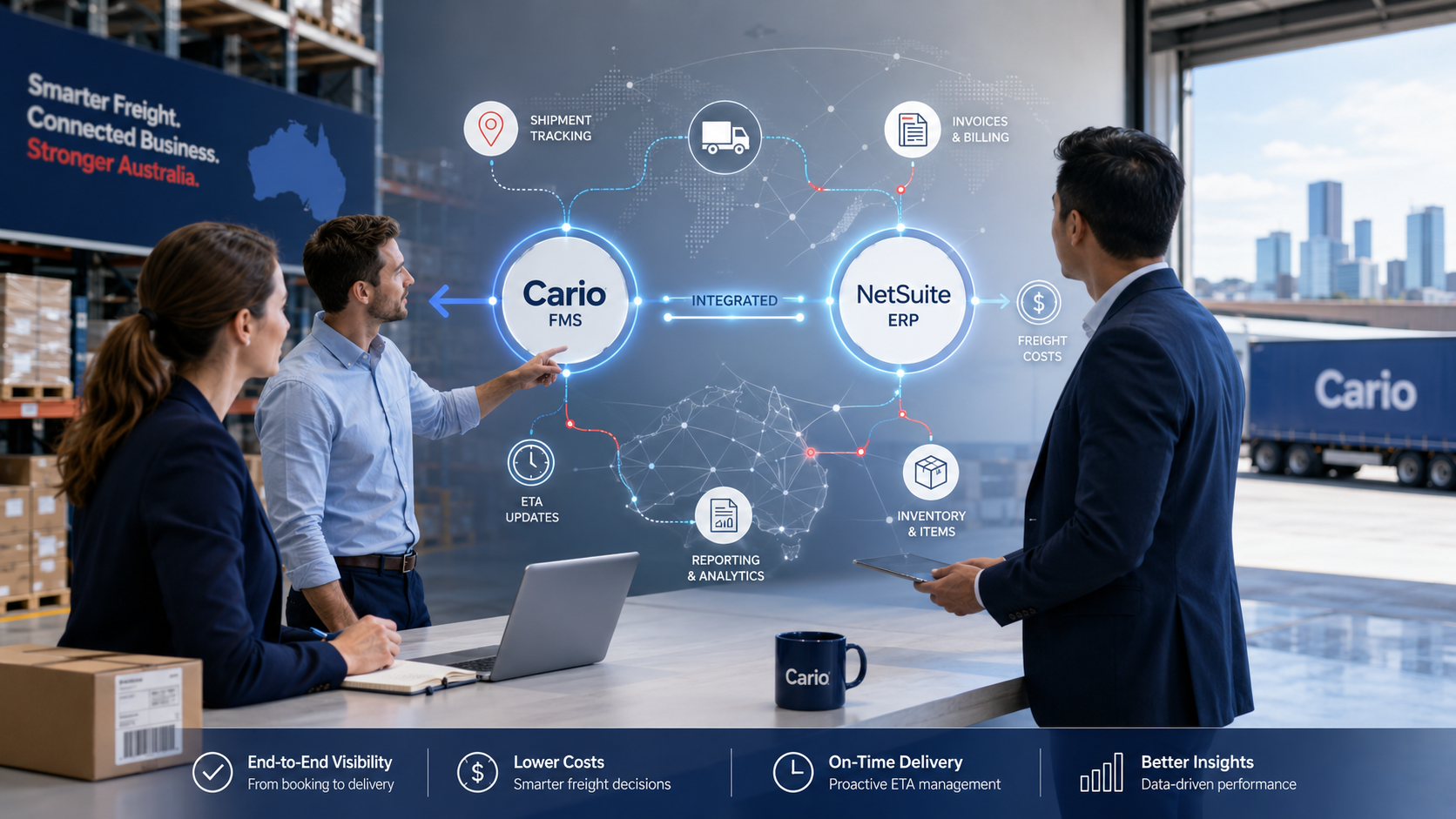
Having worked with businesses in the Australian logistics sector, I’ve seen firsthand how even small improvements in freight management can have a significant impact on a company’s bottom line. Let’s break down the key benefits of the Cario-NetSuite integration:
Streamlining Operations
One of the most significant benefits of integrating Cario FMS with NetSuite ERP is the elimination of the need for manual data entry. Think about it: no more double-handling of sales orders, no more switching between systems to update shipment status. Everything you need – from order creation to freight tracking – is handled automatically within NetSuite, ensuring that your team spends less time on administrative tasks and more time on driving your business forward.
Imagine you’re running a distribution business in Brisbane that ships thousands of orders daily. Before integration, your team would have had to manually input order details into your freight management system. But with Cario-NetSuite, as soon as the order is processed in NetSuite, the freight data automatically flows into Cario, and the shipment details are immediately updated – all without manual input. This automation not only reduces human error but also frees up time for employees to focus on more value-added tasks, such as customer service and strategic decision-making.
Cost Optimisation And Freight Automation
Freight is a significant cost for most businesses. According to industry reports, transportation and shipping can account for 10-15% of total costs in the logistics sector. Optimising freight routes and selecting the most cost-effective carriers is crucial to maintaining profitability, especially in today’s competitive market.
The Cario-NetSuite integration makes this process more efficient with automated rate shopping. This feature compares the costs and delivery times from different carriers, allowing businesses to select the most cost-effective option at the point of order fulfilment. For example, a company based in Melbourne might need to send goods to Perth, and with just a click, Cario can provide the most economical carrier options based on predefined criteria like the least cost routing or the fastest delivery.
Additionally, since all freight costs are automatically populated in NetSuite, businesses can easily track freight charges, which helps them to avoid overpaying for services and ensures better control over their freight budget.
Enhanced Supply Chain Visibility
The integration provides real-time visibility into the supply chain, which is critical for businesses to make informed decisions quickly. For example, if a shipment is delayed, your team can immediately access tracking updates and adjust plans accordingly. Not only does this keep your customers informed with real-time updates, but it also empowers your internal teams to be proactive rather than reactive.
Imagine you’re managing an online retail store in Sydney, and you’ve just shipped an order to a customer in Hobart. Without integration, you’d have to log into a separate freight system to track the shipment. However, with Cario-NetSuite, all the tracking details appear automatically within NetSuite. This means that when a customer calls to check on their order, your team can immediately provide the most up-to-date tracking information without wasting time on multiple systems. In a competitive market, this kind of real-time visibility can significantly boost customer satisfaction and loyalty.
Better Decision-Making With Accurate Data
The integration enables businesses to make smarter, data-driven decisions. By having real-time data synchronisation between Cario FMS and NetSuite, stakeholders can access accurate freight data, costs, and delivery statuses without the risk of errors. This real-time information supports better inventory management, order fulfilment, and financial planning.
For example, a wholesale distributor based in Adelaide might need to forecast future shipments. With Cario-NetSuite, the company has access to historical shipping data and can make predictions about future freight needs based on past trends. This level of visibility into freight costs and delivery performance ensures that businesses can plan more accurately and avoid costly last-minute decisions.
Improving Customer Experience With Automated Notifications
The Cario-NetSuite integration doesn’t just help businesses internally – it also enhances the customer experience. Automated notifications, such as Advanced Shipping Notifications (ASNs), keep customers in the loop by informing them about key events in the shipping process, such as shipment dispatch, tracking updates, and estimated delivery times.
For instance, if you’re managing a B2B wholesaling operation that frequently ships to retailers across the country, keeping your clients updated on their orders is crucial. With Cario FMS, your customers automatically receive email or text notifications as their orders progress. This improves transparency and reduces the number of inbound queries from customers who are simply looking for tracking updates.
By using Cario’s self-service tracking options, customers can check the status of their shipments whenever they like, further reducing the burden on your customer service team. This makes a big difference when you’re dealing with a high volume of orders, especially during peak seasons.
To wrap things up, the Cario-NetSuite integration is a powerful tool for modern businesses looking to optimise freight management and streamline logistics operations. The seamless flow of real-time data, automated freight cost allocation, and improved supply chain visibility all contribute to cost savings, greater efficiency, and an enhanced customer experience.
As someone who’s seen the evolution of logistics technology, I can confidently say that integrating systems like Cario FMS and NetSuite ERP is no longer just a luxury – it’s a necessity. Whether you’re a small business owner in Hobart or a logistics manager overseeing multiple fleets in Brisbane, this integration gives you the tools to stay ahead of the competition, reduce errors, and make smarter, data-driven decisions that can take your business to the next level.
Let's Get Straight To The Point
The Cario Freight Management System (FMS) and NetSuite ERP integration offers a seamless, automated logistics solution that helps businesses reduce manual errors, optimise shipping costs, and improve customer satisfaction. By synchronising real-time freight data, businesses can streamline operations, track shipments more efficiently, and make better decisions based on accurate data – all within the NetSuite platform.
Frequently Asked Questions
What Is The Cario Freight Management System?
The Cario FMS is an AI-powered, cloud-based platform designed to simplify freight management by automating tasks like quoting, booking, tracking, and invoicing.
How Does The Cario-Netsuite Integration Benefit Businesses?
By integrating Cario with NetSuite, businesses can automate freight costs, improve real-time tracking, and streamline order fulfilment, all within one unified system.
Can The Cario-Netsuite Integration Be Customised For Specific Business Needs?
Yes, the integration provides RESTful APIs for customisation, enabling businesses to tailor the system to their specific logistics and operational requirements.
What Data Is Exchanged Between Cario And Netsuite In Real-Time?
Critical freight data such as tracking updates, shipment details, and freight costs are exchanged bi-directionally between Cario and NetSuite for accurate and efficient operations.
How Does The Cario And Netsuite Integration Improve Customer Service?
With features like automated Advanced Shipping Notifications (ASNs) and real-time tracking, the integration keeps customers informed and improves overall customer satisfaction.