
Our Guide to Freight Logistics – Freight Software
08 February 2023

Running freight across Australia isn’t what it used to be.
Let's Get Straight To The Point
Freight logistics software centralises operations, giving complete visibility from booking to delivery.
Automation reduces admin time, eliminates manual errors, and uncovers cost savings of up to 8% through invoice audits.
Real-time tracking improves customer satisfaction and strengthens reliability.
Compliance and safety are easier to manage with built-in NHVR and Chain of Responsibility tools.
AI, IoT, and data analytics are shaping the next generation of logistics systems — offering predictive insights, smarter routing, and sustainable freight operations.

A few decades ago, a warehouse manager might’ve tracked loads on a clipboard and relied on a two-way radio to confirm deliveries. These days, between rising fuel costs, longer supply chains, and the constant pressure for real-time updates, you can’t run a national freight operation on spreadsheets and goodwill alone.
When I first worked with a regional transport operator in western Sydney, we used to lose track of pallets between the depot and the delivery docks more often than we’d like to admit. Drivers would call in from Dubbo or Tamworth, chasing missing consignment numbers. It wasn’t a matter of poor work ethic — it was a system problem. Too many manual touchpoints, too little visibility. That’s what modern freight logistics software fixes.
Digital freight systems give you the oversight you need to keep things humming, whether you’re running B-doubles across the Nullarbor or same-day deliveries around Melbourne’s industrial ring. Let’s unpack how these tools fit into the bigger logistics picture and why they’ve become the backbone of efficient freight management in Australia.
Freight Software Explained – From Paperwork To Precision
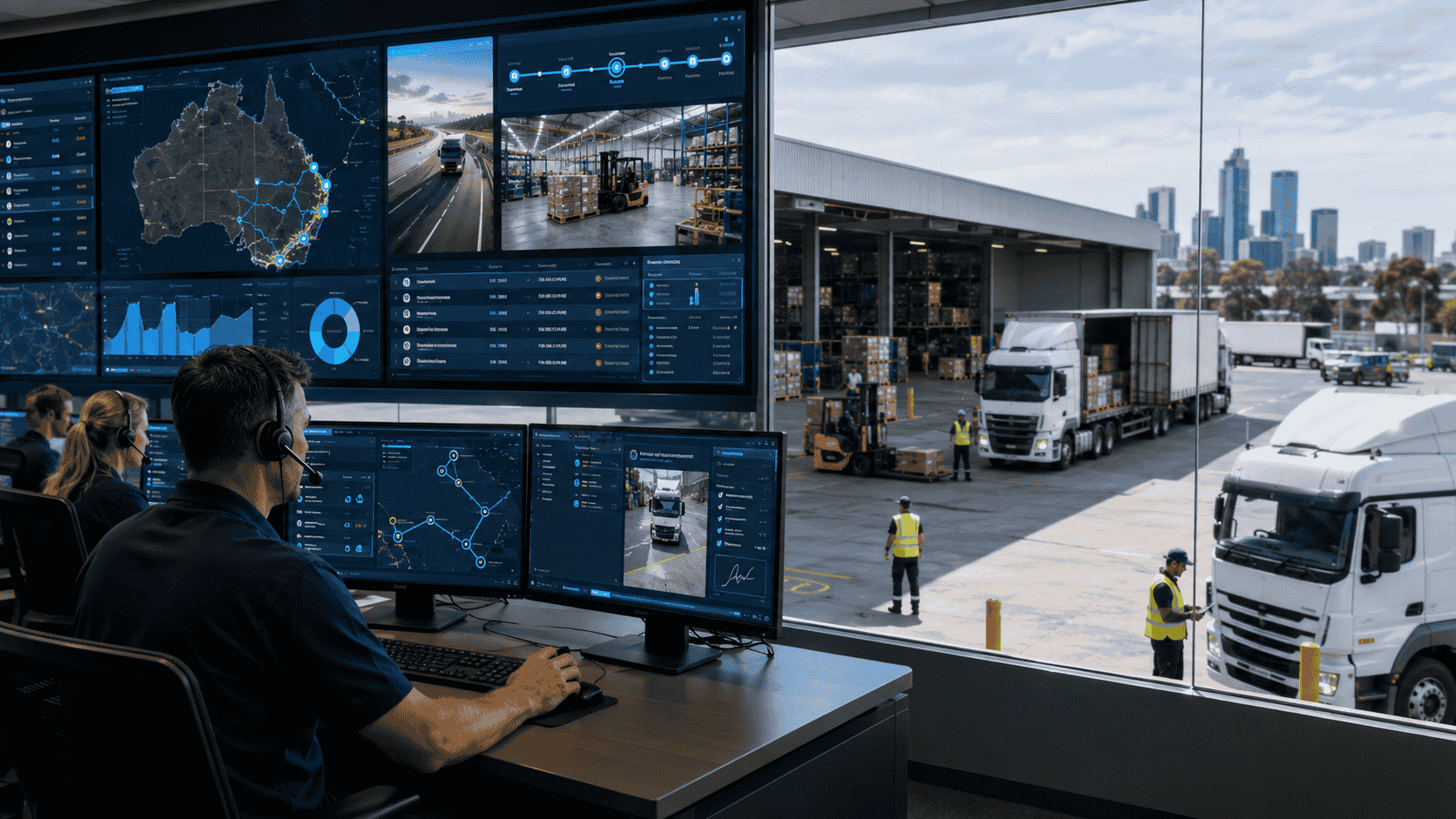
Freight logistics software — sometimes called Logistics Management Software (LMS) or a Transportation Management System (TMS) — is the engine room behind modern supply chain operations. It’s not just about tracking trucks; it’s about creating a connected ecosystem where every consignment, driver, and delivery is accounted for in real time.
When I talk to Australian operators, the biggest eye-opener usually comes when they realise that freight software doesn’t replace people — it amplifies them. It takes the grunt work out of repetitive admin, giving dispatchers, warehouse staff, and drivers the tools to make faster and smarter decisions.
Freight Management Systems (FMS): Keeping Shipments On Track
An FMS focuses on the nuts and bolts of freight operations — think of it as your digital traffic controller. It helps businesses manage load bookings, carrier selection, and route optimisation. In my early consulting days, a manufacturer in Brisbane used to manually book dozens of weekly linehaul runs using email chains. Shifting to an automated freight management platform cut their coordination time by half and reduced missed bookings by nearly 30%.
A strong FMS allows operators to:
Automate bookings and rate comparisons across multiple carriers
Generate accurate freight documents like bills of lading
Maintain compliance with local freight regulations, including NHVR mass and fatigue management standards
Optimise route plans to cut unnecessary kilometres
This shift is particularly important across Australia, where distances can be punishing. When you’re sending freight from Perth to Adelaide, every hour saved on the road adds up — in both cost and customer satisfaction.
Transportation Management Systems (TMS): The Bigger Picture
A TMS, on the other hand, is the full orchestral version of logistics software. It doesn’t just move freight — it plans, monitors, and refines every leg of the journey. Where an FMS might handle a single shipment, a TMS oversees your entire network.
I once worked with a retailer running multiple distribution centres — Sydney, Brisbane, and Perth. Before moving to a TMS framework, they treated each site as its own island. Their linehaul schedules overlapped, their rates varied wildly, and drivers often backhauled empty. Once a centralised TMS was introduced, their visibility skyrocketed. They began balancing loads between centres and reduced empty kilometres by 15%.
Typical TMS capabilities include:
End-to-end visibility across modes (road, sea, air, and intermodal)
Automated dispatch and settlement processes
Data-driven decision support for transport managers
Sustainability tracking, including CO₂ metrics per consignment
A TMS is ideal for businesses juggling multiple carriers and regions — the type of operators handling freight lanes between Sydney, Melbourne, and Perth, where network coordination is everything.
Core Features And Functionalities Of Freight Logistics Software
When freight software is set up properly, it acts like a conductor keeping the entire logistics orchestra in tune. Every component — from dispatching and invoicing to tracking and analytics — works together to make sure freight keeps moving, profitably and predictably.
I’ve seen operators in Sydney’s western industrial belt go from juggling spreadsheets and sticky notes to managing hundreds of consignments a day without breaking a sweat. That shift doesn’t happen overnight — it comes from adopting freight software with the right functionality mix.
Here’s what separates efficient digital freight systems from the ones that just look good on paper.
Automation And Workflow – Let The System Do The Heavy Lifting
Freight automation is where businesses start to see real gains. The first time I introduced automation to a regional carrier based in Dubbo, their dispatcher was shocked to see how much time they saved. Previously, they’d spend three hours each morning just matching loads to available trucks. The software cut that down to thirty minutes.
Automation covers:
Load scheduling — Automatically matching loads to available vehicles based on weight, destination, and driver hours.
Document creation — Bills of lading, customs forms, and manifests generated instantly.
Freight pricing and quotes — Automated rate comparisons across carriers ensure you don’t pay over the odds.
Invoicing — The system automatically reconciles freight charges against shipment data.
Workflow Area | Automation Benefit | Impact on Operations |
Load Scheduling | Matches trucks and routes automatically | Cuts dispatch time and human error |
Document Generation | Creates and stores key freight documents | Reduces compliance risk |
Pricing & Quoting | Compares carrier rates in seconds | Improves cost control |
Invoicing | Validates and reconciles invoices | Prevents overcharging |
In a country where fuel prices swing and road conditions vary, that sort of automation doesn’t just save money — it keeps your business agile.
Tracking And Visibility – Eyes On Every Load
If there’s one feature that’s become non-negotiable in modern freight operations, it’s real-time visibility. Customers expect to know where their freight is at all times — and so should you.
With real-time tracking, every pallet, crate, or container becomes visible from pickup to delivery. GPS data feeds back to your control centre, allowing dispatchers to pinpoint exact locations. In practical terms, this means if a truck is delayed on the Hume Highway due to a traffic incident, you can reroute the next leg or notify your customer before they even ask.
Typical visibility tools include:
Live tracking dashboards — showing all vehicles, routes, and ETAs.
Automated milestone alerts — “collected,” “in transit,” “arrived,” “delivered.”
Integrated IoT sensors — monitoring temperature, vibration, or seal integrity for sensitive goods.
A Melbourne-based food distributor I worked with relied on these sensors for perishable goods. When one truck’s chiller malfunctioned on the way to Albury, the system flagged the temperature rise instantly — saving the load from spoilage and the client from a ruined order.
That’s the power of real-time insight.
Optimisation – Getting The Most From Every Kilometre
Australia’s geography makes freight optimisation both a science and a survival skill. Every unnecessary detour burns time, fuel, and patience. Freight software now uses AI-driven optimisation tools that weigh factors like distance, roadworks, toll costs, and even weather patterns.
For example:
Route optimisation — calculates the most efficient path based on live data.
Load consolidation — combines compatible shipments to minimise empty space.
Intelligent load building — groups freight by delivery zones or timeframes.
Optimisation Function | Purpose | Operational Benefit |
Route Optimisation | Determines most fuel-efficient routes | Cuts fuel use and travel time |
Load Consolidation | Combines compatible shipments | Maximises truck utilisation |
Intelligent Load Building | Groups freight by delivery windows | Improves delivery accuracy |
When fuel prices hit record highs in 2024, one of my clients running long-haul lanes between Melbourne and Perth used their optimisation engine to reduce idle kilometres by 12%. Across a fleet of 40 prime movers, that translated into more than $180,000 in annual fuel savings.
Efficiency like that isn’t just good business — it’s survival.
Financial Management – Turning Data Into Dollars
Freight isn’t just about moving goods; it’s about managing the dollars tied to every kilometre. A good freight platform doubles as a financial watchdog.
Modern systems offer:
Automated freight invoice validation — catching duplicate or incorrect charges.
Freight audits — comparing actual costs against contract rates.
Fuel and cost tracking — monitoring fluctuating fuel levies, insurance, and surcharges.
One Sydney importer I assisted discovered, through automated audits, that nearly 5% of their invoices had errors — mostly incorrect weight charges. That single insight paid for the software in months.
With margins tightening across logistics, every dollar recovered goes straight back into keeping trucks on the road and customers happy.
Benefits Of Freight And Logistics Software
In the freight game, the difference between surviving and thriving often comes down to how efficiently you can move goods from A to B without losing money or time in between. Freight software isn’t a luxury anymore — it’s the backbone of how serious operators stay competitive in an unpredictable environment.
When I first started consulting for a medium-sized transport outfit near Wagga Wagga, the owner used to joke that he could “smell” when a shipment went off schedule. He wasn’t wrong — decades of experience gave him that gut instinct. But as his operation scaled to multiple depots, he couldn’t rely on instinct alone. Once freight logistics software came into play, the numbers did the talking — real-time visibility replaced guesswork, and efficiency became measurable.
Here’s how these systems make a tangible impact.
1. Cost Savings And Operational Efficiency
Freight costs are one of the biggest expenses for Australian businesses. Between fuel fluctuations, driver wages, and unpredictable surcharges, small inefficiencies can snowball quickly. Freight optimisation software helps stop that bleed.
Where the savings come from:
Route and load optimisation: Minimising dead runs and using predictive routing tools cuts kilometres and fuel use.
Automated workflows: Reduce administrative time and eliminate double handling of data.
Freight audits and invoice checks: Recovers lost money from billing errors — I’ve seen clients reclaim between 2% and 8% of freight spend this way.
Data-driven scheduling: Ensures trucks and drivers are used to their fullest capacity, reducing idle time.
Take an operator in Adelaide who managed refrigerated freight for supermarkets. Once they introduced automated route scheduling, their weekly overtime dropped by nearly 20%. Over a year, that meant enough savings to reinvest in two new trailers.
Efficiency Area | Traditional Issue | Software Solution | Outcome |
Manual Scheduling | Dispatchers are overwhelmed, and human error | Automated scheduling | 30% faster load assignments |
Manual Invoicing | Late or duplicate payments | Freight audit automation | 2–8% cost recovery |
Poor Route Planning | Drivers are taking inefficient routes | Route optimisation | Reduced fuel spend |
Idle Assets | Under-utilised fleet | Data-driven scheduling | Higher vehicle productivity |
Those numbers aren’t theoretical — they’re what I’ve seen time and again on the ground.
2. Enhanced Customer Experience
Customers don’t just want fast deliveries anymore — they want transparency. With e-commerce setting the benchmark, even B2B freight customers expect to track shipments like an online parcel.
Freight software gives your clients that visibility. Real-time tracking and milestone updates mean customers know where their freight is, what time it’ll arrive, and whether any delays are expected. This proactive communication changes the game.
I worked with a distributor in Melbourne who used to field dozens of “where’s my order?” calls every day. Once they implemented live tracking and automated ETA notifications, those calls dropped by 90%. Instead, they used that time to focus on improving service delivery.
Customer experience tools that make a difference:
Client portals for self-service tracking
Automated notifications via SMS or email for delivery milestones
Customised reports showing delivery performance and exceptions
That transparency builds trust — and in freight, trust is the real currency.
3. Risk Mitigation And Compliance
The Australian freight industry operates under some of the world’s strictest compliance regimes. Between NHVR fatigue laws, Chain of Responsibility (CoR) obligations, and dangerous goods handling, one oversight can cost dearly.
Modern freight systems minimise those risks. Automated documentation ensures all freight movements comply with required standards. Real-time tracking also provides an audit trail, useful if an incident or compliance check arises.
Examples of compliance benefits:
Automated record-keeping for fatigue management and driver hours.
Geo-fencing alerts for high-risk areas like construction zones or tunnels.
Digital proof of delivery (POD) with time and location stamps.
Integrated safety checks before dispatch.
I once helped a bulk freight operator in Newcastle streamline their CoR documentation. Before digitising, every compliance form lived in a filing cabinet — and finding one for an audit could take hours. Now, they pull up documents instantly, complete with timestamps and driver data. That’s not just convenient; it’s peace of mind.
4. Strategic Decision-Making Through Data
Freight software isn’t only about moving boxes faster — it’s about using data to plan smarter. By analysing delivery performance, cost trends, and carrier efficiency, managers can spot patterns that weren’t visible before.
Data insights in action:
Identifying underperforming routes or carriers.
Tracking delivery punctuality and fuel consumption trends.
Forecasting demand peaks — particularly handy around Christmas or the end of the financial year.
For example, a Queensland freight company I worked with noticed through analytics that one of their main lanes consistently ran below load capacity mid-week. They adjusted schedules, combined routes, and saved roughly $2,500 per week.
When you put that kind of intelligence into the hands of decision-makers, you’re no longer reacting to problems — you’re preventing them.
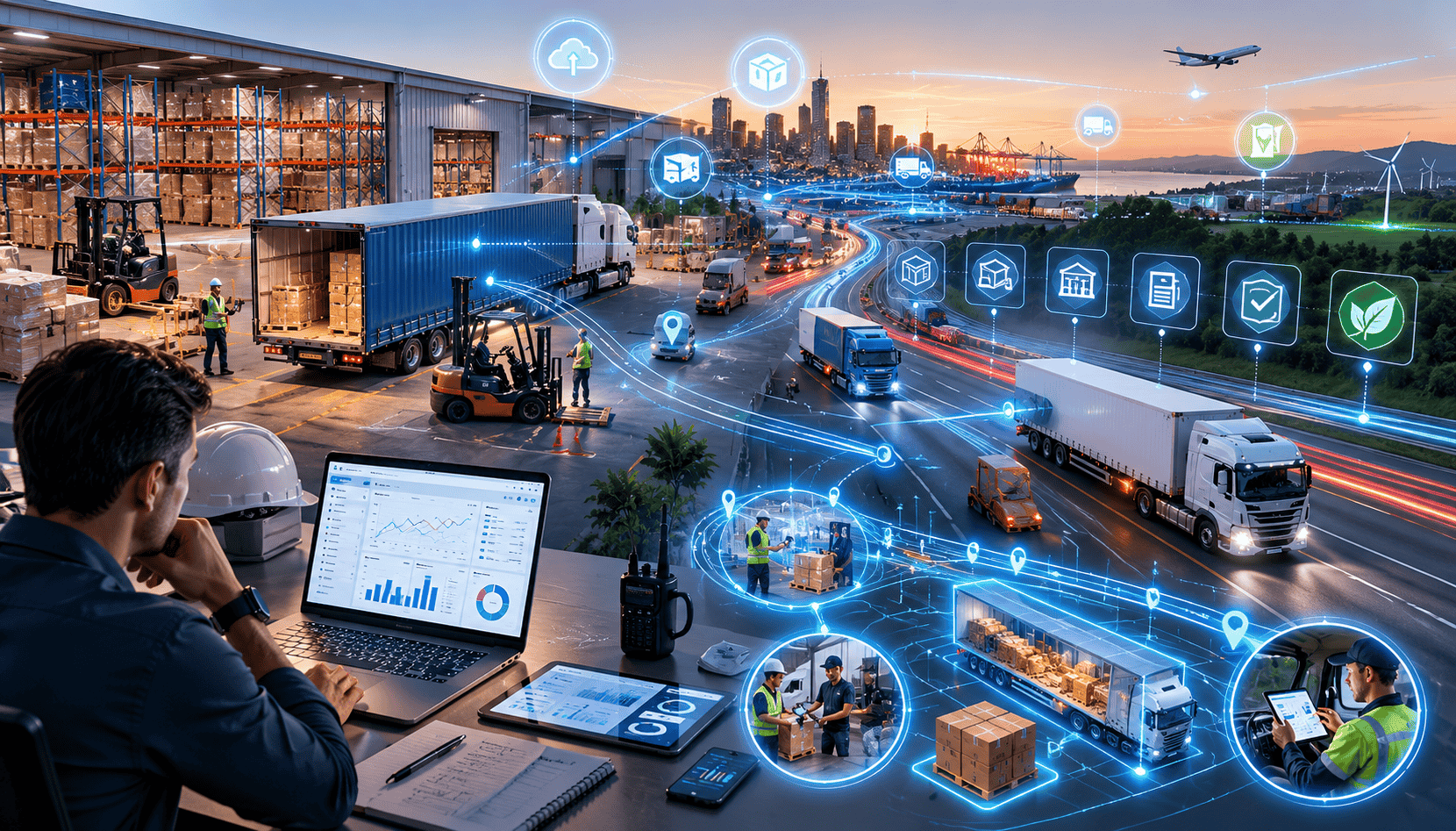
Australian freight operators are under more pressure than ever — tighter margins, rising costs, and customers expecting real-time updates on every consignment. Freight software gives you the control, visibility, and efficiency to stay ahead of the pack.
I’ve seen firsthand how digital systems transform small family-run carriers into streamlined national players. From automating invoices to predicting the best routes across the country, these tools remove the guesswork and let your team focus on what really matters — keeping freight moving safely and profitably.
Whether you’re sending containers out of Fremantle, running overnight routes from Sydney to Melbourne, or coordinating warehouse stock across the east coast, logistics software ties every moving part together. It’s not about replacing people; it’s about giving them better tools to do the job.
The operators that embrace technology now will be the ones setting the pace tomorrow.
Frequently Asked Questions
What Is Freight Logistics Software And How Does It Work?
Freight logistics software is a digital platform that manages, tracks, and optimises freight movements across different modes of transport. It automates manual processes like booking, invoicing, and route planning, while providing live updates and analytics to improve decision-making.
How Does Freight Software Help Reduce Costs?
By automating repetitive tasks and using data to optimise routes, freight software cuts wasted kilometres, prevents overcharges, and improves truck utilisation. Many Australian operators recover between 2% and 8% of their freight spend through digital invoice auditing and better load planning.
Is Freight Software Suitable For Smaller Transport Operators?
Yes. Even small carriers benefit from automation and tracking. In fact, smaller operators often see faster payoffs because the jump in efficiency is immediate — less paperwork, fewer missed deliveries, and more accurate scheduling.
How Does Freight Software Improve Compliance In Australia?
Freight systems help meet Australian standards for fatigue management, Chain of Responsibility (CoR), and dangerous goods handling. Automated record-keeping, driver logs, and proof of delivery create a verifiable digital trail — ready for audits or NHVR inspections.
What Trends Are Shaping The Future Of Freight Management?
Artificial intelligence, cloud technology, and IoT sensors are transforming freight operations. From predictive routing that adapts to weather and traffic, to blockchain-backed security for documentation, the future of freight management is fast, connected, and data-driven.