
Benefits of Advanced Shipping Notice
19 August 2022

In more than twenty years of working in freight and warehouse operations across Australia, I’ve seen plenty of technology promises come and go. But one tool that’s quietly transformed the way goods move through our supply chains is the Advanced Shipping Notice (ASN).
Think of it as the digital “heads-up” every warehouse wishes it had ten years ago. Long before a truck rolls into a depot in Sydney or a container lands at Fremantle, the ASN lets the receiving team know exactly what’s coming — down to the last pallet, carton, or SKU. It’s a small change in communication that’s produced some very big results.
In Australia’s freight landscape — where distances are vast, delivery schedules tight, and compliance with major retailers like Coles or Woolworths leaves little room for error — the ASN has become more than just an efficiency tool. It’s the foundation of proactive logistics.
Let’s break down why this seemingly simple document is now a non-negotiable for any business serious about supply chain performance.

Enhanced Operational Efficiency And Streamlined Receiving
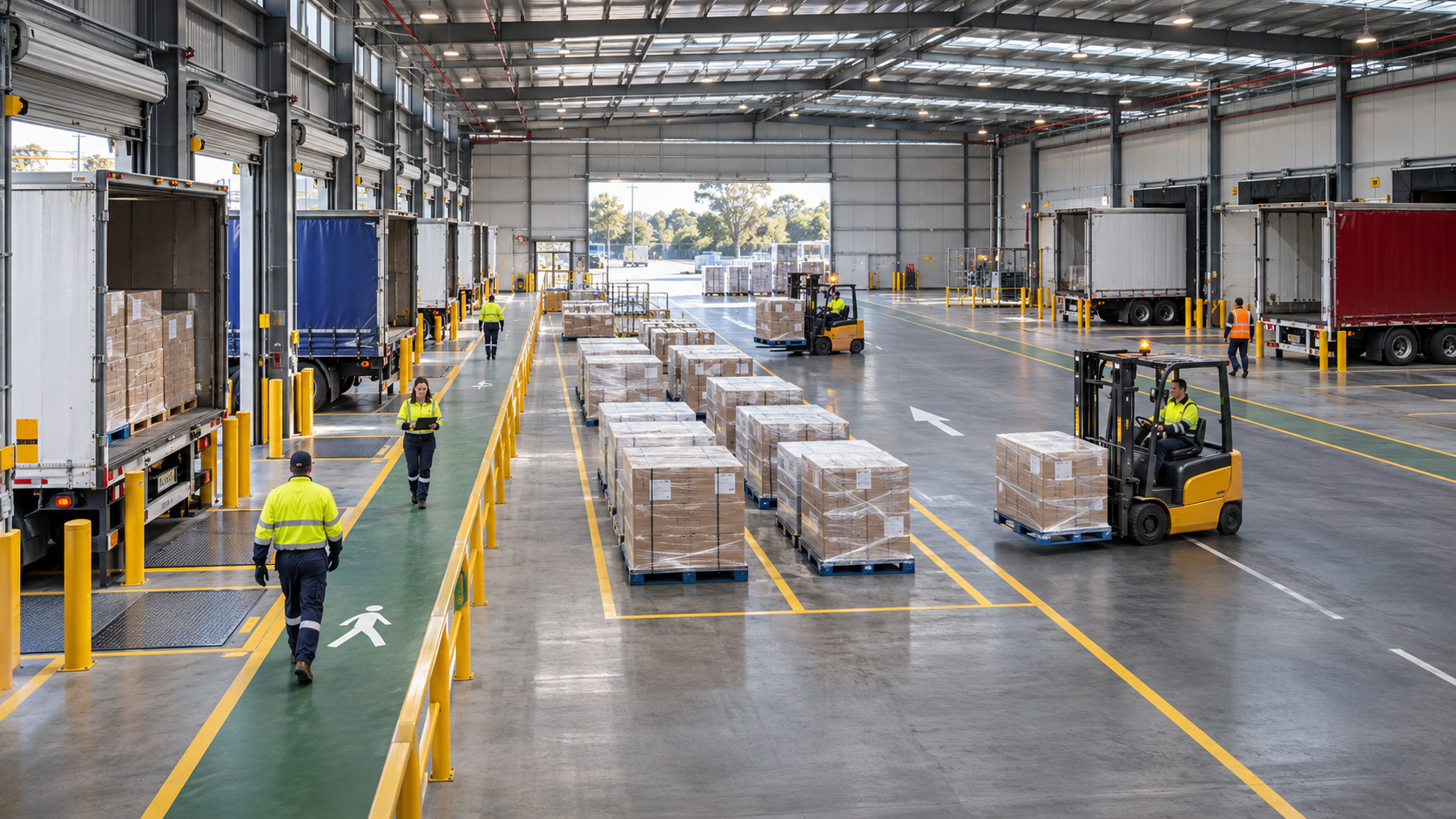
I’ll never forget walking into a regional DC near Melbourne one peak Christmas season. Pallets were lined up three deep on the receiving docks, drivers were getting restless, and the warehouse manager looked like he hadn’t had a coffee break in two days. The problem? Trucks were showing up unannounced, and no one knew what was in them until they were unloaded.
That chaos used to be the norm — until ASNs became standard practice.
Faster And More Accurate Receiving
When a supplier sends through an ASN before a truck hits the gate, it’s like giving the warehouse a playbook before the game. The receiving team knows what’s arriving, how it’s packed, and where it’s headed. They can allocate staff, prepare scanners, and even pre-print labels if needed.
For example, a food distributor in Brisbane introduced ASNs across its supplier network and saw receiving time drop by nearly 40%. Forklifts no longer sat idle waiting for instructions. Pallets were scanned and processed on arrival, and errors in product counts almost disappeared.
Process Step | Without ASN | With ASN |
Unloading & check-in | 45 mins per truck | 25 mins per truck |
Data entry errors | Common | Rare |
Dock congestion | Frequent | Minimal |
Those numbers tell the story. With advanced notice, receiving becomes predictable, not reactive.
Optimal Resource Allocation
Every warehouse manager in Australia knows the pain of juggling labour costs. Bring in too many casuals and you’re wasting payroll; too few, and trucks queue out the gate. ASNs take the guesswork out of scheduling.
When you know that five inbound loads are hitting the Sydney DC between 8 am and 10 am, you can roster staff accordingly and stage pallets or forklifts in advance. This prevents bottlenecks — and, importantly, keeps fatigue management in check, which is a growing safety focus under NHVR (National Heavy Vehicle Regulator) compliance.
It’s also a major win for smaller warehouses that don’t have the luxury of a night shift. With ASNs, they can plan early morning receipts precisely and avoid overtime.
Enables Cross-Docking And Flow-Through Distribution
ASNs are the backbone of cross-docking — that high-speed model where goods skip storage and move straight from inbound to outbound. In large-scale operations, particularly FMCG networks, the ASN data includes store destinations and pallet configurations, allowing cartons to be sorted and redirected the moment they hit the DC floor.
A good example is how many national retailers use ASNs to pre-allocate shipments to specific stores. A supplier might pre-label cartons for Coles’ stores in NSW, so when the truck arrives in Sydney, those pallets go straight to the outbound dock. No double handling. No lost time.
Cross-docking has been around for decades, but it only runs smoothly when paired with solid ASN data. It’s the digital thread that ties inbound visibility to outbound execution.
Automated Receiving Integration
Gone are the days of clipboards and manual entry. When ASNs are transmitted electronically — typically via EDI 856 — they integrate directly with warehouse management systems (WMS). As soon as the truck arrives, scanning a barcode on the carton automatically matches it to the digital record.
This automation has reshaped how many Australian operations run inbound logistics. Some companies I’ve worked with now generate inbound delivery documents automatically, accept stock with a quick scan, and send confirmation data back to the supplier — all without typing a single line.
Not only does this reduce labour, it improves data accuracy and strengthens compliance reporting. For industries that need traceability — pharmaceuticals, food, even automotive parts — that accuracy is priceless.
Improved Inventory Accuracy And Visibility
A good mate of mine runs a warehouse in Adelaide that supplies parts to the mining sector. Before implementing ASNs, they often faced what he called “ghost stock” — items that existed on paper but weren’t actually in the racks. It wasn’t unusual for a picker to chase down an order, only to discover it hadn’t arrived yet or was still sitting unopened in receiving.
Since adopting Advanced Shipping Notices, those problems have practically vanished. Now, when a shipment leaves a supplier, the warehouse already knows what’s on its way, when it’s due, and what quantities to expect. It’s a complete shift from guesswork to precision.
Real-Time Stock Tracking
ASNs make stock visibility a live process. Instead of waiting until a truck has been unloaded and scanned, inventory systems can update in real time, showing goods in transit as a separate category. This visibility means planners can act sooner — confirming stock allocations, updating customer orders, or shifting deliveries before the truck even hits the dock.

For example, if an electronics distributor in Sydney sees that a shipment of routers is delayed by 24 hours, the sales team can immediately adjust customer ETAs rather than scrambling later. That level of foresight saves face with clients and avoids the dreaded “we’ll have to backorder that” phone call.
Visibility Stage | Before ASN | With ASN |
In-transit visibility | Limited or delayed | Real-time tracking |
Order allocation | After delivery | Before arrival |
Customer communication | Reactive | Proactive |
Optimised Inventory Levels
Carrying excess inventory ties up working capital, and in today’s high-interest environment, that’s a costly mistake. ASNs give planners the confidence to run leaner stock levels because they have solid, reliable data on what’s coming and when.
Many Australian retailers now rely on ASNs to fine-tune just-in-time (JIT) replenishment. Take a major grocery DC in Perth, for instance — by integrating ASNs with their ordering system, they were able to cut their safety stock by nearly 20%. That might not sound huge, but across millions of cartons, it’s a significant cash saving and a big boost to warehouse efficiency.
On the flip side, for businesses serving rural or regional customers, ASNs help avoid stockouts by signalling delays early enough to re-route goods or communicate with buyers before issues escalate.
Better Forecasting And Planning
Forecasting accuracy relies on data integrity. Without knowing exactly what’s coming in and when, planners are working blind. ASNs provide the missing link between supplier dispatch and warehouse receipt — effectively synchronising supply chain events.
For instance, manufacturers in sectors like construction or automotive can use ASNs to align production schedules. If an inbound shipment of components from Queensland is delayed, the plant can reschedule assembly runs instead of shutting down a line mid-shift.
In seasonal industries — say, beverages during summer — that visibility can make or break on-time fulfilment. When your entire supply chain has sight of upcoming arrivals, everyone from procurement to delivery drivers can plan accordingly.
Granular Traceability
Traceability has become more than a buzzword; it’s a compliance requirement. For products with expiry dates, serial numbers, or batch codes, ASNs add another layer of traceable data. Each pallet or carton can be tied to its specific lot, country of origin, or production date — information that’s invaluable in case of recalls or audits.
I once worked with a cosmetics importer in Melbourne that faced a product recall. Because they’d implemented detailed ASNs capturing batch-level data, they isolated affected stock within hours. Previously, that process could have taken days — not to mention costing a small fortune in unnecessary returns.
In industries like pharmaceuticals or fresh produce, this kind of traceability isn’t optional. Regulators such as the Therapeutic Goods Administration (TGA) and Food Standards Australia New Zealand (FSANZ) require robust tracking and documentation. ASNs make compliance far easier to manage and verify.
Reduction Of Errors And Costs
If you’ve ever worked a warehouse floor during peak season, you’ll know that mistakes don’t just happen—they multiply. One missed carton can snowball into hours of reconciliation, lost sales, and frustrated customers. I’ve seen warehouses in Sydney lose thousands of dollars in a single afternoon simply because one inbound shipment wasn’t documented properly.
The Advanced Shipping Notice takes most of that pain out of the equation. By digitising and automating inbound shipment details, ASNs drastically cut down on manual handling, data entry errors, and miscommunication between suppliers and receivers.
Minimising Manual Errors
Before ASNs, receiving clerks relied heavily on paper manifests, phone calls, or email confirmations. In high-volume operations, it was easy for details to go missing. Now, with an Electronic Data Interchange (EDI) format like the EDI 856, all shipment data is transmitted directly from the supplier’s system to the buyer’s.
That means no double entry, no misplaced paperwork, and fewer human errors. In fact, a national retailer I worked with saw inbound discrepancies fall by over 60% within three months of enforcing ASN compliance across their supplier network.
Here’s a quick snapshot of what that looked like in practice:
Error Type | Before ASN Implementation | After ASN Implementation |
Incorrect quantities recorded | Frequent | Rare |
Lost paperwork | Common | Eliminated |
Mismatched SKUs | Occasional | Minimal |
Manual data rework | High | Negligible |
That’s not just a win for efficiency—it’s a direct hit on operational costs. Every minute saved on data correction is a minute spent on value-added work.
Accurate Reconciliation
ASNs serve as a digital checklist for every inbound shipment. As goods arrive, warehouse teams can scan and cross-check items against the ASN data and purchase order instantly. If there’s a shortfall, overage, or substitution, the system flags it automatically.
One transport client in Newcastle shared how this feature reduced reconciliation time by nearly 80%. Instead of manually counting and comparing every pallet, they relied on scan verification linked to the ASN record. The result? Faster receiving cycles and fewer disputes with suppliers.
For businesses dealing with high-value or sensitive products—electronics, pharmaceuticals, or perishables—this level of accuracy prevents serious financial loss. A single miscount in those industries can mean hundreds or even thousands of dollars down the drain.
Cost Avoidance
In logistics, the real savings often come from what doesn’t go wrong. When ASNs are properly integrated, they eliminate a range of hidden costs—freight expedites, rework, chargebacks, and penalty fees.
Many major retailers in Australia now impose compliance fines for suppliers who fail to send ASNs or send inaccurate data. Those chargebacks can add up fast. I once advised a supplier who was losing tens of thousands each quarter to such penalties. Within months of tightening their ASN process, those costs disappeared.
Here’s a simple cost checklist showing the most common savings areas after ASN adoption:
Cost Avoidance Checklist
Elimination of manual data entry labour
Reduced chargebacks for late or missing ASNs
Fewer expedited freight charges due to inventory errors
Decrease in warehouse overtime during peak receiving
Lower insurance claims from shipment discrepancies
Implementing ASNs doesn’t just cut waste—it drives discipline into the supply chain. Everyone from the supplier to the store team operates on the same digital truth.
Improved Collaboration And Customer Service
One of the biggest misconceptions about logistics is that efficiency is all about trucks, forklifts, and software. In reality, it’s about people working in sync. The Advanced Shipping Notice bridges the communication gap between suppliers, carriers, and receivers — turning what used to be guesswork into coordinated action.
I’ve seen firsthand how ASNs can transform relationships. Years ago, I was consulting for a Sydney-based FMCG distributor struggling with inconsistent supplier deliveries. Pallets were arriving late, paperwork was missing, and customer service teams were constantly chasing updates. Once they implemented ASNs across their supplier base, the difference was night and day. The phone stopped ringing with complaints, and the warehouse finally ran on schedule.
Enhanced Supply Chain Coordination
The beauty of an ASN lies in its transparency. Everyone — from the supplier’s dispatch team to the buyer’s DC scheduler — sees the same shipment data in real time. That means fewer crossed wires, fewer “where’s my truck?” calls, and far smoother operations.
In Australia’s tightly linked freight environment, this coordination is gold. Imagine a refrigerated carrier heading from Shepparton to Sydney with fresh produce. If the retailer’s receiving dock knows the exact load and ETA, they can stage cold storage and staff accordingly. That’s not just efficient — it’s the difference between fresh stock and spoilage.
Here’s a simple breakdown of how ASNs improve communication flow:
Stakeholder | Pre-ASN Communication | Post-ASN Communication |
Supplier | Phone/email updates | Automated, digital shipment notice |
Transport Provider | Manual manifests | Integrated EDI data |
Receiver/Warehouse | Last-minute scheduling | Advanced dock planning |
Customer Service | Delayed updates | Real-time shipment visibility |
Stronger Business Relationships
Trust in logistics is built on reliability. When a supplier consistently provides accurate, timely ASNs, it sends a clear message — we’re organised, and we value your time. That reliability often reflects on supplier scorecards, leading to higher ratings, repeat contracts, and preferred vendor status.
I’ve worked with a packaging manufacturer in Western Australia that climbed two tiers up their customer’s preferred supplier list purely due to improved ASN performance. They didn’t change their product — just the way they communicated. It’s a perfect example of how operational discipline translates into commercial advantage.
Faster Dispute Resolution
Every logistics manager has faced the “he said, she said” moment — a supplier claims they shipped everything, while the receiver insists something’s missing. The ASN cuts through that noise by creating a digital audit trail. Every carton, pallet, and delivery detail is logged before the goods even leave the supplier’s dock.
So when a discrepancy arises, there’s no finger-pointing — just clear data. I recall a Brisbane importer who reduced claims resolution time from days to hours simply because they could pull up ASN records to verify exactly what was dispatched.
Superior Customer Fulfilment
In an era where customers expect Amazon-style visibility, ASNs deliver a competitive edge. Retailers and distributors can provide accurate tracking updates, estimated delivery times, and backorder alerts. When customers know where their orders are — and when to expect them — satisfaction skyrockets.
One Australian homeware retailer began using ASNs for its drop-ship program. With suppliers feeding live shipment data directly into the retailer’s system, online customers started receiving automated “your order is on its way” updates. Complaints about late deliveries dropped by over 50% in a single quarter.
ASNs also enable pre-selling — allowing retailers to list inbound inventory as available stock before it even arrives. For fast-moving items like electronics or seasonal goods, this capability prevents lost sales and improves stock turnover.
After two decades in freight, I’ve come to see the Advanced Shipping Notice (ASN) as one of the most underrated tools in logistics. It doesn’t require fancy hardware or massive investment, yet it transforms how businesses handle goods, people, and data.
In a country like Australia—where distances are vast, labour costs are high, and precision matters—ASNs close the communication gap that causes so much waste. They enable better planning, faster receiving, cleaner data, and stronger trading relationships. Every supply chain leader I’ve worked with who’s adopted ASNs says the same thing: once you implement them, you’ll never go back to guessing what’s arriving next.
ASNs don’t just make operations smoother; they build trust. Suppliers deliver with confidence. Warehouses run like clockwork. Customers receive accurate updates. And management finally gets the visibility they’ve been chasing for years.
If there’s one takeaway, it’s this: an ASN isn’t just an electronic document—it’s a competitive advantage.
Let's Get Straight To The Point
What it is: An Advanced Shipping Notice (ASN) is an electronic document that tells buyers what’s coming in a shipment before it arrives.
Why it matters: It bridges communication between suppliers, carriers, and warehouses to improve efficiency, visibility, and data accuracy.
- Key benefits:
Cuts receiving time by up to 40%.
Boosts inventory accuracy through real-time tracking.
Reduces costly human errors and chargebacks.
Enhances supplier collaboration and trust.
Improves customer satisfaction with timely updates.
Result: Streamlined inbound logistics, lower costs, and stronger relationships across the supply chain.
Frequently Asked Questions
What Is An Advanced Shipping Notice In Logistics?
An Advanced Shipping Notice (ASN) is an electronic message sent by a supplier or 3PL to notify a buyer about an upcoming delivery. It details what’s being shipped, how it’s packed, and when it’s due to arrive.
Why Is An ASN Important In Supply Chain Operations?
ASNs provide early visibility into inbound goods. This helps warehouses prepare for receipt, plan labour, and reduce dock congestion. In modern supply chains—especially those operating just-in-time—this foresight is essential.
How Do ASNs Improve Inventory Accuracy?
ASNs feed live data into inventory systems, showing goods in transit and expected delivery times. This prevents overstocking, stockouts, and data mismatches. Businesses can confidently lower safety stock and rely on precise replenishment.
Can ASNs Reduce Costs For Businesses?
Absolutely. By eliminating manual data entry, reducing errors, and improving dock efficiency, ASNs save both time and labour costs. Many companies also avoid chargebacks from large retailers for missing or inaccurate ASNs.
How Are ASNs Used In Australia’s Logistics Environment?
In Australia, ASNs are commonly transmitted via Electronic Data Interchange (EDI), especially between suppliers and major retailers. They’re critical for national networks where long transit times, remote locations, and tight delivery windows demand accurate pre-notification.