
Cario | All in one Freight Tracking Software
13 November 2023

Freight management, especially in a vast country like Australia, can feel like juggling a hundred balls at once.

With thousands of carriers, a complex supply chain, and the unpredictable nature of weather and terrain, keeping track of every shipment is no small feat. But what if there was a way to simplify the chaos? An all-in-one solution that centralises operations, gives real-time insights, and streamlines communication across every stage of the journey? That’s where an advanced freight tracking software comes into play—transforming how businesses manage and optimise their freight operations.
Backed by the logistics expertise of Freight People and powered by the intelligent capabilities of Cario, businesses can seamlessly connect strategy with execution across their entire freight network.
Why The Right Freight Tracking Software Is Essential For Australian Businesses?
The Challenge Of Managing Freight In A Land Of Extremes
Australia is a country of vast distances, ranging from the tropical north to the temperate south, and from bustling cities to remote outback communities. Logistics here is a unique beast, requiring a freight system that can handle both the complexity of multi-carrier integration and the distinct challenges posed by Australia's diverse climate and terrain. This isn’t just about moving goods from point A to point B. It’s about ensuring that products get to customers efficiently, on time, and with full visibility along the way.
As someone who’s spent years working in the Australian logistics sector, I’ve seen firsthand the headaches that come with managing these systems manually. Tracking shipments across hundreds of carriers, updating spreadsheets, and dealing with unexpected delays can lead to not only stress but costly inefficiencies. Many businesses, especially smaller ones, struggle to compete with larger counterparts simply because their logistics processes are outdated or fragmented.
Real-Time Tracking: A Game-Changer For Businesses And Customers Alike
One of the biggest turning points I’ve experienced in freight management came when we started using a solution that offered real-time tracking. Suddenly, the ability to track shipments from door to door wasn’t just a luxury—it was a necessity. The difference was night and day. Imagine having the power to track your freight down to the minute, receiving updates directly to your phone or email, and even adjusting routes on the fly if things go off course. This level of transparency and control has not only saved businesses time but also boosted customer satisfaction. And in a competitive market like ours, that’s what truly sets businesses apart.
Core Features Of An All-In-One Freight Tracking Solution
Real-Time Tracking: The Key To Smooth Operations
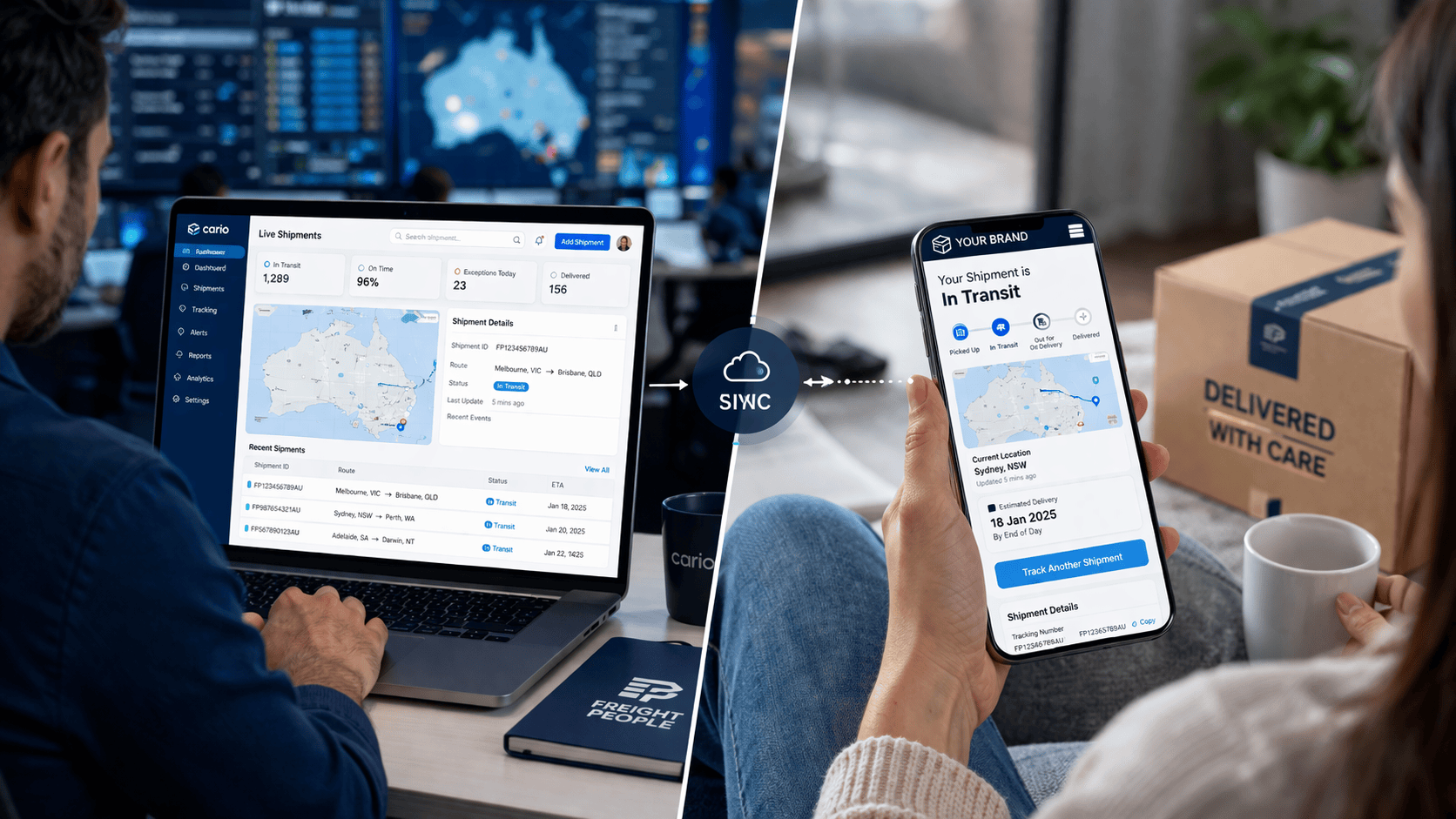
When it comes to freight management, nothing beats the ability to know exactly where your goods are at any given moment. Gone are the days of waiting for a call from the driver or frantically searching through a pile of paperwork for tracking details. With an all-in-one freight tracking system, every shipment is tracked in real-time, providing updates on its location, status, and estimated delivery time.
For example, I remember managing a complex delivery from Melbourne to a remote region in the Northern Territory. The journey was long, and with frequent stops and changing routes due to weather conditions, it was hard to keep up with the delivery’s progress. But with real-time tracking, we could monitor every stage of the journey. Not only did this reduce stress, but it also allowed us to anticipate any delays before they became a problem. We could easily notify the customer about new estimated delivery times, keeping them informed and confident in our service.
Branded Track & Trace: A Seamless Customer Experience
One of the standout features of a comprehensive freight tracking system is the branded self-serve track and trace. This feature allows businesses to offer their customers a personalised tracking page where they can monitor their orders in real-time. It’s like giving your customers a backstage pass to the freight process.
For instance, consider the example of a local supplier in Sydney who deals with frequent, high-value shipments. Instead of having customers call in every time they need an update, the supplier provides a link to their branded track and trace page. The customer can simply enter their tracking number and see exactly where their goods are. Not only does this reduce the load on customer service teams, but it also boosts customer satisfaction by providing them with the autonomy to check the status of their shipments whenever they want.
Alerts And Notifications: Staying Ahead Of Potential Issues
One of the most time-consuming aspects of freight management is responding to customer inquiries about delays or shipment statuses. But what if you could automate these updates and proactively alert customers when something changes? This is where advanced alerts and notifications come into play.
Let me share a quick story: A few years ago, we were handling a large shipment for a client based in Brisbane. The freight was stuck in transit due to unforeseen weather conditions in central Queensland. Normally, this would have led to a series of frustrated customer calls, wondering why their goods hadn’t arrived yet. However, thanks to automated alerts, we had set up the system to send out notifications at every stage—whether it was a delay due to weather, a new estimated time of arrival, or a successful delivery. Not only did this reduce customer inquiries, but it also gave the customer peace of mind, knowing we were staying on top of things.
With a fully integrated freight management system, you can set up custom alerts for key milestones in the shipment journey. Whether it’s an unmanifested freight, a failed booking, or delays beyond a certain threshold, automated notifications ensure your customers are never left in the dark, and your team can focus on resolving issues rather than handling constant inquiries.
Proof Of Delivery (POD): Streamlining Documentation And Reducing Customer Service Time
When dealing with freight, the importance of capturing accurate and timely Proof of Delivery (POD) cannot be overstated. In the past, getting a POD required waiting for physical documentation, scanning, and often having to chase up carriers. This caused unnecessary delays and potential discrepancies, especially if the freight was delivered in remote areas.
With the latest all-in-one tracking systems, PODs are captured digitally and stored in real time. This is a game-changer. For example, a client in regional Victoria once faced delays in retrieving PODs for deliveries made to rural areas. With the new system in place, PODs are immediately captured through digital signatures and photos at the point of delivery. This means no more back-and-forth with the driver or waiting for faxed forms. It’s stored in the cloud and can be accessed with a few clicks, providing full transparency and making dispute resolution far quicker and easier.
Not only does this reduce customer service time, but it also helps build trust with your customers, who can instantly verify delivery statuses without delays. The system integrates with your existing workflows, meaning you can access PODs directly within the same interface that tracks your freight.
Multi-Carrier Consolidation: Simplifying Complex Freight Networks
Australia’s logistics landscape is notoriously fragmented, with over 10,000 carriers operating across the country. Managing each carrier separately, with different systems and data formats, can quickly become overwhelming for any business. This is where a comprehensive, all-in-one freight tracking solution shines.
Imagine trying to consolidate freight from hundreds of different carriers without a unified system. It’s like trying to manage a dozen different spreadsheets, all with different formats and varying levels of accuracy. The time lost just to compile data is enough to make anyone’s head spin.
When I first started working in logistics, I spent hours each week just trying to piece together information from different carriers. Today, however, with a multi-carrier consolidation system, the integration is seamless. Whether it's for a local delivery from Sydney to Melbourne or a cross-border shipment to Perth, all carrier data is consolidated in one platform. This not only saves time but also improves the accuracy of delivery tracking and reporting, giving businesses the ability to quickly respond to delays, reroute shipments, or consolidate shipments for cost savings.
For example, in a recent project, a large Australian retailer was able to centralise shipment data from over 350 carriers into one system, providing a unified status update for every delivery. The result was fewer errors, faster response times, and better overall supply chain control.
Integrating FMS And TMS: A Holistic Approach To Freight Management
One of the standout features of an all-in-one freight tracking system is its ability to integrate both Freight Management System (FMS) and Transport Management System (TMS) functionalities. This holistic approach allows businesses to manage both external carriers and internal fleets from a single platform, ensuring a smooth, uninterrupted supply chain.
As someone who’s worked with both small businesses and large enterprises, I’ve seen how complex it can be to manage both third-party carriers and your own fleet. For example, when managing a delivery route for a client in Queensland, we had to coordinate with both an external freight carrier and our own fleet to optimise the delivery process. Coordinating between two different systems was a nightmare. But with an integrated system, the same software handles both aspects, ensuring routes are optimised and drivers are in sync. Drivers can receive job details, route updates, and capture PODs using a mobile app, all while syncing data in real time with the main system.
This integration doesn’t just make things easier; it improves efficiency and reduces the potential for errors. For large companies managing fleets and external carriers simultaneously, this feature is invaluable, especially when it comes to scaling operations.
Key Features And Capabilities Of All-In-One Freight Tracking
Automation: Streamlining Freight Decisions
Automation in freight management can transform how businesses operate. With an all-in-one system, businesses can automate freight decisions based on predefined rules, such as selecting the lowest-cost carrier or the fastest delivery option. This not only reduces manual input but also minimises the risk of errors. For instance, automating invoice reconciliation can save hours of manual work and significantly reduce the risk of billing discrepancies, which is crucial given the 5-7% of Australian freight invoices that are often incorrect.
Optimisation: Route And Cost Efficiency
An all-in-one freight solution doesn’t just track shipments—it helps optimise the entire journey. For example, Cario’s Last Mile Route Optimisation ensures that freight is delivered in the most cost-effective way, factoring in delivery time, cost, and even carbon emissions. This real-time decision-making improves efficiency and reduces the operational costs for businesses. It’s like having a virtual traffic controller ensuring that every delivery gets to its destination in the best possible way.
Integration: Seamless Data Exchange
Integration is key to making freight management efficient. With native integration into ERP and WMS systems like SAP, Netsuite, and Shopify, all the data flows in real time across platforms, ensuring there are no delays or errors in tracking shipments, invoicing, and even financial reporting. This integration eliminates the need to manually input data into multiple systems, saving businesses valuable time and ensuring data consistency.
The Impact Of All-In-One Freight Tracking On Customer Experience
Enhanced Visibility = Happier Customers
Providing customers with visibility throughout their shipment’s journey is a game-changer. With features like Branded Track & Trace and Automated Notifications, businesses can keep their customers informed at every step, reducing call volumes and customer anxiety. A client I worked with in Melbourne implemented this, and they saw a 20% reduction in customer service calls because customers could track their shipments directly. Not only does this save time, but it also builds trust and improves the overall customer experience.
Proof Of Delivery (POD) Made Simple
Gone are the days of chasing paper PODs. With integrated systems, every delivery can be captured digitally and stored in real-time. This not only speeds up the process but also improves accuracy. For example, in a large-scale operation, having POD data instantly available means quicker disputes resolutions and better customer service. This digitalisation is crucial, especially for businesses that handle large volumes of shipments daily.
Scalability: Adapting To Business Growth
One of the standout features of an all-in-one freight tracking system is its scalability. Whether you're managing a handful of shipments or handling thousands daily, the software can adjust to your needs. For instance, a local supplier in Sydney was able to scale from managing 200 consignments per month to over 2,000 with minimal operational disruption. The system effortlessly handled the increased load, optimising routes, and tracking shipments in real time.
Flexibility For Various Business Needs
As businesses grow, their logistics needs evolve. An all-in-one system adapts to these changes, offering flexible features like route optimisation and multi-carrier support. Whether it’s adjusting delivery routes based on traffic or selecting the most cost-efficient carrier for a shipment, the software ensures businesses are always ahead of the curve.
Cost Savings: Efficiency In Every Aspect
An all-in-one freight tracking solution can significantly reduce costs by automating tedious tasks such as booking, invoicing, and freight decision-making. For instance, a client in Brisbane saved 15% in operational costs within the first three months of using an automated system. This was achieved by eliminating manual invoice reconciliations and optimising delivery routes, proving that automation isn’t just a convenience—it's a competitive advantage.
Optimising Carrier Selection And Freight Spend
In logistics, choosing the right carrier for each shipment can make a huge difference in costs. With an integrated system, businesses can automatically select the best carrier based on cost, delivery time, or environmental impact. This ensures that each shipment is optimised for cost-efficiency without sacrificing service quality.
Sustainability: Eco-Friendly Freight Management
Sustainability is becoming increasingly important in the logistics industry, and businesses are looking for ways to reduce their environmental impact. An all-in-one freight system helps track carbon emissions across different carriers, routes, and shipments. For example, a Melbourne-based business implemented a Scope 3 Carbon Calculator to measure emissions and adjusted its delivery routes accordingly. This not only helped the company reduce its carbon footprint but also aligned with their sustainability goals.
Making Freight Operations More Environmentally Responsible
By integrating environmental data into the decision-making process, businesses can minimise emissions and choose more sustainable delivery options. Whether it's selecting routes that reduce carbon emissions or optimising fleet management, these features help companies reduce their environmental impact, which is crucial in today’s eco-conscious market.
Managing freight across Australia’s vast network of carriers has never been easy. But with a true all-in-one freight tracking system, businesses can finally take control of their supply chains. By centralising tracking, automating routine tasks, and providing full visibility from dispatch to delivery, companies gain more than just operational efficiency — they gain confidence.
Whether it’s a manufacturer in Melbourne, a wholesaler in Brisbane, or a regional supplier servicing the outback, an integrated freight platform gives every business the tools to reduce costs, improve service, and deliver on time — every time. Freight management doesn’t have to be complicated; it just needs to be smart, connected, and built for the way Australians move goods.
How Cario Freight Tracking Software Works
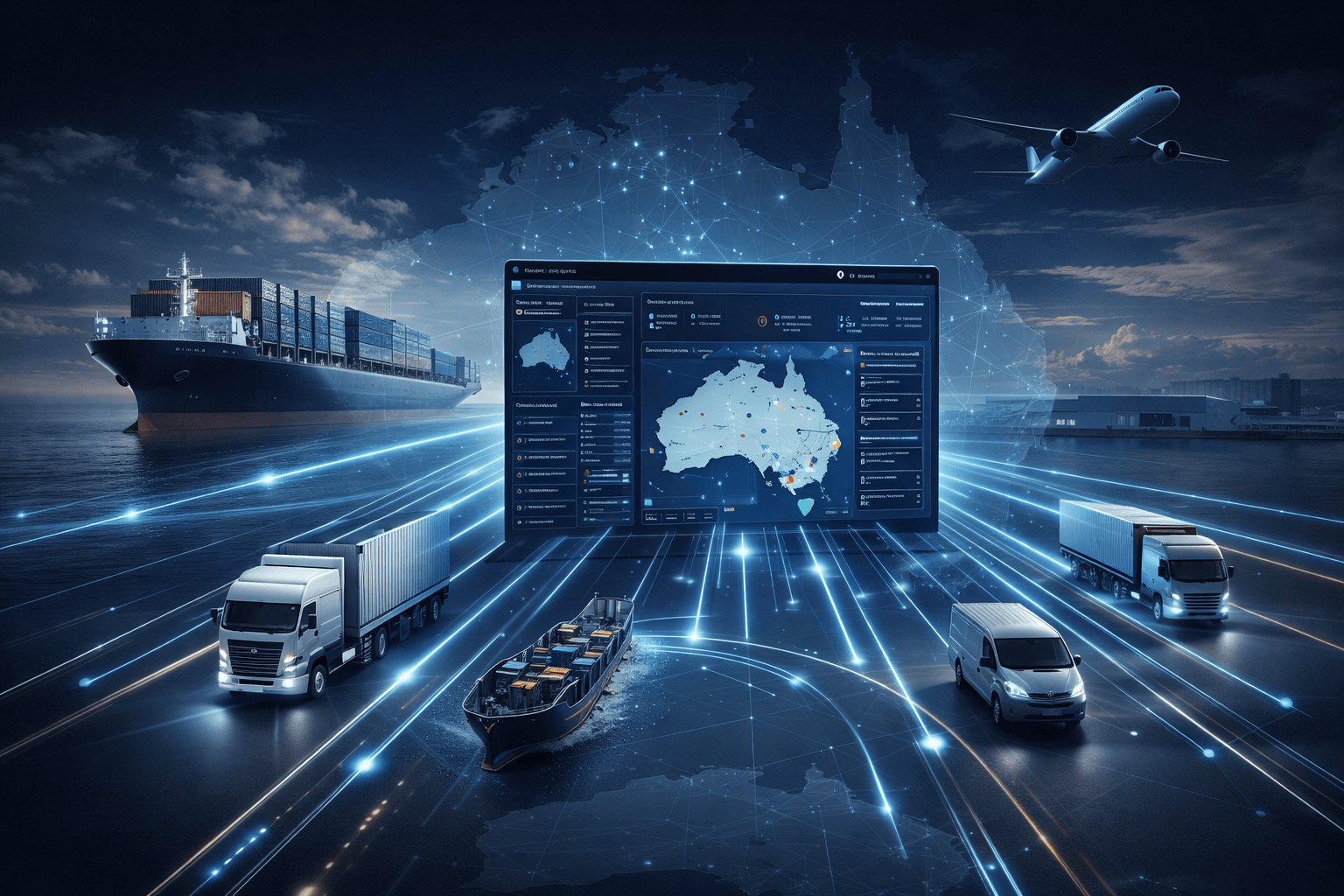
Sign Up: The first step is to create an account on our user-friendly platform.
Input Shipment Details: Enter shipment details, including origin, destination, and product information.
Real-Time Tracking: Track your shipments in real-time using our intuitive interface.
Route Optimisation: Optimise routes to save time and reduce fuel costs.
Inventory Management: Keep an eye on your inventory across multiple locations.
Automated Alerts: Receive alerts for delays, route changes, or any unforeseen issues. Cario's Freight Tracking Software simplifies the complex process of managing freight, making it a breeze for businesses of all sizes.
Benefits of Cario's Freight Tracking Software
Businesses using Cario's Freight Tracking Software can enjoy a wide range of advantages, including:
Cost Savings: Streamlined operations result in reduced costs and improved efficiency.
Reduced Errors: Human error is minimised through automation and real-time data.
Real-Time Tracking: Stay informed about the status and location of your shipments.
Customisability: Tailor the software to meet your unique business needs. For more information on customisation, click here.
Conclusion
All-in-one freight tracking systems centralise and automate freight visibility across multiple carriers.
Real-time tracking and automated alerts improve customer communication and reduce manual work.
Integration with ERP and WMS platforms ensures seamless data flow across business systems.
Scalable architecture supports both SMEs and large enterprises with thousands of consignments daily.
Sustainability tools, such as carbon calculators, help businesses meet environmental goals while optimising operations.
Frequently Asked Questions
How Does An All-In-One Freight Tracking System Improve Efficiency?
By automating core freight processes like booking, invoicing, and tracking, an all-in-one system reduces manual effort and speeds up decision-making. This means fewer errors, quicker deliveries, and a smoother workflow across all departments.
Can Small Businesses Benefit From Using Freight Tracking Software?
Absolutely. Even small operators benefit from the automation, real-time visibility, and cost control that these systems offer. It’s especially useful for SMEs managing multiple carriers or wanting to improve customer communication without hiring extra staff.
What Is The Role Of Real-Time Tracking In Modern Freight Management?
Real-time tracking allows businesses to monitor shipments every step of the way. This transparency means potential issues — like weather delays or missed pickups — can be managed proactively before they impact customers.
How Does Freight Tracking Software Support Sustainability Goals?
Many systems now include carbon tracking tools that calculate emissions by route, carrier, or load. Businesses can use these insights to make greener choices, such as selecting carriers with lower emissions or optimising delivery routes to reduce fuel use.
What Makes Multi-Carrier Integration So Valuable?
Instead of juggling multiple carrier portals or systems, multi-carrier integration brings everything into one platform. This saves time, provides consistent updates, and ensures all teams — from customer service to finance — work with the same real-time data.