
How Courier Booking Software works on Cario
05 October 2023

Understand the importance of logistics freight management to your business and learn how our software can improve efficiency and save you money
As customer expectations soar and logistics demand ever-greater precision, courier booking software has emerged as the unsung hero of the logistics industry. Whether you’re a small business just getting into delivery services or a large enterprise with a complex network of shipments, this software is the backbone that keeps everything running smoothly.
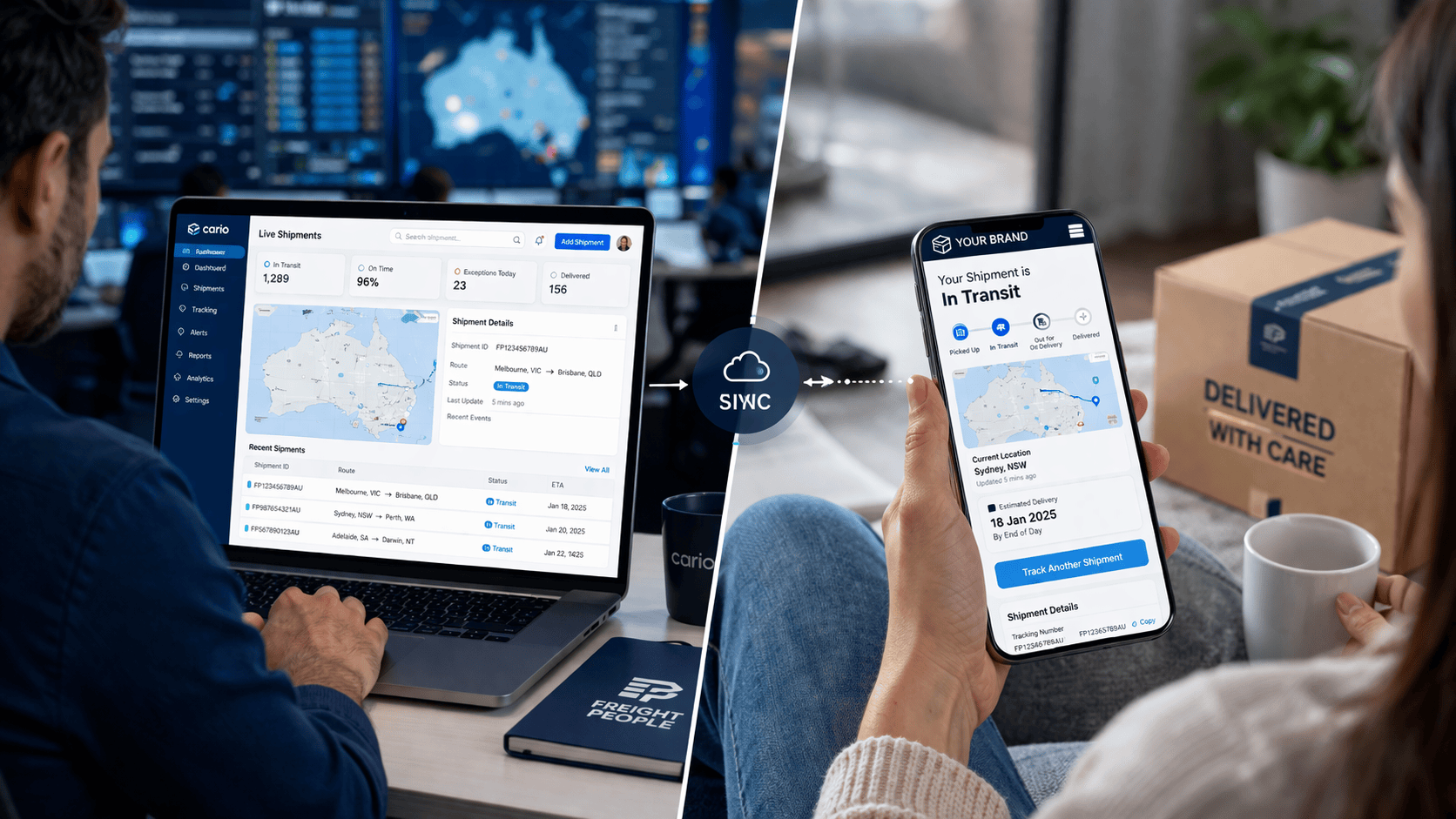
When I first used a courier management system for a business I worked with, I had no idea how much the software would simplify things. Instead of sorting through spreadsheets and making endless phone calls to various carriers, the software handled it all – from booking orders to tracking packages in real-time. The time saved alone was invaluable, and the process itself became so much more efficient. Today, courier booking software isn’t just a nice-to-have; it’s essential for staying competitive in the modern logistics landscape.
Let’s break down exactly how this powerful tool works and how it can transform your business operations.
What Is Courier Booking Software And Why Is It Essential?
At its core, courier booking software is a tool designed to automate, streamline, and optimise the entire process of scheduling, tracking, and managing deliveries. Imagine a time when businesses relied on phone calls and paper forms to organise each parcel's journey – that was a time of inefficiency, human error, and missed opportunities. Today, with the power of courier management systems, all these processes are consolidated into one seamless platform.
I recall the first time we fully integrated a courier management system into our operations; it felt like an overhaul, but the benefits were immediate. The software automated everything, from the moment an order was entered into the system to when the delivery was confirmed. No more manually typing out addresses or calling a courier service to get quotes. The system did it all, saving countless hours every week and ensuring that we could focus on what really mattered – improving our services.
Core Benefits Of Courier Booking Software
Streamlined Operations: With the entire process automated, from order entry to dispatch and billing, there’s no need for repetitive manual tasks. For example, if you’re running a small e-commerce shop, the software can automatically generate shipping labels when an order comes through. This reduces human error and saves time that would otherwise be spent on mundane administrative tasks.
Reduced Costs and Errors: For businesses, cost is always a consideration. By automating booking, rate comparison, and route optimisation, courier booking software eliminates inefficiencies that lead to increased operational costs. I remember how we cut down on shipping errors – no more wrong addresses or wrong shipments – simply because the software checks and validates all data in real-time.
Enhanced Customer Satisfaction: Imagine being able to tell your customers exactly where their package is, down to the minute. Real-time tracking and automated notifications improve transparency and keep your customers informed at every step. This level of communication also cuts down on the number of customer inquiries (WISMO calls – "Where Is My Order?"), making customer service much smoother.
Courier booking software isn’t just about logistics; it’s about creating a more efficient, cost-effective, and customer-centric delivery process. So, why is it essential? In the competitive world of logistics, it helps businesses stay agile, reduce errors, and deliver on customer expectations.
The Step-By-Step Process Of Courier Booking Software
1. Order Entry And Shipment Details: Automating The First Step
The journey of a package begins with the order entry process. Whether a customer submits an order through a portal, mobile app, or API, the system’s first task is to capture all relevant data automatically. Let’s walk through this step to see how automation kicks in:
Data Capture: Once the order is placed, all details are collected, including the pickup and drop-off locations, package dimensions, weight, and any delivery time preferences. If you’ve ever tried entering this information manually or had to rely on customers to provide accurate details, you know how prone this process is to errors. Courier software eliminates this risk by automatically capturing and storing the relevant data, ensuring all details are correct.
Address Validation: The system uses advanced algorithms to verify the entered address in real-time. This feature is essential for businesses in Australia, where we have a large number of rural areas and postcodes that can easily be mistyped or misunderstood. For instance, if a customer enters an incorrect address or a postcode that doesn’t exist, the system flags it immediately, preventing the delivery from being delayed or returned.
For a local business I once worked with, this feature was a lifesaver. A small error in a delivery address could mean delays, additional costs, and, more importantly, an upset customer. Address validation solved this problem right off the bat.
2. Rate Calculation And Carrier Selection: How Automation Works
One of the most powerful features of courier booking software is rate calculation and carrier selection. This is where the real magic happens:
Rate Comparison: The system automatically compares rates across multiple carriers in real-time. Depending on factors such as destination, weight, package dimensions, and service speed (express, standard), the system identifies the most cost-effective shipping options available.
Data-Driven Decision: Once the rate comparison is complete, the software presents a list of available carriers and their prices, including surcharges, along with the Estimated Time of Delivery (ETA). This process is completely automated, saving businesses from having to manually research shipping options for each order. It’s a game-changer for e-commerce businesses, especially those dealing with high volumes of daily orders.
For example, an online store selling handcrafted furniture in Sydney may offer customers the choice of two different carriers: one offering a cheaper but slower service, and another offering expedited delivery with a higher rate. The software makes it clear which option is best based on the customer's needs, saving time and providing clarity to both the business and the customer.
Rate Calculation & Carrier Selection Table:
Carrier | Price | Service Speed | Estimated Delivery Time | Surcharge |
Carrier A | $10 | Standard | 3-5 Days | $2 |
Carrier B | $18 | Express | 1-2 Days | $5 |
Carrier C | $12 | Standard | 4-6 Days | $3 |
Once a carrier is selected, the system automatically generates shipping documents, including the tracking number (waybill) and the shipping label, ready to be printed. No need to manually create invoices or paperwork – it’s all done with the click of a button.
3. Dispatch And Dynamic Route Optimisation: Ensuring Fast And Efficient Deliveries
Now that the booking is confirmed, we move into the dispatch phase, where the system focuses on efficiency and speed. Here’s where things get even smarter:
Smart Dispatching: The system uses AI algorithms to dynamically assign the job to the most suitable driver based on a number of criteria. This includes proximity to the pickup point, vehicle capacity, driver availability, and delivery priority. Think of it like a logistics manager who’s always aware of the best options, 24/7.
For example, if a driver is just down the road from a pickup location, the software assigns them the job. Suppose another driver is closer to a different destination but is already handling another task. In that case, the system will select the available driver who can make the delivery in the shortest amount of time.
Route Planning: The system takes route optimisation to the next level by using real-time data. Factors like traffic, road closures, weather conditions, and delivery windows are automatically considered, ensuring that the route is always the most efficient. During peak hours, the software adjusts the planned routes to account for new obstacles, rerouting deliveries and saving time and fuel costs.
I recall a time when route optimisation saved the business hours of travel time. During the Christmas rush, the system helped reroute drivers based on real-time traffic updates, which allowed us to keep deliveries on time, despite the heavy holiday traffic in Sydney.
4. Real-Time Tracking And Communication: Enhancing Transparency
In the modern logistics world, real-time tracking has become a must-have feature for courier booking software. It's not just about knowing when a package is out for delivery – it’s about offering full visibility at every stage of the journey. Here’s how it works:
Visibility: As soon as a courier picks up a parcel, the GPS tracking kicks in. This allows both customers and dispatchers to see the exact location of the parcel in real time. This eliminates the guesswork that often plagues traditional courier methods. Imagine tracking a parcel from Melbourne to Perth; the system shows you the current location, whether it’s in transit or at a drop-off point, helping you stay informed every step of the way.
For a business I worked with, this feature drastically reduced the volume of “Where Is My Order?” calls. Customers were able to track their parcels and receive real-time updates, which not only improved the customer experience but also boosted trust in the service. Real-time visibility is a game-changer, especially when customers demand precision, like in the Australian outback, where delays due to weather or road conditions can occur. This software offers reassurance.
Automated Alerts: To keep customers updated, the software sends automatic notifications through email, SMS, or in-app alerts. These notifications are sent whenever there’s a change in the parcel’s status – from dispatched, to out for delivery, to successfully delivered. For example, when a delivery is running late due to traffic or weather, customers are notified ahead of time, managing expectations and reducing frustration.
ETA Prediction: Another powerful aspect of real-time tracking is the Estimated Time of Arrival (ETA). The system predicts when the parcel will arrive, adjusting the ETA based on live data like traffic or weather conditions. This accuracy helps both businesses and customers better plan their day. If there’s an unexpected delay, like a storm in the Great Dividing Range, the system automatically adjusts and provides an updated ETA.
This functionality has proven invaluable during busy seasons, such as Boxing Day sales in Australia, where delivery timelines can be unpredictable. With real-time updates, both businesses and customers feel more in control.
5. Proof Of Delivery (POD) And Billing: Completing The Process
Once a parcel reaches its destination, Proof of Delivery (POD) is required to confirm that the parcel has been delivered safely. Courier booking software ensures that this final step is as efficient and accurate as the rest of the process.
Proof of Delivery (POD): The courier uses their mobile app to capture digital proof of delivery. This could include an electronic signature, a photo of the package at the delivery location, a barcode scan, or a timestamp. Once the delivery is confirmed, this information is uploaded and made available to the customer in real time. This adds an extra layer of transparency, building trust with customers and giving them peace of mind that their parcel was successfully delivered.
For example, in regional areas like Western Australia, where deliveries can sometimes be tricky, having a photo of the package at the delivery point becomes a useful proof. It confirms that the item was dropped off and provides the customer with a reference point if there are any disputes.
Automated Billing and Invoicing: The software also automates the billing process, ensuring that the invoice is generated based on parameters like service level, distance, and package weight. The system calculates charges automatically, factoring in any surcharges or extra fees. This reduces administrative workload and ensures that invoices are accurate, with no hidden charges or surprises for the customer.
In the case of one logistics company I worked with, the automated billing process helped streamline their entire invoicing system. Instead of manually calculating costs for each delivery, the software handled everything. This not only saved time but also eliminated the errors that previously caused disputes with customers over billing.
Reporting and Analytics: At this stage, the software provides detailed reporting tools and analytics. Logistics managers can track key performance indicators (KPIs), such as delivery times, driver efficiency, and on-time performance. The software can even provide delivery performance metrics – metrics like average time per delivery and delivery success rates. This data allows businesses to refine their processes, optimise routes, and better manage driver performance.
For example, after using courier software, we noticed that certain routes were regularly delayed due to congestion. With the help of the data, we shifted drivers to alternative routes during peak hours, reducing delays and improving delivery times.
Key Features Of Courier Booking Software That Maximise Efficiency
Now that we’ve covered the main steps in the courier booking software workflow, let's take a deeper dive into the key features that make this software indispensable for modern courier management.
Feature | Description and Function |
Multi-Carrier Integration | Allows businesses to book and track shipments across multiple carriers through a single dashboard, offering greater flexibility and cost-efficiency. |
Smart Carrier Allocation | Uses Machine Learning to automatically select the best carrier for each shipment based on factors like cost, delivery speed, and destination. |
Automation | Automates key tasks like order creation, label generation, and data entry, reducing errors and administrative costs. |
Inventory Management Integration | Syncs with inventory systems to provide real-time updates on stock levels and shipment statuses, ensuring orders are fulfilled accurately and efficiently. |
Customer Portal | Provides a dedicated portal for customers to track their orders, select preferred delivery options, and receive updates – all of which improve customer satisfaction. |
Real-Time Visibility Technology | Integrates GPS tracking, RFID, barcoding, and IoT to provide continuous location updates for parcels and vehicles. |
API Integration | Seamlessly connects with external systems such as ERP, WMS, CRM, and e-commerce platforms, streamlining operations across the business. |
How Courier Booking Software Enhances E-Commerce And Customer Experience?
Courier booking software is not just about logistics; it’s about creating a seamless experience for your customers. This becomes particularly important when businesses integrate their courier management system with e-commerce platforms. Here’s how the software enhances both logistics and the customer journey.
E-Commerce Integration: Syncing Courier Systems With Online Stores
For any online store – whether it’s a small boutique in Melbourne or a large-scale retailer – integrating courier booking software with e-commerce platforms is a game-changer. This integration allows businesses to automate the entire order fulfilment process, from the moment a customer clicks “buy” to the delivery of the item.
Example: Let’s say a customer orders a set of premium Australian wines through an online shop. With e-commerce integration, the order is automatically captured in the courier booking system. The software checks inventory, calculates shipping rates in real-time, generates the shipping label, and books the carrier – all without any manual input.
This integration not only speeds up the process but also reduces human error. A small Australian gift shop I worked with reported a 25% increase in order fulfilment speed after integrating their courier booking system with their Shopify store. Not only did this save them time, but it also improved their customer satisfaction, as delivery estimates were more accurate, and parcels arrived without the usual hiccups.
Customer Notification Tools: Keeping Customers In The Loop
In a world where customer expectations are increasingly higher, customer notification tools provided by courier booking software are invaluable. Imagine a situation where a customer places an order for a product and has no idea when it will arrive. The anxiety of uncertainty can lead to frustration and, in the worst case, lost business. That’s where automated notifications come into play.
Once a package is in transit, the software sends automated alerts to the customer about every important milestone: dispatched, in transit, out for delivery, and finally, delivered. This constant flow of information reduces WISMO calls (Where Is My Order?) and enhances the customer experience.
One of the businesses I worked with, an Australian online retailer selling eco-friendly products, set up automated alerts through their system. The results were astonishing – they saw a 40% decrease in customer service inquiries related to tracking, and customers were noticeably happier because they felt more in control of the process.
Automated Emails and SMS: The system automatically sends updates, such as “Your parcel has been dispatched” or “Your parcel is 1 hour away from delivery”, ensuring the customer is always in the know.
In-App Notifications: Some courier software even integrates with mobile apps, providing push notifications for updates, further enhancing the experience for customers who prefer using their phones.
Analytics And Reporting: Gaining Insights For Optimised Courier Operations
In addition to the operational benefits, courier booking software provides businesses with valuable analytics and reporting tools. These tools give logistics managers access to key metrics that help refine and optimise delivery operations.
Delivery Performance Metrics: Tracking Key Indicators To Improve Efficiency
With the help of delivery performance metrics, businesses can track the efficiency of their couriers and identify areas for improvement. These metrics are gathered automatically, and the system offers insights into the following:
Driver Performance: How many deliveries did a driver complete on time? How long did each delivery take? Are there any patterns indicating slowdowns?
On-Time Delivery Rate: The software keeps track of how often packages are delivered within the promised timeframe.
Average Time per Delivery: This is an essential metric for understanding efficiency at an operational level. By tracking how long each delivery takes, businesses can identify slow-moving routes or drivers who may need additional support or training.
I worked with a logistics company that noticed a dip in on-time deliveries after implementing their courier booking software. Upon reviewing the metrics, it became clear that one driver was taking much longer than expected on deliveries in regional areas due to poor route planning. Armed with this data, the company adjusted the driver’s route, resulting in a 20% improvement in delivery times.
Courier Analytics: Data-Driven Decision-Making For Improved Service
Courier analytics is another critical feature. By using data-driven insights, logistics managers can optimise routes, reduce fuel costs, and improve service levels. Here’s a snapshot of the types of insights the software can generate:
Route Optimisation: Based on past delivery data, the software can suggest the most time-efficient routes, factoring in road conditions, peak hours, and even weather forecasts.
Cost Analysis: Analytics tools break down costs by carrier, delivery type, or even region, helping businesses understand where they’re spending and identify opportunities for cost-saving.
Operational Efficiency: Metrics like average delivery time, cost per delivery, and service level help businesses make informed decisions on where to allocate resources or adjust operations.
After using courier analytics, one e-commerce business I worked with discovered they were paying higher rates for express deliveries than necessary. With the data, they were able to shift some deliveries to more affordable services without compromising on customer satisfaction.
Courier booking software isn’t just a tool; it’s a crucial part of modern logistics that drives efficiency, cuts costs, and most importantly, improves customer satisfaction. The integration of automated features, real-time tracking, dynamic route planning, and robust analytics transforms how businesses manage their deliveries.
For small businesses, especially those involved in e-commerce, integrating courier software can provide a competitive edge by streamlining order fulfilment, reducing human error, and offering a level of customer service that today’s consumers expect.
In today’s world, where the delivery experience often defines customer loyalty, investing in courier booking software isn’t just a smart decision – it’s essential.
Let's Get Straight To The Point
Courier booking software is essential for streamlining and optimising logistics operations, especially for e-commerce businesses. It automates tasks from order entry and shipment details to dispatch, route optimisation, and delivery confirmation. Key features like real-time tracking, automated notifications, and data-driven analytics ensure improved operational efficiency, reduced costs, and enhanced customer satisfaction. With integration across multiple carriers, automated billing, and smart routing, this software empowers businesses to manage deliveries more efficiently, save time, and meet customer expectations. For modern logistics, investing in courier booking software is no longer optional – it’s a necessity for staying competitive.
Frequently Asked Questions
What Is Courier Booking Software And How Does It Work?
Courier booking software is a system designed to automate and optimise the process of managing deliveries. It integrates with e-commerce platforms, allowing businesses to book shipments, select carriers, track parcels in real-time, and generate shipping labels – all from a single platform.
How Can Courier Booking Software Benefit Small Businesses?
For small businesses, courier booking software reduces administrative workload by automating tasks like order entry, rate calculation, and invoicing. It also provides real-time tracking, ensuring customers are kept informed and reducing the volume of customer service inquiries.
What Is Multi-Carrier Integration And Why Is It Important?
Multi-carrier integration allows businesses to manage shipments across different courier providers within one platform. It enables rate comparison, carrier selection, and shipment tracking, helping businesses choose the most cost-effective or suitable options for each delivery.
How Does Courier Software Improve Customer Experience?
Courier software enhances customer experience through real-time tracking, automated notifications, and dynamic delivery time predictions. Customers receive up-to-date information on their parcel's location, reducing anxiety and improving satisfaction with reliable, transparent communication.
Can Courier Booking Software Be Integrated With E-Commerce Platforms?
Yes, most courier booking software can be integrated with e-commerce platforms like Shopify or WooCommerce. This integration streamlines order processing, automates shipping label creation, and updates customers on their delivery status, all directly from the e-commerce interface.