
Managing a supply chain across Australia isn’t for the faint-hearted.
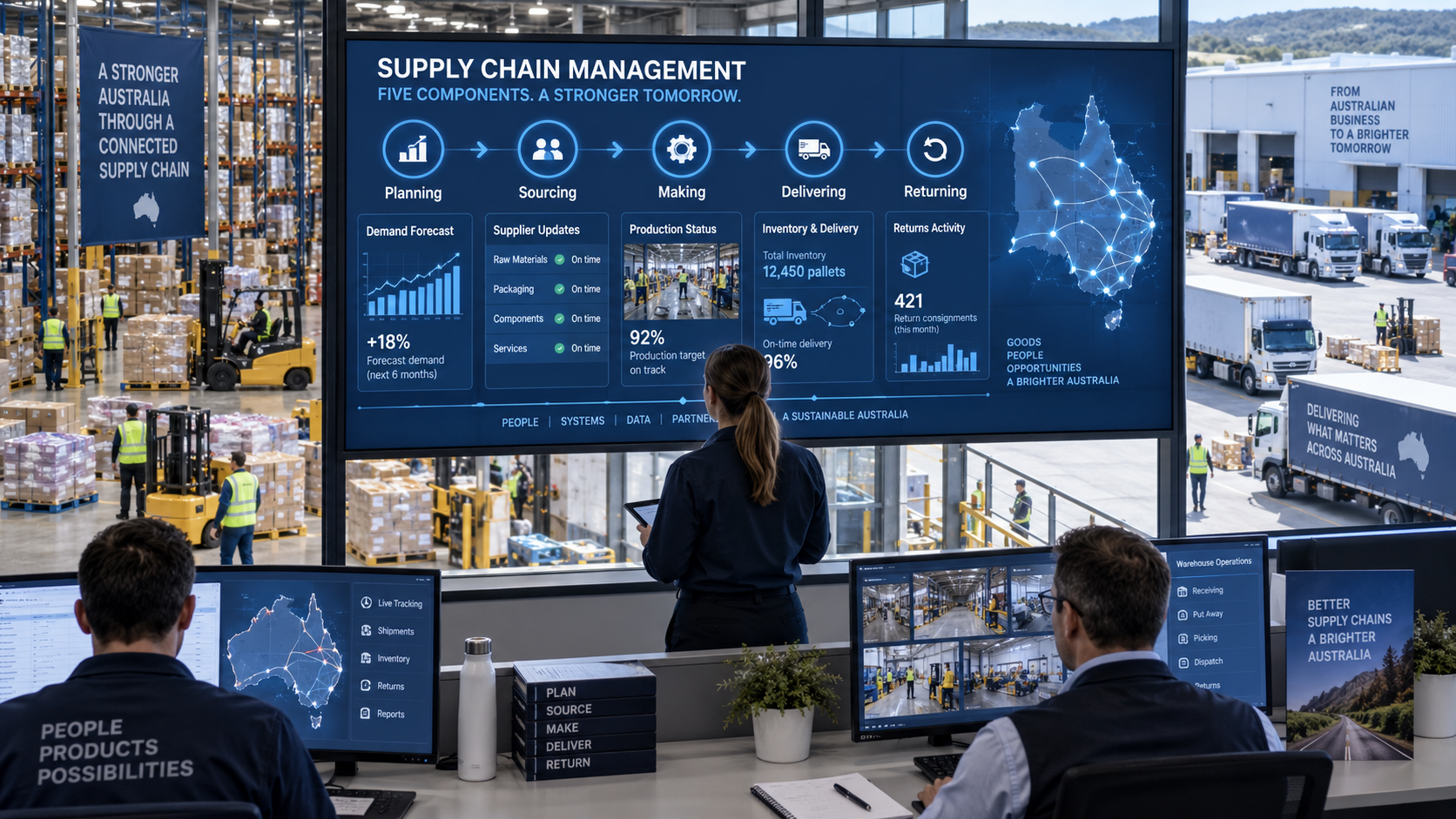
With freight moving from Fremantle to Brisbane, and every dusty road or flooded causeway in between, you quickly learn that efficiency doesn’t happen by accident. It’s built on planning, coordination, and knowing how to roll with a few curveballs — whether that’s a late vessel into Port Botany or a last-minute spike in demand before Christmas.
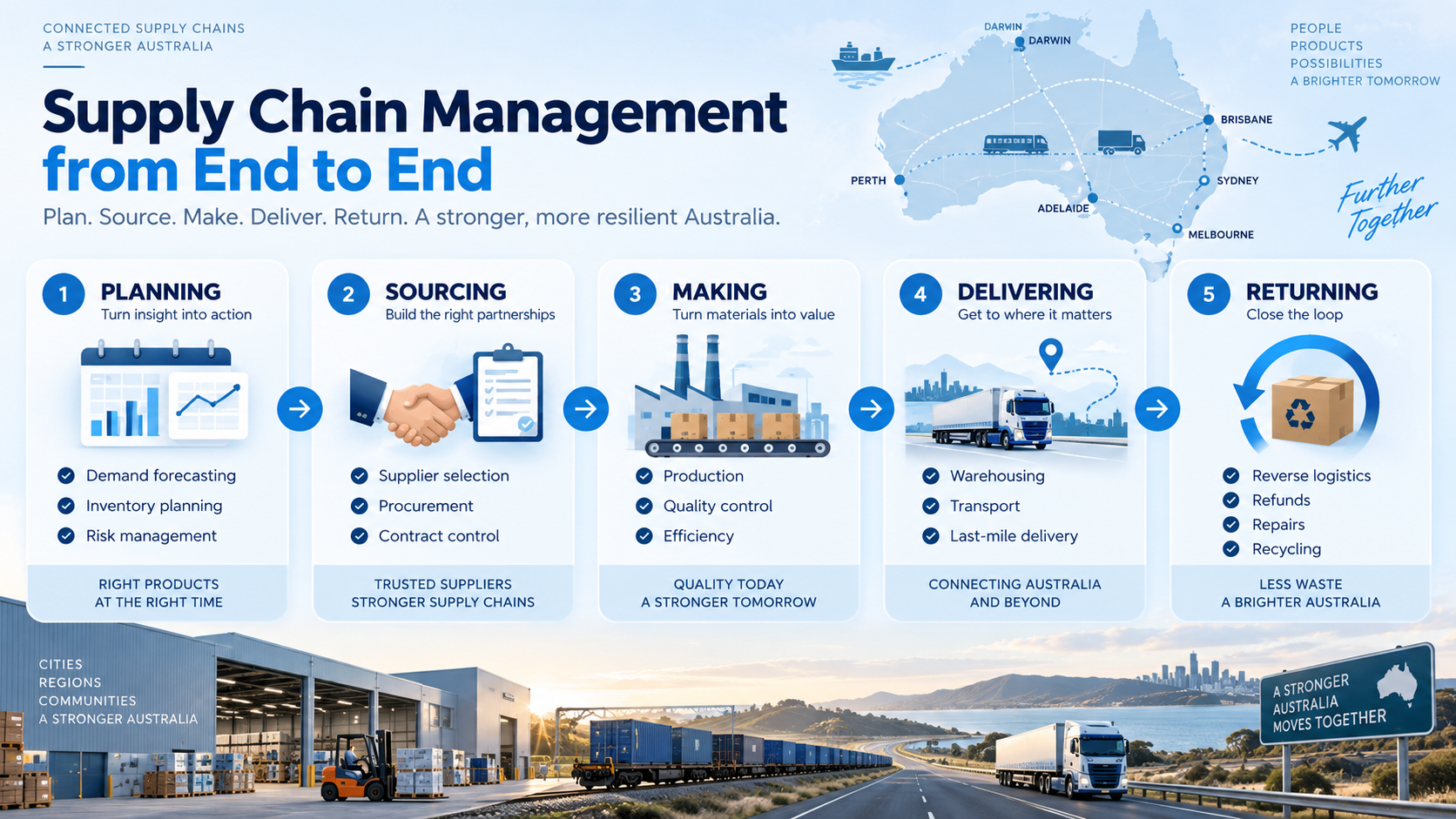
After more than two decades in freight and logistics, I’ve seen that the strongest supply chains aren’t necessarily the biggest — they’re the best organised. And that organisation stems from mastering five key components: Planning, Sourcing, Making, Delivering, and Returning. Together, these stages form the backbone of supply chain management (SCM). Get them working in harmony, and you’ll have a system that not only runs smoothly but also adapts when things inevitably go sideways.
Let’s start with the first — and arguably most critical — component: Planning.
1. Planning: Setting The Pace For The Entire Supply Chain
Every strong supply chain starts with a solid plan. Planning isn’t just a few spreadsheets and forecasts; it’s the art of anticipating challenges and setting up your team to handle them before they become problems. In the Australian context, that might mean accounting for seasonal fluctuations — like the grain harvest rush through Port Adelaide — or managing the long lead times between east coast suppliers and western manufacturing hubs.
I’ve seen firsthand how poor planning can bring even the most capable operation to a halt. Years ago, one regional manufacturer I worked with faced a six-week backlog because of misaligned inventory forecasts and a wet harvest season that delayed incoming raw materials. Their production floor was ready, but the inputs weren’t. A simple forecast adjustment based on rainfall patterns could have avoided the mess entirely.
Good planning sits at the crossroads of data, experience, and foresight.
Key Components Of Effective Supply Chain Planning
Focus Area | Description | Practical Example |
Demand Forecasting | Uses sales data, market trends, and customer insights to predict future needs. | A beverage distributor forecasts increased demand during the summer and scales warehouse capacity accordingly. |
Capacity Planning | Aligns production, storage, and workforce levels with forecasted demand. | A Perth-based logistics firm adds weekend shifts in December to manage Christmas volume surges. |
Inventory Management | Balances stock levels to avoid both shortages and overstocking. | Implementing Just-in-Time principles to reduce holding costs without risking stockouts. |
Risk Management | Identifies and prepares for potential disruptions. | Developing contingency plans for port strikes or bushfire-related road closures. |
Strategic Alignment | Ensures the supply chain supports the company’s broader objectives. | Aligning sustainability goals with transport decisions by incorporating rail over road where possible. |
A Quick Planning Checklist
Before finalising your supply chain plan, always ask:
Have we forecasted demand using both historical and current market data?
Do we have enough capacity to handle best- and worst-case scenarios?
Have we built flexibility into our inventory and transport schedules?
Do we have a response plan for unexpected disruptions (weather, border closures, supplier issues)?
Does our supply chain strategy align with our corporate objectives — cost, sustainability, and service levels?
Local Insight
In Australia, planning often comes down to distance and timing. Unlike Europe or parts of Asia, our freight corridors stretch thousands of kilometres, with limited alternatives when a route is blocked. That’s why many Australian businesses adopt multi-modal planning — combining road, rail, and sea to maintain flexibility. For example, a food manufacturer in Melbourne might use rail for bulk interstate deliveries but switch to road transport when time-sensitive perishables need faster turnaround.
Planning isn’t just paperwork — it’s your early-warning system. Done right, it turns uncertainty into opportunity and keeps your entire operation moving in sync.
2. Sourcing: Building Reliable Partnerships That Keep The Chain Moving
If planning sets the pace, sourcing keeps the rhythm. You can have the best plan in the world, but without dependable suppliers, it’ll crumble faster than a biscuit in a cuppa. Sourcing is about far more than just finding the cheapest quote — it’s about building resilient, trustworthy partnerships that can withstand the pressures of cost, distance, and disruption.
I remember a Sydney-based electronics assembler who relied heavily on a single overseas supplier for key components. When a typhoon hit their supplier’s region, production stopped overnight. After that experience, the company diversified its supplier base — adding local alternatives even at slightly higher costs — and never suffered a total shutdown again. That’s what smart sourcing looks like: paying a bit more upfront to avoid a costly standstill later.
The Core Of Effective Sourcing
Good sourcing balances cost, quality, and reliability. It’s the fine art of choosing the right partners, setting clear expectations, and nurturing those relationships over time. Here’s what that looks like in practice:
Focus Area | Description | Australian Example |
Supplier Management | Selecting and maintaining long-term supplier relationships through performance reviews and transparent communication. | A mining equipment manufacturer in Newcastle uses quarterly scorecards to assess supplier reliability and quality. |
Quality Assurance | Ensuring materials meet required standards before production begins. | A Brisbane food processor uses regular site audits to verify ingredient safety and compliance with FSANZ standards. |
Risk Diversification | Avoiding reliance on a single supplier or region by spreading sourcing risk. | An Adelaide construction firm sources timber from both Queensland and New Zealand to mitigate regional shortages. |
Ethical and Sustainable Procurement | Aligning sourcing with environmental and social responsibility standards. | Australian retailers now prioritise suppliers with strong environmental credentials to meet local sustainability targets. |
Cost and Contract Control | Negotiating contracts that balance fair pricing with dependable delivery terms. | A logistics provider locks in long-term freight rates before fuel cost surges to stabilise margins. |
Sourcing Checklist For Australian Supply Chains
Have you verified each supplier’s financial and operational stability?
Are contracts clear on delivery times, quality standards, and penalties for non-compliance?
Do you have at least one alternative supplier for each critical input?
Have you reviewed your suppliers’ sustainability practices and compliance with Australian regulations?
Are you maintaining active communication channels to anticipate potential issues early?
Practical Tip: Think Local And Regional
During the pandemic, we saw just how fragile long-distance sourcing could be. Border restrictions, container shortages, and freight delays made “just-in-time” feel more like “just-too-late.” Many Australian companies learned the hard way that “local is reliable.”
By bringing part of their sourcing closer to home — even if just a percentage — they reduced lead times and increased agility. For instance, one apparel importer I advised shifted 30% of its supply from offshore to Victorian manufacturers. Yes, unit costs went up slightly, but stock turnover improved, and transport costs dropped.
Sourcing isn’t just procurement; it’s relationship management with a strategic twist. When you get sourcing right, you don’t just secure materials — you secure peace of mind.
3. Making: Turning Plans Into Product
This is where the rubber hits the road — quite literally for those of us who’ve spent years on warehouse floors watching forklifts buzz around like bees on a hot day. The Making phase of supply chain management is where raw materials are transformed into finished goods, and efficiency here can make or break your margins.
I once worked with a Melbourne-based manufacturer that produced packaging for fast-moving consumer goods. Their operations ran like clockwork — until one minor equipment failure halted an entire production line for 36 hours. The real problem wasn’t the breakdown itself but the lack of visibility into production processes. They had data, but no system connecting it all in real time. Once they introduced live performance tracking and automated maintenance alerts, downtime dropped by nearly 40% in a quarter.
That’s the essence of good manufacturing in today’s supply chains — precision, visibility, and continuous improvement.
Key Elements Of The Making Phase
Element | Description | Practical Example |
Production Scheduling | Coordinating materials, labour, and equipment to meet deadlines efficiently. | A Perth food manufacturer aligns batch runs with supermarket delivery schedules to reduce warehouse dwell time. |
Quality Control (QC) | Ensuring products meet set standards and regulations. | A Sydney chemical producer follows ISO 9001 protocols and conducts random batch testing. |
Efficiency and Waste Reduction | Using lean manufacturing and automation to minimise waste and energy use. | A Brisbane automotive supplier uses sensors to monitor machine idle time and reduce energy costs. |
Continuous Improvement | Reviewing processes for ongoing optimisation and cost reduction. | Monthly performance reviews identify bottlenecks and feed into next month’s planning cycle. |
A Hands-On Approach To Manufacturing Efficiency
Australian manufacturers face some unique challenges — high labour costs, vast shipping distances, and fluctuating energy prices. The trick isn’t to cut corners but to work smarter. That’s where lean thinking and automation come in.
A good rule of thumb:
“If a process can be measured, it can be improved.”
Even small gains add up. For example, trimming just 10 seconds off a repetitive packing process could save hundreds of hours a year in labour. Over time, that efficiency compounds like interest in a savings account.
Compliance And Safety
Unlike some markets, Australian manufacturers must also contend with strict regulations — from the Work Health and Safety Act 2011 (WHS) to specific standards like AS/NZS ISO 14001 for environmental management. Ignoring compliance isn’t an option. I’ve seen a single missed audit lead to production halts and penalty notices that wiped out months of profit. A disciplined safety and quality culture keeps both people and business secure.
Manufacturing Checklist
Have you mapped your entire production process — inputs, outputs, and downtime triggers?
Are you using real-time data or manual reporting to track performance?
Is your quality assurance system fully integrated across production and supply chain teams?
Are you compliant with all relevant Australian safety and environmental standards?
Do you review production performance and cost drivers regularly?
Manufacturing is the heartbeat of the supply chain. When it runs smoothly, everything else follows suit — deliveries are on time, returns are minimal, and customers stay happy. But when it falters, the whole system feels the ripple.
4. Delivering: Making Sure It Gets There — On Time And Intact
If the Making phase is the heartbeat of the supply chain, Delivering is the set of arteries keeping everything flowing. It’s the point where your planning and production efforts meet reality — trucks on the road, pallets in transit, and customers waiting for that delivery confirmation.
In Australia, delivery logistics can test the patience of even the most seasoned operators. Between long-haul interstate routes, regional road closures, and unpredictable weather, ensuring reliable delivery requires a mix of precision and flexibility. I remember a Sydney 3PL provider that managed a retail contract shipping to over 250 stores nationwide. When the Stuart Highway was cut off by floods, they didn’t panic — they rerouted via rail through Adelaide within hours. That kind of quick thinking comes from planning, but more importantly, from logistical resilience.
Core Elements Of The Delivery Phase
Area | Description | Example in Practice |
Order Management | Processing, verifying, and tracking orders from placement to receipt. | A Brisbane wholesaler uses integrated systems to update customers automatically as consignments move through each leg of the journey. |
Transportation Management | Coordinating freight modes — road, rail, sea, or air — for time and cost efficiency. | A Cairns exporter uses a mix of sea freight for bulk and air freight for urgent deliveries to reduce costs by 20%. |
Warehouse and Distribution | Managing inventory storage, picking, and dispatch to align with delivery schedules. | A Melbourne DC operates zone picking to speed up high-volume order fulfilment. |
Last-Mile Delivery | Getting goods to the customer’s door or store is often the most expensive and visible part of logistics. | A Perth retailer uses local courier partnerships to improve next-day delivery coverage in suburban areas. |
Invoicing and Documentation | Ensuring proof of delivery, payment tracking, and compliance paperwork are accurate and complete. | An Adelaide carrier integrates ePOD (electronic proof of delivery) to reduce invoice disputes. |
The Challenge Of The Last Mile
In Australia, last-mile delivery can account for more than half of total logistics costs. With sprawling suburbs, limited delivery density in regional areas, and high labour costs, it’s the toughest nut to crack.
For instance, during a holiday rush in December, one e-commerce operator in Melbourne I worked with was spending close to 60% of its delivery budget on the last mile alone. By consolidating deliveries through local depots and shifting some urban routes to night-time runs, they reduced congestion delays and shaved off nearly 15% of costs within two months.
The takeaway? Visibility and adaptability matter as much as speed. Without real-time tracking, route optimisation, and customer communication, even a simple delay can snowball into dissatisfied clients and cancelled orders.
A Quick Delivery Readiness Checklist
Before hitting the road, make sure your delivery process covers these essentials:
Are your order management and warehouse systems integrated for real-time visibility?
Do you have contingency routes planned for road closures or carrier delays?
Are you leveraging multi-modal transport options to reduce cost and time risks?
Is your customer notified automatically at each delivery stage?
Have you analysed delivery KPIs — on-time rate, delivery cost per unit, and damage rate — in the last quarter?
Local Insight
Australia’s geography means logistics planning must account for distance, isolation, and seasonality. Delivering from Sydney to Darwin is not the same as moving freight between Sydney and Newcastle — and it never will be. That’s why many operators rely on hub-and-spoke networks — centralised hubs in Brisbane, Melbourne, and Perth feeding regional spokes.
And with tightening emissions standards and rising fuel prices, sustainability is quickly becoming part of the delivery conversation. I’ve seen more companies adopt hybrid fleets, invest in driver training for fuel efficiency, and collaborate on backhaul opportunities to reduce empty kilometres. It’s not just good for the planet — it’s good business.
When delivery runs like a well-oiled machine, customers notice. Orders arrive on time, drivers know their routes, and communication is seamless. That final stretch of the journey might be the most expensive, but it’s also where reputations are made or broken.
5. Returning: Turning Setbacks Into Strategic Wins
While most supply chain conversations revolve around getting products out the door, the Returning phase — or reverse logistics — often tells you more about a company’s strength than the delivery itself. It’s where the real customer loyalty is tested.
I’ve seen countless businesses stumble here. Years ago, an online retailer I worked with in Sydney had a messy returns process — delays, lost parcels, and frustrated customers. The team was so focused on dispatching new orders that they treated returns like an afterthought. It wasn’t until they streamlined their returns workflow and implemented better inspection processes that customer satisfaction climbed back up. Within six months, repeat orders rose by 20%. That’s the power of a clean, customer-friendly return system.
Why Reverse Logistics Matters
In a market where consumer expectations are sky-high — especially in e-commerce — returns management isn’t just a back-end process. It’s a front-line customer experience. A smooth return builds trust and can even improve margins if managed properly.
Area | Description | Example in Practice |
Returns Handling | Receiving and inspecting returned goods for defects, resale potential, or recycling. | A Melbourne electronics distributor uses barcode scanning to automatically categorise items for resale or recycling. |
Refund and Replacement Processing | Ensuring refunds and replacements are handled quickly and transparently. | A Perth retailer automates refund authorisations within 48 hours to improve turnaround time. |
Repair and Refurbishment | Reworking returned goods for resale instead of disposal. | A Brisbane appliance manufacturer refurbishes returned units, selling them through outlet stores. |
Recycling and Waste Reduction | Minimising landfill waste by recycling components or packaging. | A Sydney-based cosmetics brand recycles 80% of returned packaging materials. |
Feedback Integration | Analysing return reasons to identify design or manufacturing flaws. | A clothing importer tracks size-related returns and adjusts future sizing charts accordingly. |
The Value Recovery Advantage
Every return represents potential value — either in product, insight, or customer goodwill. Businesses that treat reverse logistics as an opportunity, not a nuisance, often see cost savings and better brand perception.
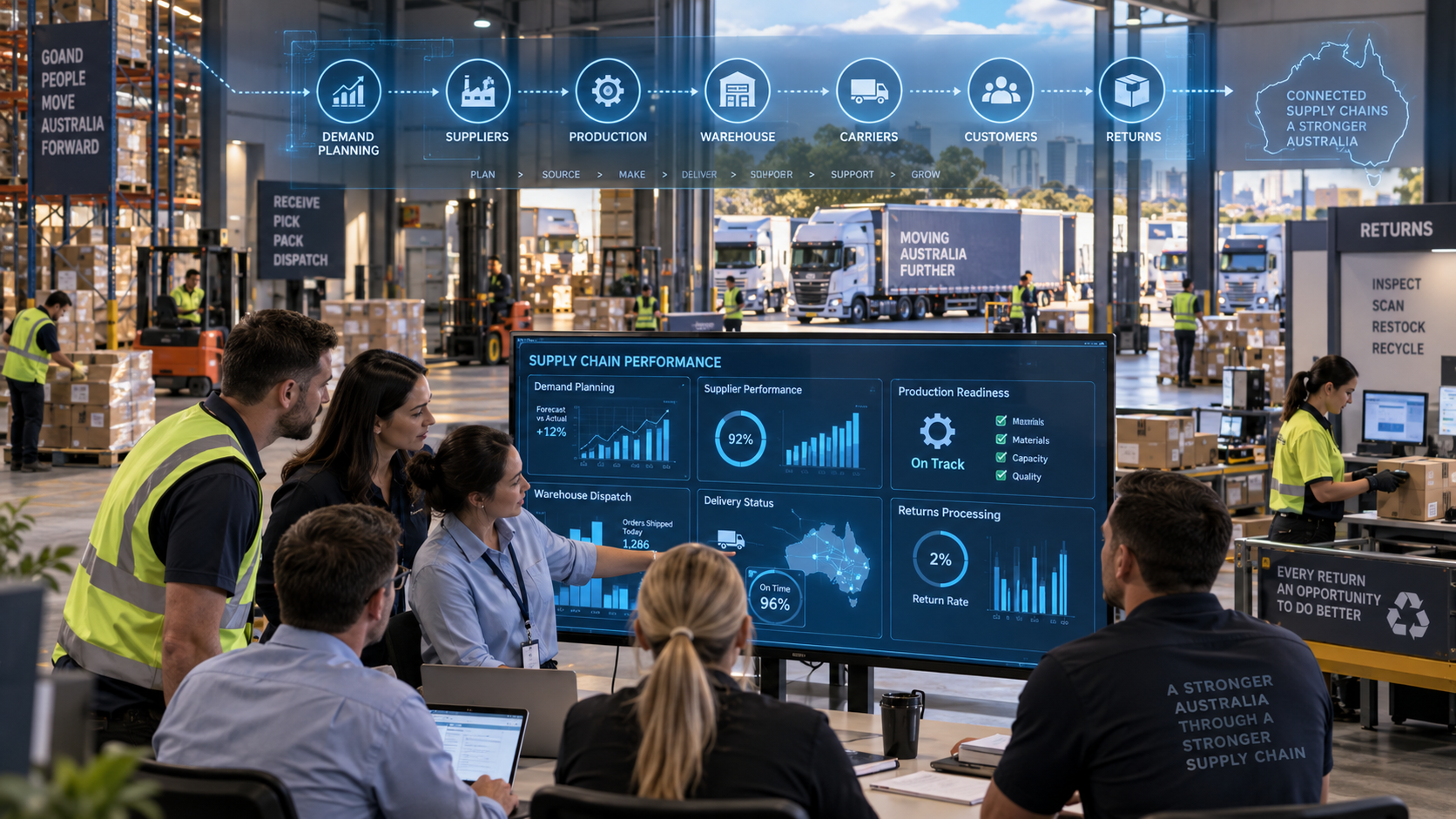
For instance, one national retailer in Melbourne introduced a dedicated Returns Management System (RMS). Instead of waiting weeks for items to move through manual processing, they digitised the workflow. Returned goods were assessed within 24 hours, customers received immediate updates, and re-sellable stock was automatically flagged for re-listing. The system paid for itself within the first year through recovered value and labour savings.
A clear returns policy also matters under the Australian Consumer Law (ACL). Customers are entitled to refunds or replacements for faulty goods, so having transparent, compliant procedures avoids disputes and protects your brand’s reputation.
Reverse Logistics Checklist
Do you have clear, easy-to-follow return instructions for customers?
Is your warehouse equipped to inspect, repair, or recycle returned products efficiently?
Are your refund timelines consistent with ACL obligations?
Have you implemented tracking or automation tools to improve return speed and accuracy?
Are you analysing return trends to improve future products or services?
Local Insight
Australia’s vast geography adds another challenge to returns — especially for remote or regional customers. A mining supplier in Kalgoorlie, for instance, can’t afford to wait weeks for a part exchange. Many logistics providers are now integrating regional drop-off points and prepaid return options to make the process quicker and more cost-effective.
Reverse logistics isn’t just about sending products back; it’s about learning from what comes back. The data hidden in return patterns — whether it’s damaged goods from one supplier or repeated faults in a specific batch — can lead to major improvements across sourcing, manufacturing, and delivery.
Handled well, the return process becomes an extension of customer service, reinforcing trust and strengthening relationships long after the initial sale.
Strong supply chains don’t happen by luck — they’re built through smart planning, dependable sourcing, efficient production, reliable delivery, and a well-managed return process. These five components of supply chain management are interconnected, each feeding the next. When one falters, the rest feel it. But when they work in harmony, businesses achieve lower costs, faster response times, and happier customers.
From my years in the freight and logistics sector, I’ve found that the best-performing operations are those that never stop refining these five areas. They understand that supply chain management isn’t a one-time project — it’s an ongoing cycle of improvement. Whether you’re a regional manufacturer or a national retailer, keeping these principles at the forefront of your mind helps you stay competitive in an unpredictable market.
In Australia, where distance, weather, and regulation can throw plenty of curveballs, the businesses that thrive are the ones that treat their supply chains as living systems — adapting, learning, and growing with each season.
Let's Get Straight To The Point
Supply chain management is built around five key components — Planning, Sourcing, Making, Delivering, and Returning.
Planning aligns supply and demand, sets capacity, and prepares for risks.
Sourcing focuses on supplier relationships, cost control, and sustainability.
Making converts raw materials into finished goods through efficient, compliant processes.
Delivering handles logistics, warehousing, and last-mile fulfilment.
Returning — or reverse logistics — manages refunds, repairs, and recycling while improving customer trust.
When these functions operate in sync, businesses achieve efficiency, resilience, and long-term growth.
Frequently Asked Questions
What Are The Five Basic Components Of Supply Chain Management?
The five key components are Planning, Sourcing, Making, Delivering, and Returning. Together, they form a continuous cycle that manages materials, information, and finances across the supply chain — from forecasting demand to handling customer returns.
Why Is Planning Considered The Most Important Step In Supply Chain Management?
Planning lays the foundation for every other stage. It aligns production capacity, supplier readiness, and customer demand. In Australia, where distance and seasonality can disrupt schedules, solid planning helps businesses stay flexible and cost-efficient.
How Can Australian Businesses Improve Their Sourcing Strategies?
By diversifying suppliers across multiple regions, maintaining transparent communication, and prioritising ethical and sustainable procurement. Local sourcing — even partially — can also reduce lead times and increase reliability, especially during transport disruptions.
What Role Does Technology Play In The Making And Delivery Phases?
Technology improves visibility, automation, and accuracy across production and logistics. Real-time tracking, predictive maintenance, and integrated warehouse systems all help reduce downtime, waste, and delivery errors. These tools are especially valuable in Australia’s large, decentralised freight networks.
Why Is Reverse Logistics Becoming More Important?
With the rise of e-commerce and consumer rights under Australian Consumer Law, a smooth return process has become critical. Reverse logistics not only protects customer trust but also reduces waste and recovers value from returned goods through refurbishment or recycling.