
Why Freight Logistics Management Matters for Your Business.
23 August 2023

With rising consumer expectations and increasing competition in the global marketplace, the critical role of freight logistics management is clearer than ever.
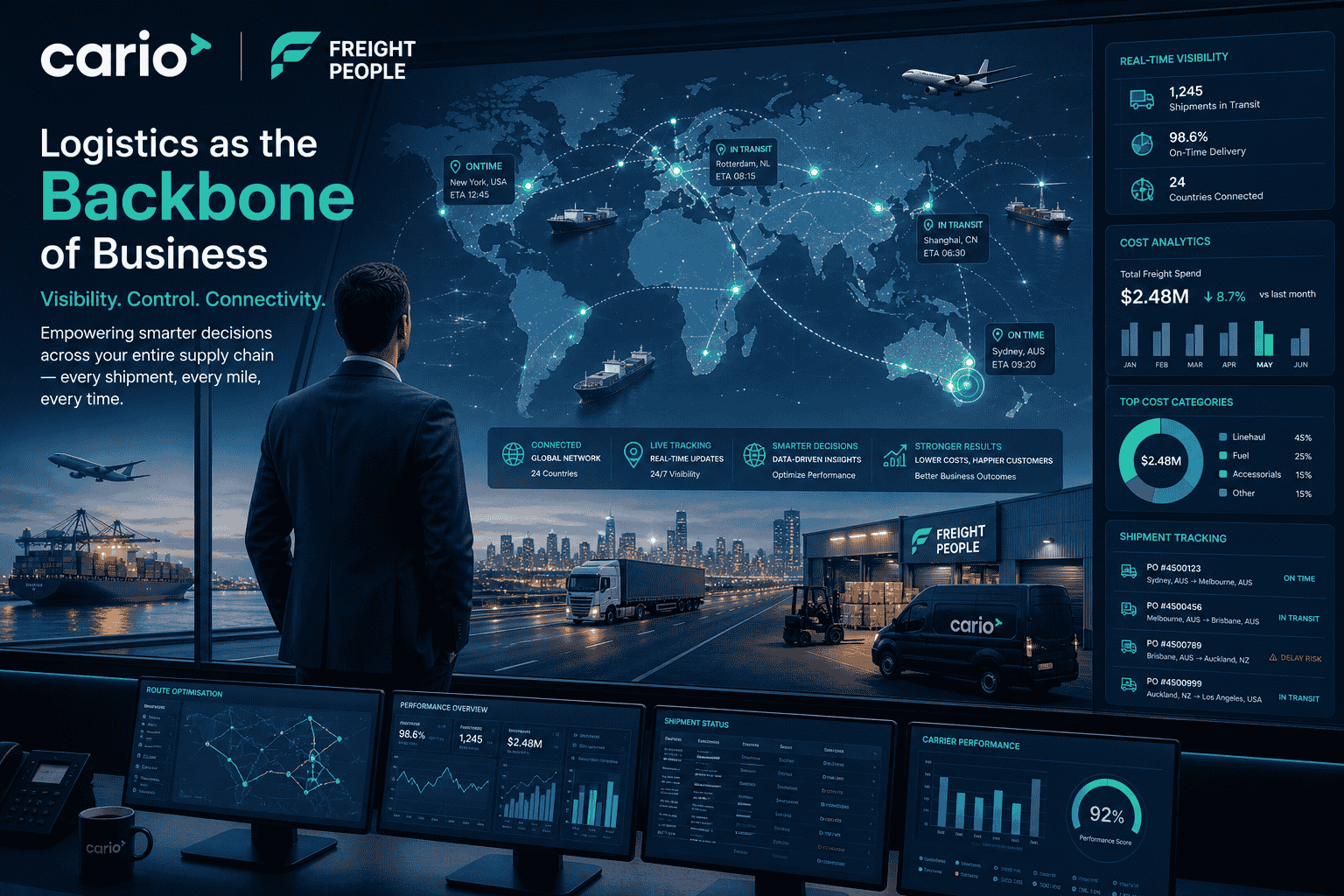
Think of it as the backbone of your supply chain – it’s the driving force behind delivering products on time, keeping costs under control, and ensuring your customers stay happy. If you’ve ever struggled with late deliveries or been hit with unexpected shipping costs, you’ll know just how crucial a well-oiled logistics system is to the success of your business. But how do you ensure that your logistics operations are not just running smoothly, but driving the kind of results that will propel your business forward?
“Platforms like Cario, combined with the expertise of Freight People, help businesses turn logistics from a cost centre into a strategic advantage—delivering greater visibility, smarter carrier selection, and stronger financial control across every shipment.”
In this blog, we'll explore why freight logistics management matters for your business, and how getting it right can boost your financial stability, streamline your operations, enhance customer satisfaction, and even give you an edge over competitors.
Enhancing Financial Stability And Cost Reduction
In my years of working with various businesses across industries, one thing always stands out: the impact freight logistics management has on the bottom line. Whether it’s an e-commerce business looking to scale or a small company trying to stay competitive, the way you manage your logistics can make or break your financial stability. Let’s break it down:
Optimising Freight Spend:
When I first started working with a logistics provider in Australia, we quickly realised that we were bleeding money on freight charges that weren’t optimised. After implementing a Freight Audit and Payment (FAP) system, we caught errors that would have gone unnoticed – things like incorrect weights or charges for services we didn’t use. It’s been estimated that many businesses overpay by 4.5–8.5% on their freight bills simply due to billing errors. Imagine what you could do with that extra margin in your pocket!
Controlling Operational Costs:
One of the best strategies for cutting costs is route optimisation, and it’s something I’ve seen businesses in industries ranging from manufacturing to retail benefit from. A client I worked with in Melbourne, for instance, saved over 15% on fuel costs alone by using real-time data to optimise their shipping routes. The same principle applies to inventory management – by ensuring that stock levels are just right (not too much and not too little), companies can save on warehouse space and reduce the costs of holding excess stock.
Avoiding Penalties And Unnecessary Fees:
It’s easy to forget about the hidden costs of logistics, like detention charges for delayed shipments or reweighing fees for mislabelled freight. I once worked with a Sydney-based business that kept racking up costly detention charges. After putting in place a better logistics planning system, which included more accurate scheduling, they not only avoided these penalties but also streamlined their supply chain. Compliance is key here – especially in a market like Australia, where shipping regulations are strict, and fines can be steep.
Improving Return On Investment (ROI):
A real-world example that comes to mind is a company I helped transition from a paper-based system to a fully integrated Freight Management Software (FMS). The upfront cost was significant, but the results were worth it. By eliminating inefficiencies and reducing manual errors, the company saw a 12% improvement in ROI within the first year. A well-managed logistics system ensures that your resources are being used in the most cost-effective way possible, giving your business a solid foundation for growth.
Driving Operational Excellence And Efficiency
In my experience, logistics management isn’t just about moving goods from Point A to Point B. It’s about creating a system that maximises the efficiency of every step, from inventory control to transportation planning. When logistics are well-managed, everything else falls into place. Here’s how:
Optimised Transportation Planning
One of the most critical decisions businesses make is choosing the right mode of transportation for their goods. Should you use air freight, which is faster but more expensive, or stick with sea freight, which can take longer but costs far less? I’ve worked with a company in Queensland that faced exactly this dilemma. By carefully analysing their shipping patterns and evaluating the true costs (not just the price per shipment), we were able to shift from air to sea freight for 60% of their shipments without negatively impacting delivery times. This change alone saved them 20% annually in shipping costs.
Key Insight:
Transportation decisions should be data-driven, considering both cost and time efficiency. Optimised planning means choosing the right transport mix to meet customer expectations while reducing operational costs.
Streamlined Logistics Processes
Over the years, I've seen logistics processes evolve from being manual and cumbersome to fully automated and streamlined. I recall working with a Melbourne-based retailer who had been manually tracking shipments and updating invoices, which took up hours every week. After implementing a Transportation Management System (TMS), tasks like quote requests, shipment tracking, and even billing were automated. The result? They saved 10 hours per week and significantly reduced errors.
Key Insight:
Automating logistics processes, such as shipment tracking and invoicing, reduces administrative burden, cuts down errors, and boosts overall productivity.
Enhanced Inventory Management
Effective logistics management is also closely tied to inventory control. Having too much stock ties up valuable resources, while too little stock risks stockouts and delayed deliveries. A client I worked with in Perth experienced this issue firsthand. By implementing a Just-in-Time (JIT) inventory system combined with real-time data tracking, they were able to keep their stock levels optimised. The result? Less waste, fewer stockouts, and an overall 18% reduction in holding costs.
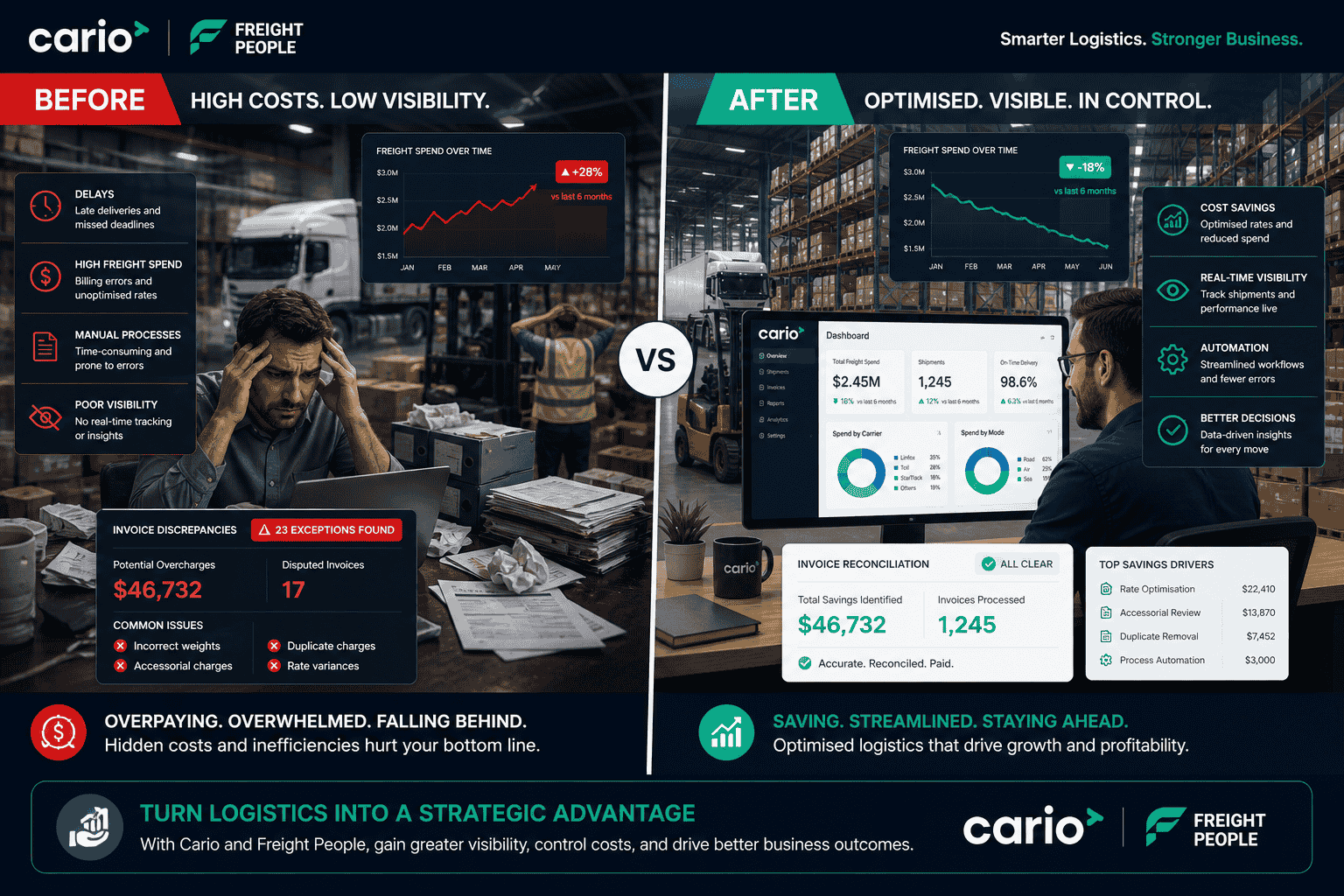
Here’s how they did it:
Step | Outcome |
Implemented JIT Inventory | Reduced excess stock and saved on storage costs. |
Integrated Real-Time Data | Allowed for better demand forecasting and quicker stock replenishment. |
Used Automated Reordering | Ensured timely stock levels, reducing out-of-stock situations. |
Key Insight:
Inventory management goes beyond just ordering. It’s about balancing demand with supply in real-time, reducing waste, and improving cash flow.
Advanced Data Utilisation
In today’s digital age, data is your best ally in logistics management. I once worked with a logistics company in Sydney that began using AI-powered analytics to predict traffic patterns and optimise delivery routes. This saved them not only fuel costs but also precious time. With real-time data, the system dynamically adjusted delivery routes based on traffic conditions, resulting in a 15% improvement in delivery times.
Key Insight:
Data-driven decisions, powered by AI and real-time analytics, allow businesses to stay agile and optimise logistics performance on the fly.
Boosting Customer Satisfaction And Loyalty Through Logistics Optimisation
When it comes down to it, the true test of any business is how well it serves its customers. Logistics play a massive role in shaping the customer experience – and a well-run logistics operation can be the difference between a loyal customer and a lost one. Here’s how freight logistics management directly impacts customer satisfaction:
Timely And Reliable Delivery
I once worked with a fashion retailer in Sydney that was grappling with delayed deliveries. Their customers, understandably, were unhappy, and the company’s reputation was on the line. After conducting a thorough analysis, we discovered inefficiencies in their logistics network, particularly in route planning and warehouse management. By implementing an automated route optimisation system and improving their warehouse processes, we were able to improve their on-time delivery rate from 85% to 98% in just three months. The result? Not only did customer complaints drop, but repeat business increased by 30%.
Key Insight:
Timely delivery is critical for customer satisfaction. The more reliable your logistics, the more likely your customers will return. Implementing automated route optimisation can significantly improve delivery times.
Transparency In Shipment Tracking
Today, customers expect transparency. They want to know where their product is at every stage of the delivery process, and they want that information in real-time. I worked with a Melbourne-based e-commerce company that integrated an advanced freight tracking system using GPS and IoT devices. This allowed customers to track their shipments from the warehouse to their doorstep. Not only did this provide customers with peace of mind, but it also improved their confidence in the brand. Studies show that 79% of customers are more likely to stay loyal to companies that offer accurate delivery tracking and updates.
Tracking Feature | Customer Benefit |
Real-time Shipment Updates | Customers are kept in the loop, reducing anxiety. |
GPS and IoT-Enabled Tracking | Customers can pinpoint exactly where their delivery is. |
Automatic ETA Notifications | Customers know when to expect their orders, enhancing satisfaction. |
Key Insight:
Providing customers with transparency and real-time tracking updates fosters trust and boosts their overall satisfaction with your service.
Ensuring Order Accuracy
There’s nothing more frustrating for a customer than receiving the wrong product or an incomplete order. Poor logistics planning can lead to packing mistakes, which can seriously affect your business. I remember helping an online retailer in Perth that had struggled with order accuracy due to inefficient warehouse processes. After implementing an automated picking and packing system, the error rate dropped by over 40%, and customer feedback became overwhelmingly positive. Accurate order fulfilment isn’t just a nice-to-have; it’s essential for building long-term loyalty.
Key Insight:
Effective logistics management ensures that orders are packed and delivered correctly. Accuracy in order fulfilment is a key driver of customer satisfaction.
Table: Impact Of Logistics On Customer Satisfaction
Logistics Element | Impact on Customer Satisfaction |
Timely and Reliable Delivery | Customers are more likely to return and recommend your business. |
Shipment Transparency | Increased trust in your business reduces customer anxiety. |
Accurate Order Fulfilment | Fewer returns and complaints, leading to higher customer retention. |
Key Insight:
Every step of your logistics operation, from delivery times to order accuracy, directly impacts customer satisfaction. Optimising logistics improves not only operational efficiency but also strengthens customer loyalty.
Strategic Positioning And Risk Management Through Freight Logistics
In today’s global economy, logistics isn’t just about getting products from one point to another. It’s also a critical part of your business strategy, offering a competitive advantage and playing a key role in risk management. I’ve worked with many companies that initially underestimated the power of logistics as a strategic tool, only to realise later that it was pivotal to their long-term success. Here’s why:
Achieving Competitive Advantage
When I worked with a local supplier in Adelaide, their logistics system was essentially an afterthought. Products were moved without much planning, and it was starting to affect their ability to compete with larger players in the market. By helping them optimise their logistics – from choosing the right carriers to improving their supply chain visibility – we turned their logistics operation into a competitive advantage. Their on-time delivery improved, costs dropped, and they were able to offer faster service, which helped them win new clients. Logistics is no longer just a back-end operation; it’s a core part of your business’s ability to differentiate itself in a crowded market.
Key Insight:
Efficient logistics doesn’t just reduce costs; it can give you a competitive edge. Fast, reliable service, coupled with cost-effective solutions, will differentiate your business in the marketplace.
Informing Strategy With Data-Driven Decisions
One of the key benefits of modern logistics management is the ability to gather and analyse vast amounts of data. In one project I handled for a Melbourne-based manufacturer, we integrated Freight Audit and Payment (FAP) software, which allowed them to analyse every shipment and invoice. This data provided invaluable insights into their supply chain, enabling them to identify inefficiencies, negotiate better rates with carriers, and make data-backed decisions on procurement and route planning. The result? A more strategic and informed approach to their supply chain management which ultimately led to better resource allocation and improved profitability.
Data-Driven Logistics Strategy | Outcome |
FAP Software Integration | Improved decision-making through detailed insights into logistics data. |
Freight Spend Analysis | Identified inefficiencies and negotiated better rates with carriers. |
Real-Time Data Utilisation | Optimised route planning and resource allocation. |
Key Insight:
Using logistics data not only improves operational efficiency but also informs strategic decisions, making your supply chain more agile and responsive to market changes.
Building Resilience In Your Supply Chain
In the face of disruptions – whether caused by natural disasters, geopolitical issues, or even a global pandemic – having a resilient logistics strategy is key. I worked with a logistics company in Sydney during the height of the COVID-19 pandemic, and their ability to quickly pivot to alternative suppliers and routes was essential for maintaining operations. By adopting flexible logistics practices, like multi-modal transport and diversifying its supplier base, the company was able to withstand disruptions and even grow during challenging times. Logistics planning is about more than just day-to-day operations; it’s about building a supply chain that can weather the storms of uncertainty.
Key Insight:
Building resilience through logistics allows your business to continue operating smoothly, even when unforeseen disruptions occur. A flexible, adaptable approach is crucial for mitigating risks.
Ensuring Compliance With Regulations
Navigating the regulatory landscape is one of the most challenging aspects of freight logistics, especially when dealing with international shipping. Australian businesses, in particular, must comply with a variety of regulations, ranging from customs laws to safety standards, depending on the nature of their goods and their markets. I once worked with an importer in Brisbane who was hit with hefty fines because they weren’t fully aware of the import-export regulations in certain Asian markets. After streamlining their logistics processes and implementing a robust compliance system, they avoided costly penalties and maintained their good standing with customs authorities. Compliance isn’t just about avoiding fines; it’s about protecting your reputation and ensuring smooth, uninterrupted operations.
Compliance Strategy | Outcome |
Integrated Compliance System | Avoided fines and ensured smooth international operations. |
Continuous Training & Monitoring | Ensured the business stayed updated on regulatory changes. |
Risk Mitigation Protocols | Safeguarded against supply chain disruptions due to regulatory issues. |
Key Insight:
Staying compliant with regulatory requirements is critical for avoiding fines and protecting your reputation. An integrated compliance strategy ensures that your logistics operations run smoothly across all borders.
Promoting Sustainability Through Freight Logistics Management
As climate change concerns continue to rise, businesses are under increasing pressure to reduce their environmental footprint. In this context, freight logistics management is not just about moving goods efficiently but also about doing so in a way that minimises the impact on the environment. I’ve seen firsthand how businesses that prioritise sustainability in their logistics practices not only reduce their carbon footprint but also gain a competitive advantage by appealing to environmentally conscious consumers.
Reducing Carbon Footprint With Efficient Route Planning
One of the most effective ways to reduce the environmental impact of logistics is through route optimisation. I worked with a Perth-based company in the food supply industry that managed to reduce its fleet's fuel consumption by 18% simply by leveraging real-time traffic data to avoid congested routes. This also helped reduce the carbon emissions associated with their transportation network. Optimising routes is a no-brainer when it comes to cutting down on unnecessary fuel consumption and greenhouse gas emissions.
Key Insight:
Optimising routes to avoid traffic jams, unnecessary detours, or underutilised transportation methods directly reduces fuel consumption, which in turn cuts carbon emissions and supports sustainability.
Adopting Green Logistics Practices
Green logistics is a growing trend, and companies are adopting eco-friendly practices to improve sustainability. I’ve worked with companies that have embraced electric vehicles (EVs) for local deliveries, reducing emissions and lowering their overall carbon footprint. Additionally, incorporating alternative fuels, such as biofuels or compressed natural gas, has been another avenue for businesses to meet sustainability goals. One company in Sydney switched a portion of their fleet to EVs and saw a 25% reduction in its fleet’s overall emissions. Beyond transportation, optimising packaging by reducing waste and choosing sustainable materials has a huge impact as well.
Green Logistics Initiative | Sustainability Outcome |
Transition to Electric Vehicles | Reduced emissions by 25% for local deliveries. |
Use of Alternative Fuels (Biofuels, CNG) | Lowered the carbon footprint of the fleet. |
Sustainable Packaging Materials | Reduced waste and enhanced brand image. |
Key Insight:
Incorporating green practices such as switching to electric vehicles, using alternative fuels, and optimising packaging not only reduces emissions but also aligns with customer expectations for sustainability.
Meeting Consumer Demands For Sustainability
Consumers today are more environmentally conscious than ever before. According to research, nearly 70% of Australians are willing to pay more for sustainably sourced products. One business I worked with in Melbourne found that by prioritising sustainability in their logistics – including using eco-friendly packaging and offsetting their carbon emissions – they saw a noticeable increase in customer loyalty. Their commitment to reducing their environmental impact resonated with their customers, particularly those who were already inclined to make sustainable purchases. In a competitive market, sustainability can be a powerful differentiator.
Key Insight:
Consumers are increasingly prioritising sustainability in their purchasing decisions. A commitment to eco-friendly logistics practices not only reduces your carbon footprint but can also attract and retain customers who care about the environment.
Tracking And Quantifying Environmental Impact
Modern logistics management systems allow businesses to track and quantify their environmental impact. Through the use of sustainable logistics software, companies can monitor everything from fuel consumption to carbon emissions and waste management. One logistics provider I worked with in Queensland implemented a software solution that provided detailed reports on their environmental impact, allowing them to pinpoint areas for improvement. This transparency not only helped the company meet regulatory requirements but also provided valuable data for customers who wanted to know how their products were being delivered in an environmentally responsible manner.
Sustainability Tracking System | Environmental Benefits |
Carbon Emission Monitoring | Real-time tracking of CO2 emissions across transportation modes. |
Fuel Consumption Reports | Identifying inefficiencies and reducing fuel waste. |
Waste Management Optimisation | Reducing packaging waste and improving recycling efforts. |
Key Insight:
Sustainable logistics software enables businesses to track and quantify their environmental footprint, providing transparency that builds customer trust and helps meet regulatory standards.
Freight logistics management is far more than just a cost-saving function. It’s a critical strategic tool that can drive financial stability, improve operational efficiency, boost customer satisfaction, and, importantly, ensure sustainability. As businesses continue to adapt to the evolving landscape of customer expectations and environmental responsibility, efficient logistics practices will be central to maintaining competitiveness and meeting long-term sustainability goals.
Effective logistics management will continue to be a key enabler of growth, and those who embrace this will be better positioned to navigate the challenges and opportunities of the modern supply chain. From optimising routes and adopting green practices to ensuring timely and accurate deliveries, it’s clear that managing logistics with a strategic and sustainable approach isn’t just a trend – it’s a business imperative.
Let's Get Straight To The Point
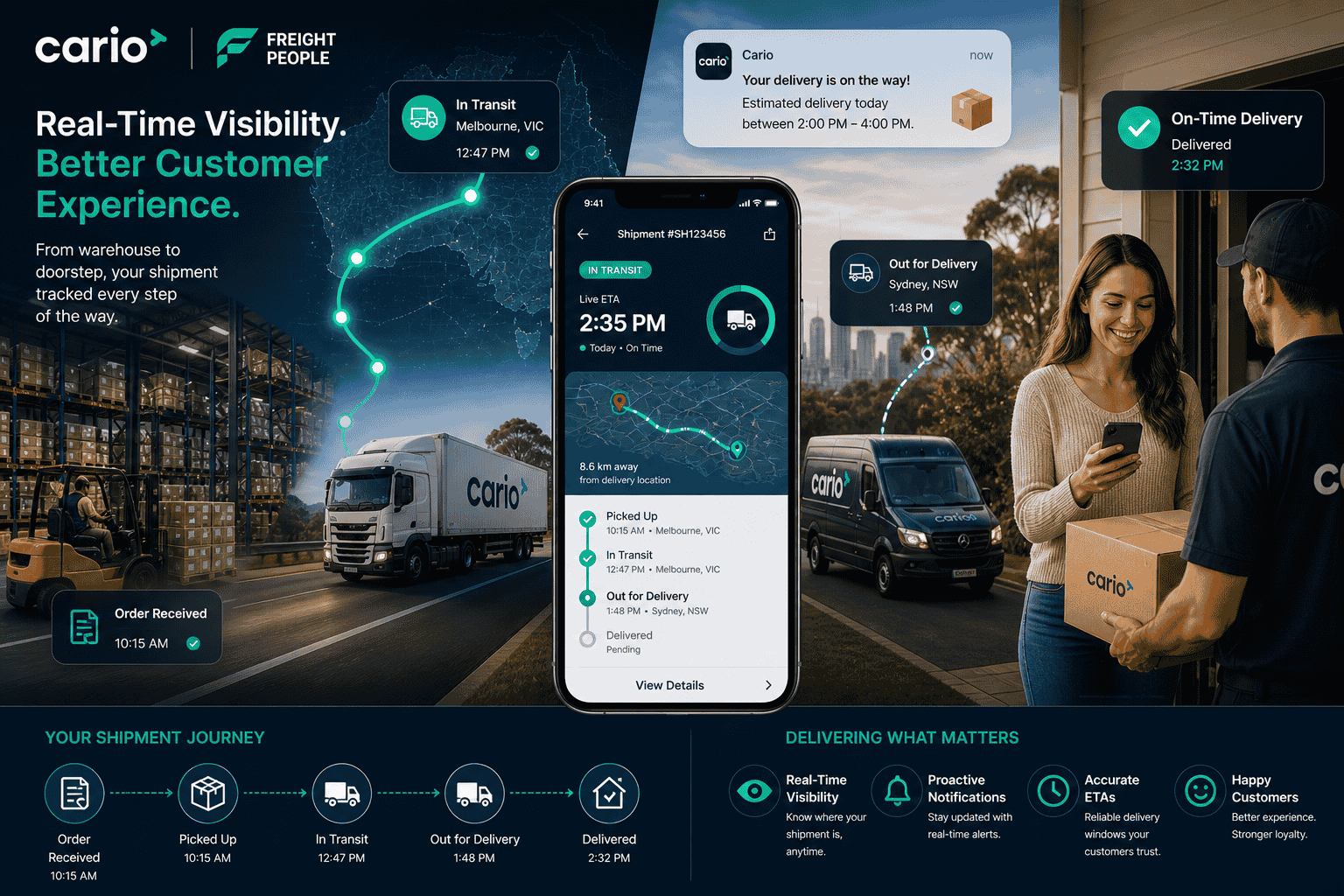
Effective freight logistics management is crucial for business success. It drives financial stability by optimising freight spend, controlling operational costs, and avoiding unnecessary fees. It also boosts operational efficiency through streamlined processes, better transportation planning, and enhanced inventory control.
By improving customer satisfaction through timely, reliable deliveries and transparent tracking, logistics management directly impacts loyalty. Additionally, logistics plays a strategic role in competitive advantage, risk management, and compliance with regulations.
Sustainability is another key benefit, as optimised routes and green practices reduce carbon footprints and appeal to environmentally conscious consumers. Freight logistics management is not just a cost centre; it's a strategic asset that supports business growth and long-term success.
Frequently Asked Questions
What Is The Role Of Logistics Planning In Supply Chain Optimisation?
Logistics planning ensures that the right products are delivered at the right time, in the right quantity, and at the lowest cost. It directly impacts inventory control, transportation efficiency, and overall supply chain performance.
How Can I Reduce Freight Costs Through Better Logistics Management?
By optimising routes, consolidating shipments, using freight audit systems, and leveraging technology to automate processes, businesses can significantly reduce their freight spend.
What Technologies Can Help Improve Freight Tracking And Operational Efficiency?
Technologies like GPS, IoT, and advanced transportation management systems (TMS) enable real-time tracking, automate processes, and provide data-driven insights that improve overall efficiency.
How Does Effective Logistics Management Impact Customer Satisfaction And Loyalty?
Timely deliveries, accurate order fulfilment, and transparent tracking systems all contribute to a better customer experience, fostering trust and increasing the likelihood of repeat business.
What Are Some Sustainable Practices That Can Be Incorporated Into Logistics Management?
Sustainable logistics practices include using electric vehicles, adopting alternative fuels, optimising packaging, and using software to track and reduce environmental impacts like fuel consumption and carbon emissions.