

Freight Spend Is Rising — But Visibility Is the Real Problem
20 July 2026

Freight costs are rising, but the real issue is visibility. Learn how better freight data and cost allocation help you control spend, improve reporting, and reduce reconciliation effort.
Freight Spend Is Rising — But Visibility Is the Real Problem
Freight costs are going up. That’s not news to anyone running a logistics-heavy business.
Carrier rate increases, fuel surcharges, and service demands all play a part. But here’s the part most businesses miss:
It’s not just that freight spend is rising — it’s that you can’t clearly see why.
And without that visibility, controlling costs becomes guesswork.
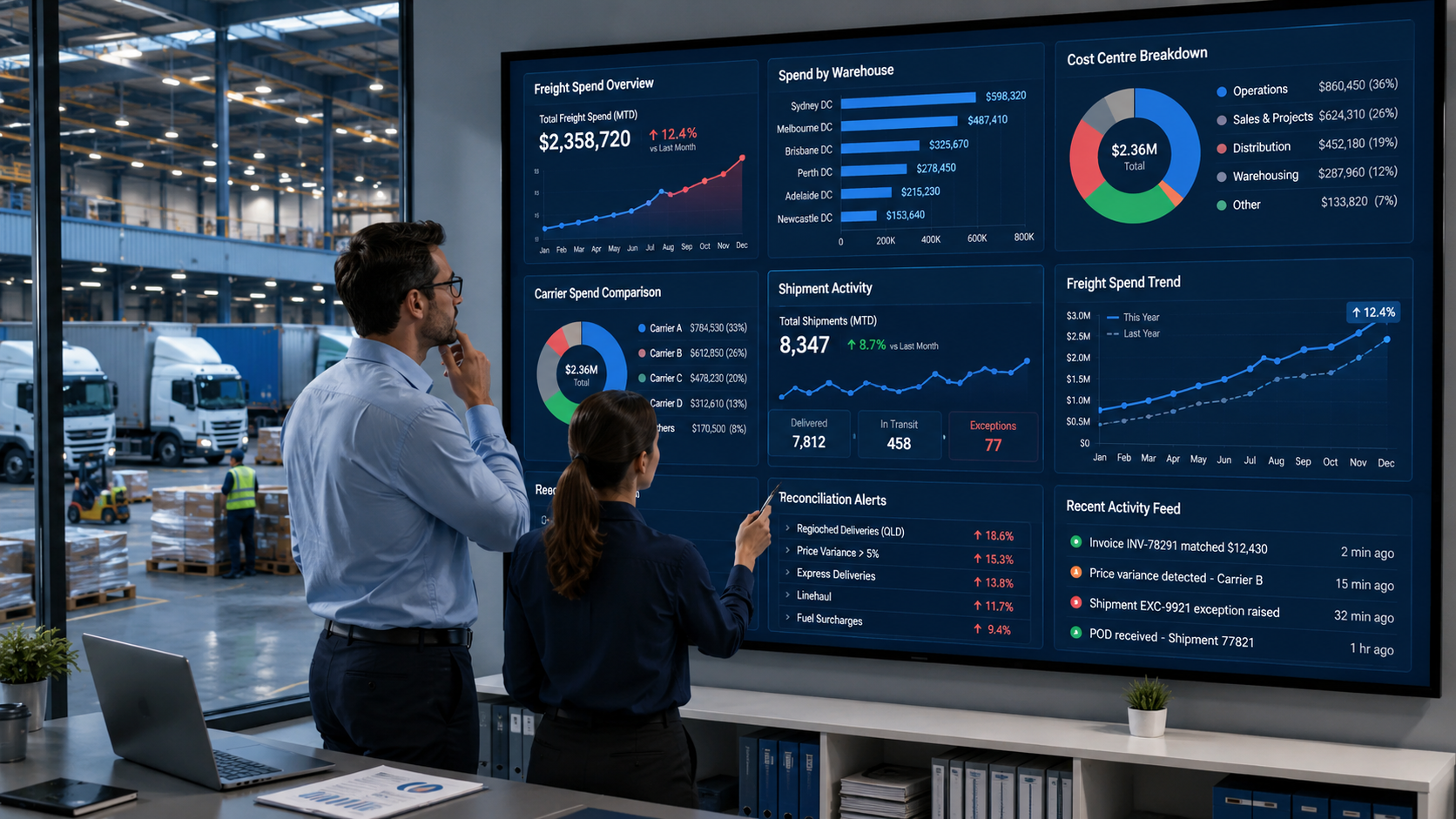
The Real Issue Isn’t Cost — It’s Visibility
Most businesses can tell you how much they spent on freight last month.
Fewer can break that number down in a meaningful way.
Which warehouse is driving the cost?
Which part of the business is responsible?
Which types of shipments are causing the increase?
When that detail isn’t available, freight becomes a black box.
You see the outcome, but not the cause.
That’s where things start to unravel.
What This Looks Like in Practice
I’ve seen this play out across Australian operations more times than I can count.
A finance team flags a freight overspend.
Operations get pulled in.
Logistics tries to explain it.
And everyone ends up digging through spreadsheets, carrier invoices, and system exports just to piece together what happened.
By the time you get an answer, the moment to act has already passed.
This is exactly the kind of gap Cario is designed to close — by giving teams clearer visibility across freight, transport, and reporting in one connected platform.
Why Freight Becomes a Blind Spot
Freight doesn’t behave like other costs.
It moves across:
multiple locations
different departments
various delivery types
multiple carriers
But in many businesses, it’s still reported as one combined figure.
That disconnect creates a visibility gap.
And that gap leads to:
delayed cost insights
reactive decision-making
ongoing reconciliation effort
limited accountability across teams
The Shift: Visibility Starts Earlier Than You Think
Most teams try to fix visibility at the reporting stage.
Better dashboards. More reports. More analysis.
But if the underlying data isn’t structured properly, better reporting won’t fix the problem.
The shift happens earlier — at the point where freight is created.
That’s where cost centres come in.
Turning Freight Data Into Something Finance Can Use
A cost centre gives each shipment context.
Instead of just recording what was shipped, you also capture where the cost belongs:
warehouse
department
project
operational function
It’s a small step during booking.
But it changes everything that follows.
What Better Visibility Actually Delivers
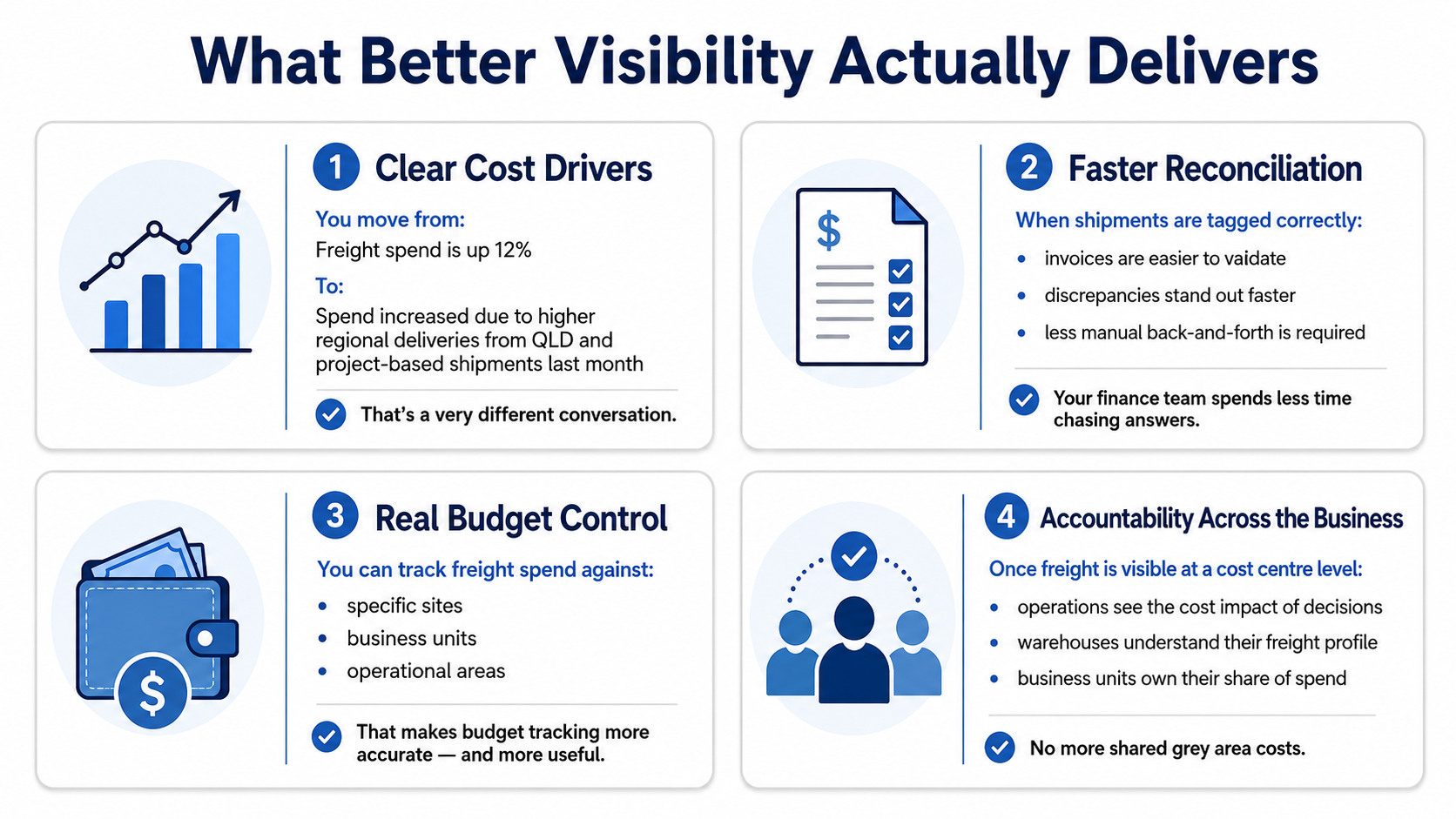
A Simple Scenario
Let’s say your freight spend increases this quarter.
Without visibility, you’re left guessing.
With proper structure, you might see:
metro deliveries increased due to higher order volume
regional shipments drove higher linehaul costs
one project created a short-term spike
Now you can act on it.
Adjust carriers. Review service levels. Revisit pricing.
That’s the difference visibility makes.
Where This Fits in a Modern Freight Operation
Visibility isn’t just about reporting.
It’s about how freight data flows across the business.
When freight, transport, and reporting are connected in one system, you get:
consistent data across teams
fewer manual workarounds
clearer insights earlier in the process
That’s the role Cario plays — helping businesses bring structure and visibility into complex freight operations so teams can make better decisions with less effort.
A Quick Test
If freight spend increased this month, could your team clearly explain:
where the cost came from?
which part of the business drove it?
what changed operationally?
If not, the issue isn’t just cost.
It’s visibility.
Freight will always fluctuate.
Rates change. volumes shift. operations evolve.
But without clear visibility, every increase feels like a surprise.
And surprises are hard to control.
The businesses that get on top of freight spend aren’t just tracking costs better.
They’re structuring their data earlier — so they can actually see what’s going on.
If freight still feels like a black box, it’s worth a closer look.
Talk to the Cario team about how better visibility — starting at the point of shipment — can improve reporting, reduce reconciliation effort, and give you more control over freight spend.