

How to Compare Freight Quotes Before You Book a Consignment
29 July 2026

Learn how freight quote comparison helps logistics teams check cost, ETA and delivery requirements before booking consignments across multiple carriers.
Freight costs can change quickly once real shipment details are added.
A delivery that looks simple at first may need a tail lift. A residential address may change the carrier cost. A pallet with the wrong dimensions may return a price that is much higher than expected.
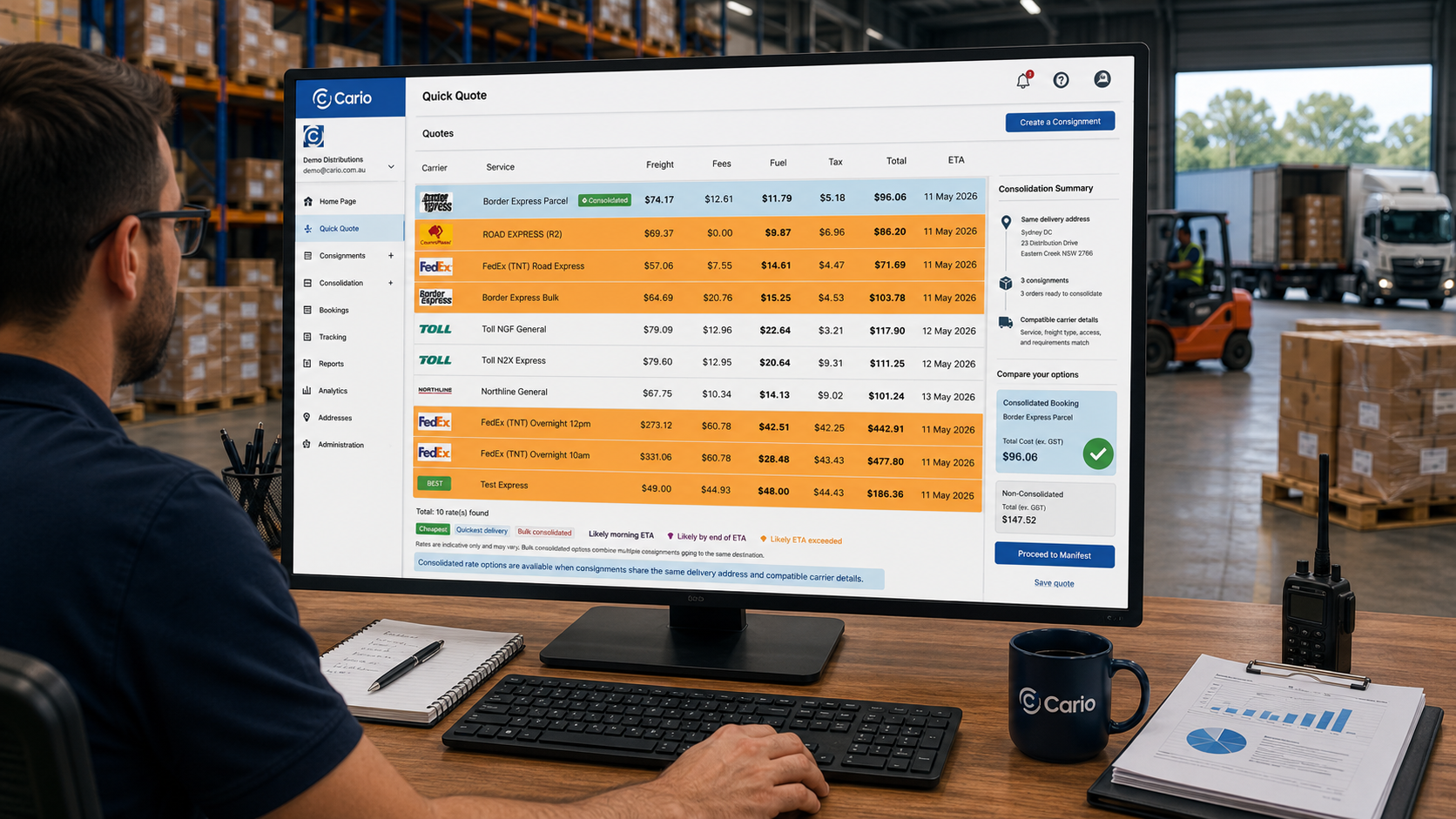
For logistics and warehouse teams, this is where freight quote comparison becomes useful. Before a consignment is booked, teams need a quick way to check which carrier services are available, what each option costs and how long delivery is expected to take.
Cario helps Australian businesses quote, book, track and report on freight from one connected platform, with access to more than 300 carriers and support for multi-carrier freight operations.
Why Freight Quote Comparison Matters
Many freight teams still compare prices across carrier portals, email chains or spreadsheets.
That might work for low shipment volumes, but it starts to slow teams down when freight becomes business-critical. A warehouse team preparing dispatch may need to answer several questions at once:
Which carrier is cheapest for this shipment?
Which service has the fastest ETA?
Does the delivery need a tail lift?
Is the address residential?
Are the freight dimensions correct?
Will this shipment create extra charges later?
Without a consistent quoting process, teams can book freight with missing details, incorrect dimensions or the wrong service type. That can lead to higher costs, delivery delays and extra admin for logistics, customer service and finance.
The Problem With Manual Freight Quoting
Manual freight quoting creates two common problems.
The first is time. Staff may need to log into separate carrier systems, enter the same freight details more than once, compare rates manually and then record the result somewhere else.
The second is accuracy. Freight quotes rely on details such as suburb, postcode, weight, dimensions and delivery requirements. If one field is wrong, the quote may be wrong too.
A common example is entering dimensions in millimetres instead of centimetres. The system may still produce a quote, but the freight charge may be much higher than expected. Another issue is entering a postcode linked to a PO box rather than a delivery location.
These details matter because freight pricing is tied to the real movement of goods.
What Cario’s Quick Quote Capability Helps Teams Do
Cario’s quoting workflow helps teams calculate freight costs before creating a consignment.
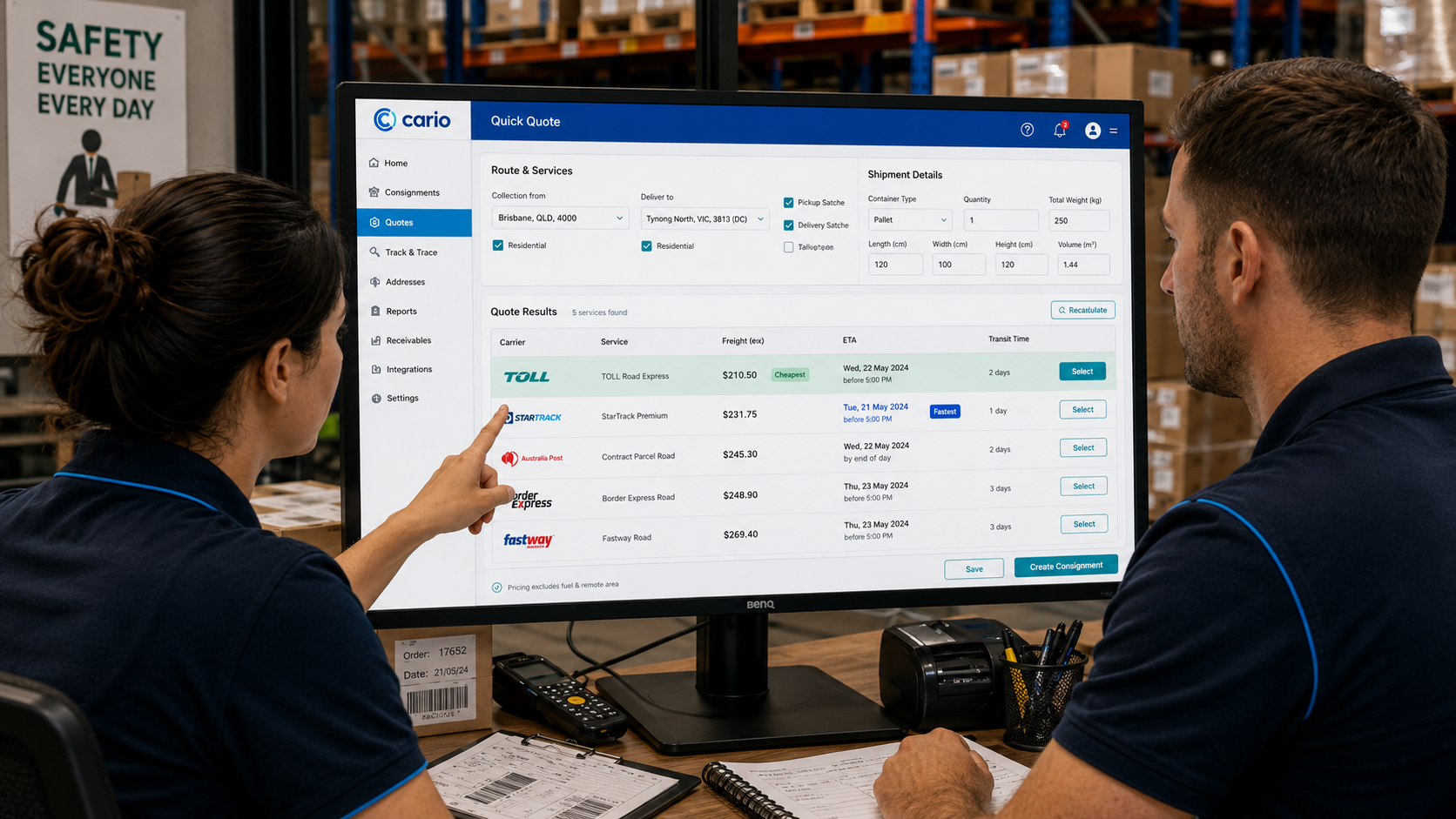
Teams can enter the collection and delivery locations, freight type, quantity, weight, dimensions and delivery requirements. Cario then presents available carrier services so users can compare cost and ETA in one place.
The cheapest carrier option is highlighted, and the fastest ETA is also shown clearly. This gives teams a practical way to compare cost against delivery speed before they book.
It also helps catch common data issues. For example, if freight volume looks too low or dimensions appear unusual, Cario can flag the issue so the user can review the shipment details before moving ahead.
What Teams Can Compare Before Booking
A good freight quote process should give teams more than a price.
It should help them compare the key details that affect cost, service and delivery outcome.
Freight locations
Teams can enter the collection and delivery suburbs and postcodes. This helps match the freight movement to the right carrier services.
Residential delivery
Residential delivery can affect freight cost and service availability. Cario allows teams to identify residential collection or delivery requirements during the quoting process.
Tail lift and hand unload requirements
Some deliveries need extra handling. Teams can select requirements such as pickup tail lift, delivery tail lift or hand unload before calculating the quote.
Freight type and dimensions
Users can enter the container type, quantity, weight, length, width and height. These details help calculate the freight quote based on the actual shipment.
Carrier cost and ETA
Once the quote is calculated, teams can compare carrier services. The lowest-cost and fastest ETA options are clearly identified.
Why This Helps Logistics Teams
For logistics managers, quote comparison supports better carrier selection.
Instead of relying on habit or manually checking one carrier at a time, teams can compare available services before they commit. This helps them choose the right carrier for the job based on cost, speed and delivery requirements.
It also helps reduce avoidable mistakes. When users receive prompts about unusual dimensions or volume issues, they can fix the details before the consignment is created.
That matters in busy dispatch environments where small errors can become expensive later.
Why This Helps Warehouse Teams
Warehouse teams often know the final packed freight details.
They know how many cartons, pallets or cages are ready. They can confirm weight and dimensions. They can also identify whether a delivery needs special handling.
A quote workflow gives warehouse teams a clearer way to turn those packed freight details into carrier options. This reduces the need to pass information back and forth through emails, spreadsheets or phone calls.
Why This Helps Customer Service
Customer service teams often deal with delivery questions after a booking has been made.
Freight quote comparison helps reduce issues earlier in the process. When logistics teams select the right carrier service upfront, customer service teams are less likely to deal with avoidable delivery problems later.
It also helps when customers ask for freight cost or delivery timing before an order is dispatched. Teams can check available options rather than guessing.
Why This Helps Finance
Finance teams care about freight cost control.
If teams choose carrier services without comparing options, costs can creep up. If freight dimensions are entered incorrectly, charges can be higher than expected. If delivery requirements are missed, extra fees may appear later.
By comparing freight quotes before booking, businesses can create a more controlled freight process. Finance teams get better visibility into cost decisions earlier, instead of only seeing the result when carrier invoices arrive.
From Quote to Consignment
A useful freight quote should not sit in isolation.
Once the team reviews the available carrier services, they can move from quote comparison into consignment creation. This helps keep the workflow connected from quoting through to booking and freight documentation.
In Cario, this supports a more consistent process across freight operations. The same platform can support quoting, booking, tracking, proof of delivery visibility and reporting across delivery movements.
What to Check Before You Generate a Freight Quote
Before calculating a freight quote, teams should check:
Collection suburb and postcode
Delivery suburb and postcode
Whether collection or delivery is residential
Whether a tail lift is needed
Whether hand unload is required
Freight type or container type
Quantity
Weight in kilograms
Length, width and height in centimetres
Any dangerous goods requirements, where relevant
These checks help produce a more accurate quote and reduce the risk of freight charge surprises.
A Practical Example
A warehouse team has three pallets ready to leave Melbourne for a customer site in regional New South Wales.
The team enters the delivery suburb, confirms the postcode, adds pallet dimensions and marks that delivery tail lift is required. Cario then shows available carrier services, with the lowest-cost option highlighted and the fastest ETA shown.
The logistics team can now make a better call.
If the customer needs the goods urgently, they may choose the fastest ETA. If the delivery is less time-sensitive, they may choose the lowest-cost service. Either way, the team makes the decision with clearer information before the freight is booked.
Better Freight Decisions Start Before Booking
Freight cost control does not start when the invoice arrives. It starts when the team chooses the carrier service.
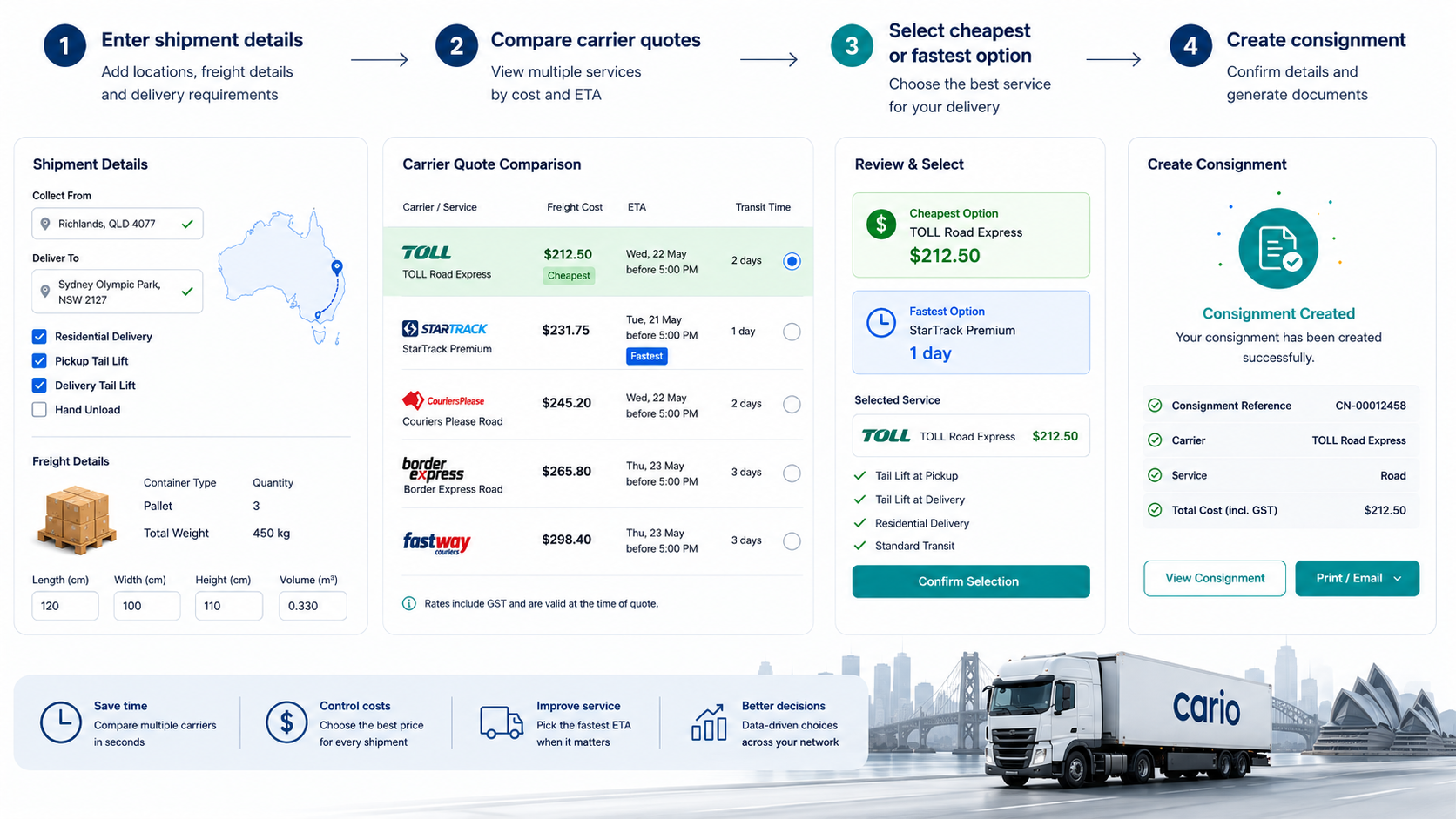
A connected quote comparison process helps logistics, warehouse, customer service and finance teams work from the same information. It reduces manual checks, helps catch common freight detail errors and gives teams a clearer way to compare cost and ETA before booking.
For businesses managing freight across multiple carriers, that control matters.