

Driver Delivery App for Runs, Scans and POD | Cario
04 August 2026

Give drivers one mobile workflow for assigned runs, barcode scans, proof of delivery, assessments, and live delivery updates back to your operation with Cario.
Why Driver Execution Breaks Down, and How a Mobile Workflow Fixes It
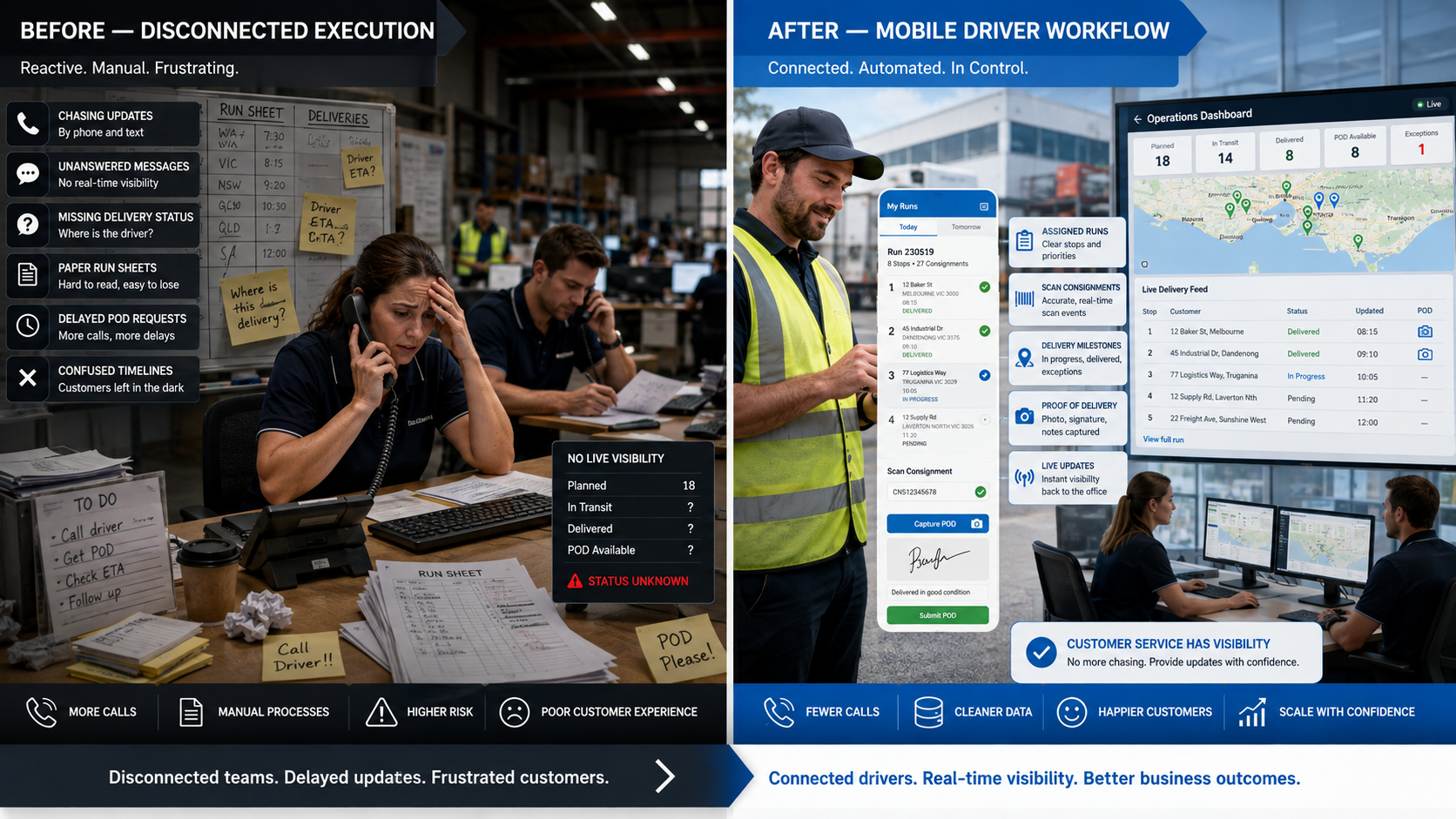
If you manage transport or delivery operations, you’ve probably seen this play out.
A run leaves the depot looking organised.
By mid-morning, things start to drift.
A missed scan here.
A delivery delay there.
A customer asking for proof that hasn’t been captured yet.
By the end of the day, your team is chasing updates instead of staying in control.
This is the gap most transport teams live with: the difference between planning a run and actually executing it on the road.
The Real Problem Isn’t Planning, It’s Execution
Most operations teams already have a plan in place:
runs are assigned
routes are mapped
deliveries are scheduled
But once drivers are out on the road, things often rely on:
phone calls
paper notes
memory
separate apps
delayed updates
I’ve seen this firsthand. A warehouse team in Western Sydney had everything dialled in at dispatch. But once trucks left, customer service had no visibility. Drivers were doing the work — just not capturing it in a way the business could use.
That’s where things break.
What This Looks Like Day to Day
For an operations manager or transport lead, the symptoms are familiar:
You don’t know which deliveries are actually complete until hours later
Customer service keeps asking for updates you don’t have
Proof of delivery is slow to retrieve
Drivers forget or skip scan events
Delivery issues only surface when customers call
It’s not that your team isn’t doing the job.
It’s that the process isn’t connected.
Why This Becomes a Bigger Issue as You Grow
The bigger the operation, the worse this gap gets.
More drivers = more variation in how work gets done
More deliveries = more chances for missed updates
More customers = more pressure on visibility
What worked with 2 vehicles breaks with 20.
And suddenly:
your customer service team is overloaded
your operations team is reacting instead of managing
your delivery data can’t be trusted
What a Better Process Looks Like
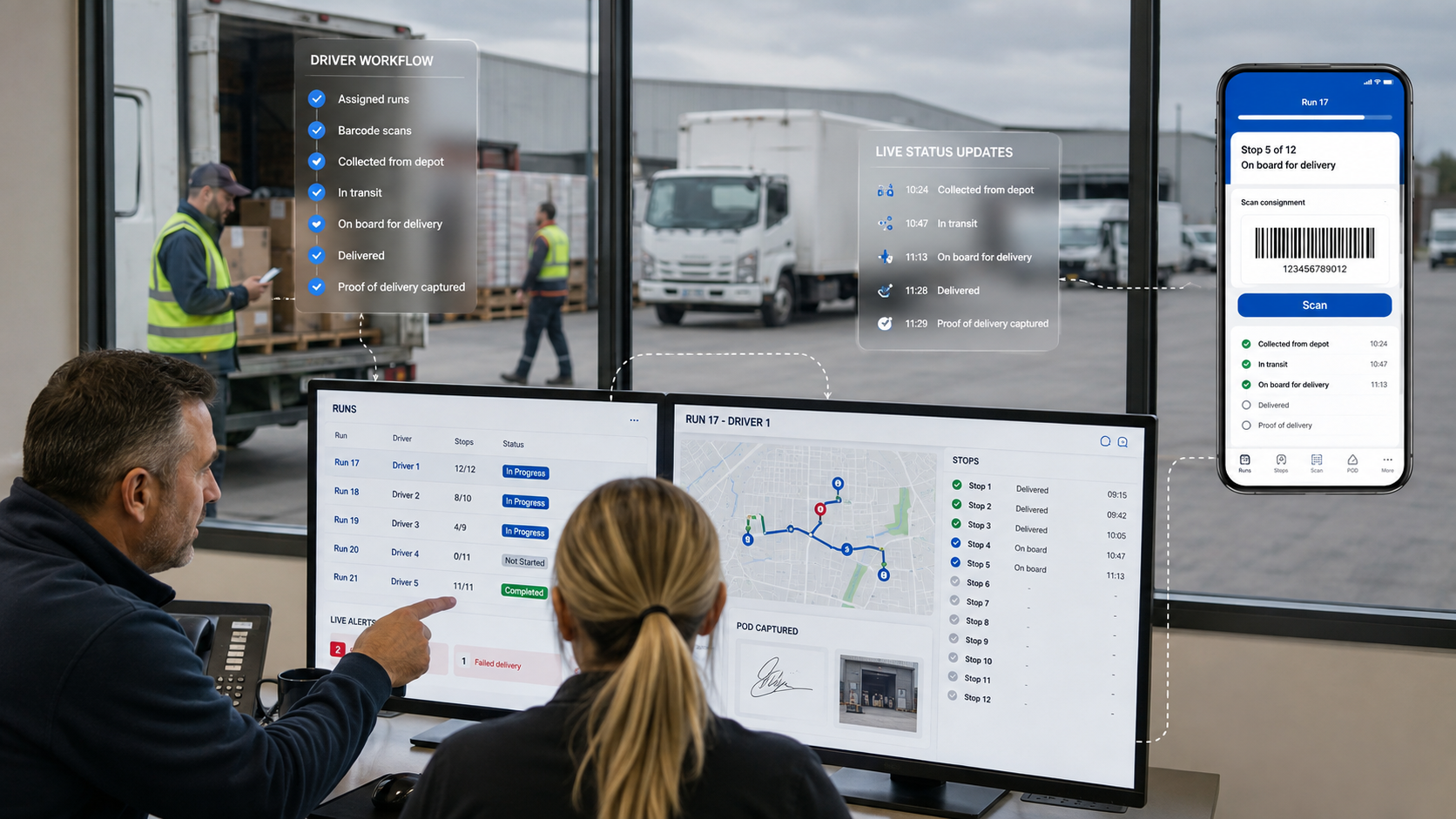
Now picture a different setup.
Instead of juggling calls and paperwork, your drivers work from one mobile workflow.
They can:
see their assigned runs
complete required checks before starting
scan consignments at each milestone
capture proof of delivery on the spot
log activity throughout the day
receive updates as runs change
And the key difference?
That information flows back to your operation in real time.
How This Changes Things for Your Team
When driver execution is connected, the impact shows up across the business.
For Operations Managers
You get a clearer view of what’s happening on the road, not just what was planned in the morning.
For Customer Service Teams
You can answer “Where’s my order?” without chasing drivers or logging into carrier portals.
For Logistics Teams
You reduce manual follow-ups and keep delivery data consistent across runs.
For the Business Overall
You move from reacting to problems → to managing delivery performance.
A Practical Example
Let’s say a customer calls at 2:30 PM asking about a delivery.
Without a connected driver workflow:
CS calls the warehouse
warehouse calls the driver
driver checks notes
someone calls the customer back
20–30 minutes gone. Sometimes longer.
With a mobile driver workflow:
CS checks delivery status
sees scan history
confirms delivery progress or completion
responds immediately
Same question. Completely different experience.
Why This Matters More Than It Sounds
Driver execution isn’t just a transport issue.
It affects:
customer experience
internal workload
delivery reliability
cost of operations
And in Australian freight, where you’re often dealing with long distances, mixed delivery types, and tight delivery windows, small gaps get exposed quickly.
This is exactly where connected freight and transport systems make a difference — bringing driver activity, delivery events, and proof of delivery into one consistent flow across the business.
The Bottom Line
Most delivery problems don’t start in planning.
They start when the plan hits the road.
If your drivers are still working across disconnected tools or manual processes, your team is always going to be one step behind.
A mobile-first workflow changes that.
It gives your drivers structure.
It gives your team visibility.
And it gives your business a more reliable way to manage delivery at scale.
Want to See What This Looks Like in Practice?
If you’re running your own fleet or managing contracted drivers, it’s worth seeing how a connected driver workflow fits into your broader freight and transport setup.
Talk to the Cario team to walk through your current process and see where a mobile driver workflow can reduce admin and improve delivery visibility.