

How to Speed Up Freight Consignment Creation Across Multiple Carriers
24 June 2026

If your team is still creating consignments through a mix of carrier portals, spreadsheets, and manual workarounds, it may be time to tighten up the process.
Talk to the Cario team about how a connected freight workflow can help you create consignments faster, compare carrier options more clearly, and reduce admin across your operation.
Creating a consignment should be routine. In many businesses, it still eats up too much time.
Teams jump between carrier portals, re-enter address details, check service rules by hand, and hope the booking goes through without a pricing surprise or delivery issue later. That slows down the warehouse, creates pressure on customer service, and makes it harder to keep freight moving when volumes pick up.
Cario helps bring that process into one place. Instead of treating consignment creation as a series of disconnected steps, it gives operations teams a single workflow to enter delivery details, choose service options, add freight dimensions, compare carrier services, and finalise the booking. That fits Cario’s broader role as one platform for freight and transport management across complex Australian operations.
Why consignment creation becomes a bottleneck

Freight admin often looks small on paper. In practice, it turns into a daily drag on the whole operation.
A team might be booking freight for pallets, cartons, bulky freight, or special handling jobs across several carriers. Each job needs delivery and collection details, service selection, shipment dimensions, references, and instructions. If that work sits across separate systems or manual workarounds, every booking takes longer than it should.
For growing businesses, that leads to familiar problems:
warehouse teams spending too long preparing freight bookings
operations staff switching between carrier systems
customer service chasing delivery details after the booking is created
higher risk of data entry mistakes on dimensions, addresses, or instructions
slower carrier selection when cost and ETA need to be compared quickly
These are the same types of operational issues Cario is built to solve for businesses handling freight across multiple carriers, sites, and systems.
What a better process looks like
A stronger consignment workflow does more than create a shipment record. It gives teams a cleaner way to make booking decisions and move on.
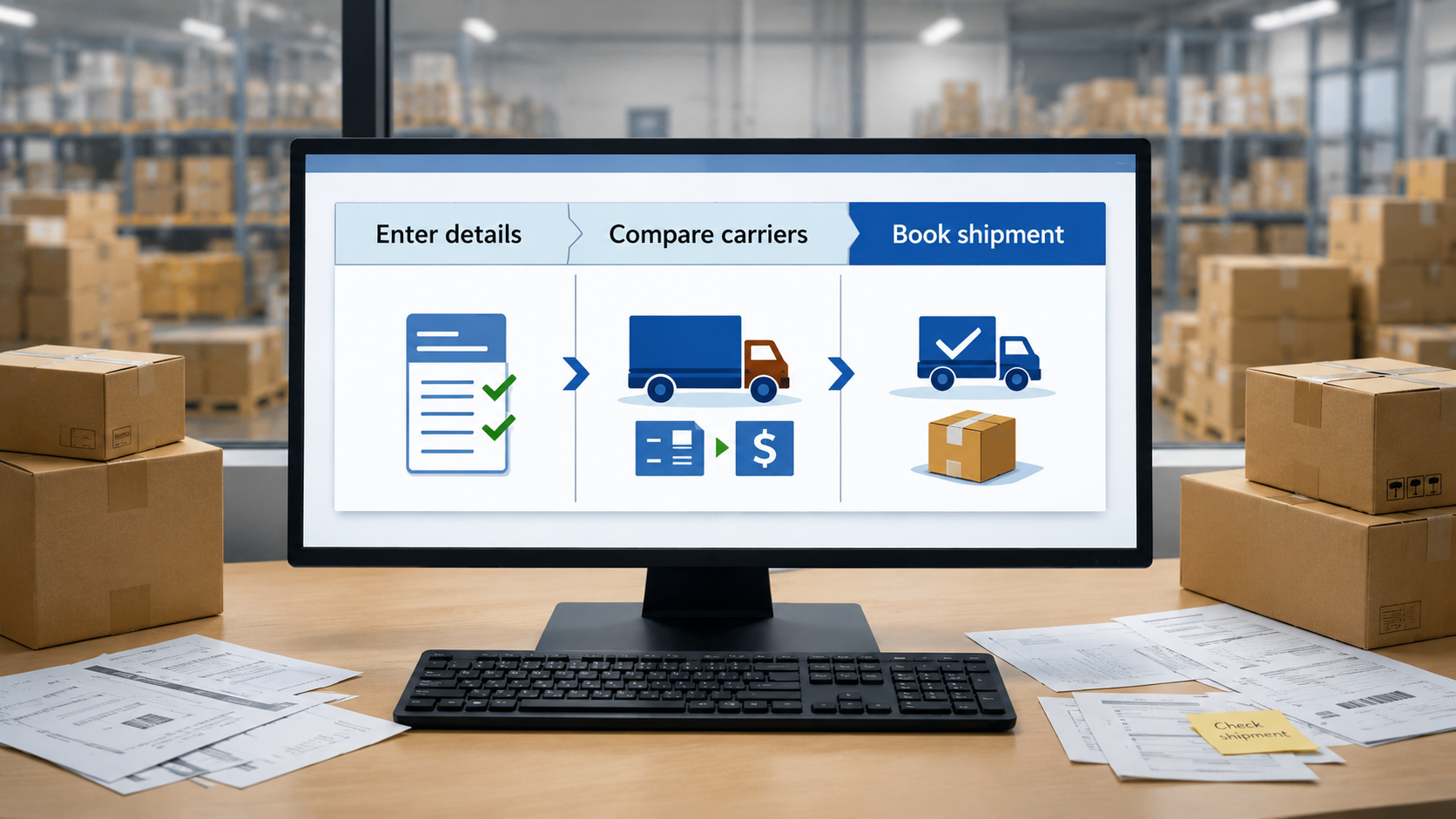
Cario’s consignment process brings together the key information needed to create and manage a freight movement:
collection and delivery details
service requirements
shipment dimensions and weight
pricing and references
special handling instructions
carrier service review before final booking
That matters because carrier pricing, service availability, and booking rules all depend on the quality of that information. When the workflow is connected, teams can create consignments with less back-and-forth and more confidence that the booking reflects the actual freight requirement.
How Cario helps operations teams move faster
Cario turns consignment creation into a practical operational workflow rather than a patchwork of admin tasks.
1. One place to enter delivery and collection details
Users can capture both delivery and pickup information, including address details, residential requirements, authority to leave, and handling instructions. That gives teams a more complete booking record from the start.
For operations managers, the benefit is simple: less rework later because key delivery requirements are captured upfront.
2. Shipment details that support better carrier selection
Dimensions, weight, container type, references, and other shipment details are part of the same workflow. The note also shows that Cario applies checks and warnings when freight dimensions look wrong.
That helps reduce avoidable booking errors. It also matters for cost control, because incorrect dimensions can drive the wrong pricing outcome.
3. Carrier options reviewed before the booking is finalised
Once the consignment is created, users can review available carrier services. the cheapest option is highlighted first and the fastest ETA is also identified.
This is where the workflow starts supporting a broader business outcome. Teams can compare service fit at the point of booking, rather than defaulting to habit or making rushed choices across separate portals.
4. Support for real freight requirements, not just basic parcel jobs
Cario offers options for handling requirements, additional references, dangerous goods workflows, and consolidation for matching unmanifested consignments.
That reflects the kind of freight reality Cario is built for: varied freight types, different carrier rules, and operations that need more than a basic shipping tool.
What this means for the business

Consignment creation sounds tactical. The flow-on effect is much bigger.
When teams can create consignments faster and with fewer manual steps, the business gets:
Less admin in the warehouse and operations team
People spend less time re-entering information and chasing carrier booking requirements.
Better carrier choice at the point of booking
Teams can compare service options in one process instead of working from habit or limited visibility.
Fewer avoidable freight errors
More accurate shipment details help reduce booking issues, pricing disputes, and downstream service problems.
Clearer handover between teams
When booking information is captured properly, customer service and operations have a better starting point for tracking and exception handling.
A stronger base for scale
As freight volumes grow, a connected workflow is easier to repeat than a manual one.
Those outcomes line up with Cario’s broader value proposition around visibility, automation, cost control, and simplification for businesses managing growing freight complexity.
A practical example
A distributor shipping across metro and regional Australia might be booking freight with several carriers each day. Some jobs need tail lift. Some need delivery instructions. Some are residential. Some are bulky or time-sensitive.
Without one process, staff often rely on memory, carrier-specific workarounds, and duplicate data entry.
With a connected consignment workflow, the team can enter the shipment details once, review service options, select the right carrier fit, and move the job forward. That saves time at the booking stage and helps reduce avoidable friction later in the delivery journey.
This kind of scenario is exactly where Cario’s Australian freight focus matters. The platform is positioned for businesses dealing with multi-carrier operations, broad delivery requirements, and day-to-day freight pressure across local operating conditions.
Signs your current process needs work
Your consignment workflow may be holding the business back if:
staff still book freight across multiple carrier portals
service selection depends on tribal knowledge
shipment details are often corrected after booking
special handling requirements are easy to miss
customer service needs to chase booking details from operations
volume growth is increasing admin faster than output
If any of that sounds familiar, the issue is usually bigger than one booking screen. It points to a freight process that needs better structure and visibility.
Consignment creation is one step in the freight journey, but it shapes everything that comes after it. A poor booking process creates flow-on issues in tracking, customer communication, cost control, and reporting. A stronger one helps set up the rest of the delivery lifecycle with better information from the start.

Your Own Cario Trial Account
Sometimes you just need to try out software to get a feel for its capabilities and how it might fit within your organisation.