

How Freight Surcharges Impact Your Costs (and How to Stay in Control)
10 June 2026

Freight pricing rarely stops at the base rate. For most Australian businesses managing multiple carriers, the real cost of delivery includes a range of additional charges that can be easy to miss.
Fuel adjustments, handling fees, regional surcharges—these all play a role in what you actually pay.
If they’re not accounted for properly, they can quietly eat into margins and create headaches across logistics, finance, and customer service.
This is where many operations start to feel the strain.
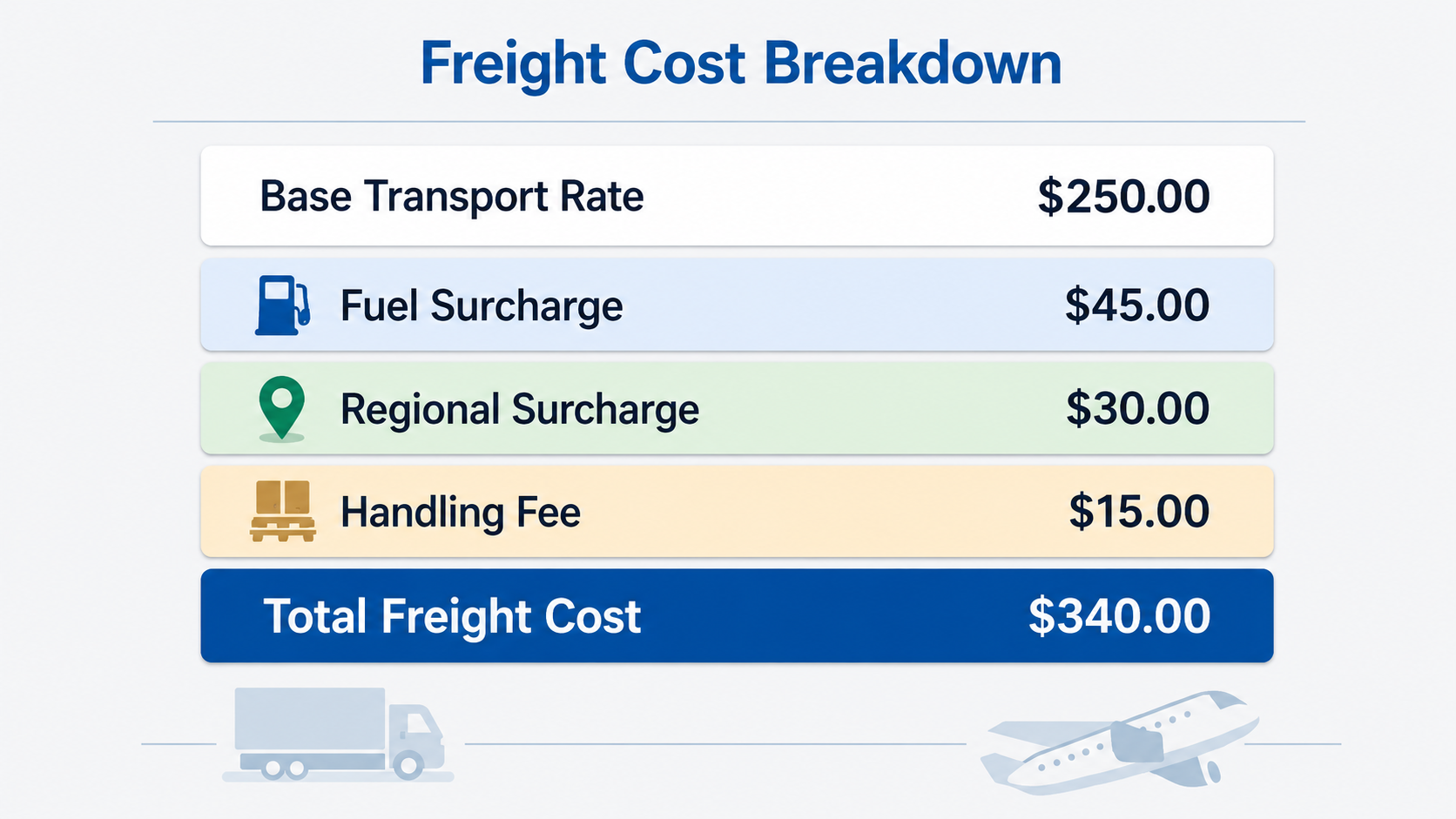
Why Freight Costs Often Don’t Match the Quote
On paper, a freight rate might look straightforward. In reality, carriers apply extra charges depending on how, where, and what you ship.

Common examples include:
Fuel surcharges that fluctuate regularly
Manual handling fees for non-standard freight
Oversize or overlength charges
Regional delivery surcharges for remote or rural areas
Service-specific or carrier-specific fees
These aren’t edge cases. They’re part of everyday freight in Australia, especially when you’re moving goods across metro and regional networks.
The problem is consistency.
When these charges aren’t applied correctly at the quoting stage, businesses run into:
Underquoted shipments that reduce margins
Unexpected invoice increases at the end of the month
Disputes between teams over what was charged vs what was expected
Time lost chasing carrier explanations
It’s a small gap in process that quickly becomes a bigger financial issue.
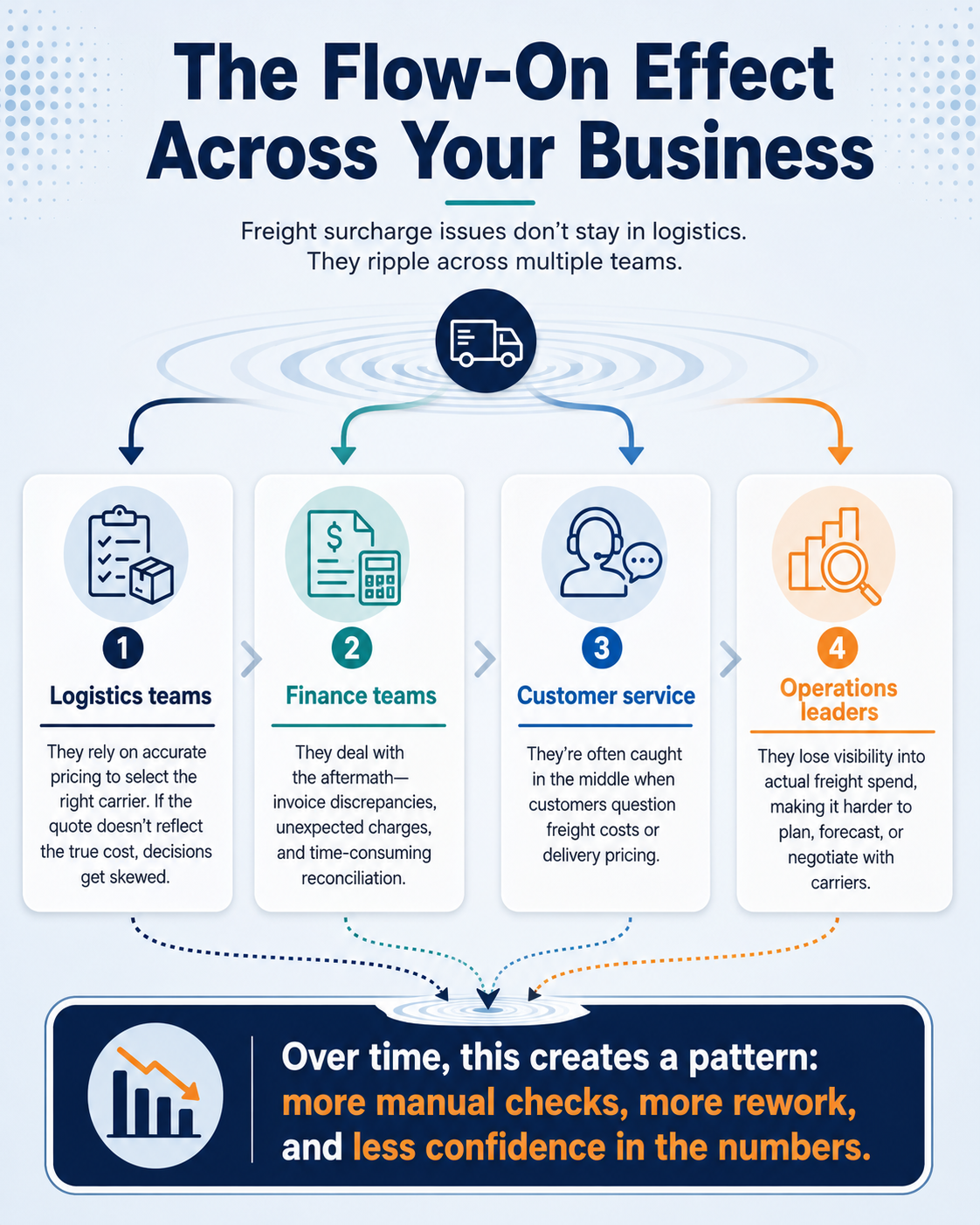
Why Surcharges Are Hard to Manage Manually
Most businesses don’t ignore surcharges—they just struggle to keep up with them.
That’s because:
Each carrier structures fees differently
Surcharges change regularly (especially fuel)
Some charges apply only to specific regions or services
Others depend on freight dimensions or handling requirements
Trying to track all of this in spreadsheets or across multiple carrier portals quickly becomes unmanageable.
It’s not uncommon to see teams double-checking quotes manually or relying on experience to “estimate” the real cost. That might work at low volume, but it doesn’t scale.
A More Practical Way to Handle Freight Surcharges
The alternative is to treat surcharges as part of your core freight logic—not as an afterthought.
That means:
Linking surcharge rules directly to carrier rate cards
Applying charges automatically during quoting
Keeping updates aligned with carrier changes
Handling special cases (like oversized freight) separately
This shifts the process from reactive to controlled.
Instead of asking, “Did we include that fee?”, your team can trust that the pricing already reflects it.
What This Looks Like in Practice
In a well-structured setup:
A pallet going to a regional postcode automatically includes the correct regional surcharge
A bulky item triggers the appropriate handling or oversize fee
Fuel surcharges update in line with carrier changes
Shipments that can’t be priced upfront are flagged for manual review
The key difference is consistency.
Every quote follows the same logic, regardless of who in the team creates it.
Where This Makes the Biggest Difference
This approach has the most impact in operations where:
Multiple carriers are in use
Freight types vary (cartons, pallets, oversized items)
Regional deliveries are common
Shipment volumes are growing
Finance teams need tighter cost control
In these environments, even small pricing gaps can add up quickly.
Reducing Surprises in Freight Spend
One of the biggest benefits of managing surcharges properly is predictability.
When surcharge logic is applied upfront:
Quotes align more closely with invoices
Finance teams spend less time reconciling differences
Logistics teams make better carrier decisions
Customers receive clearer, more consistent pricing
It doesn’t eliminate complexity in freight—but it does bring it under control.
A Common Scenario (And How It Changes)
Take a typical example.
A business ships pallets from Sydney to regional Queensland. The base rate looks competitive, so the carrier is selected. A week later, the invoice includes:
Fuel surcharge
Regional delivery fee
Manual handling charge
The final cost is 20–30% higher than expected.
Now multiply that across hundreds or thousands of consignments each month.
With proper surcharge handling in place, those costs are visible at the quoting stage—not after the fact.
That’s the difference between reacting to freight costs and managing them.
The Bottom Line
Freight surcharges aren’t optional extras—they’re part of the real cost of moving goods.
Ignoring them, or managing them manually, creates gaps that show up later in margins, invoices, and customer conversations.
Bringing surcharge logic into your freight process helps close that gap.
It gives your team a clearer view of costs, reduces surprises, and supports better decisions across logistics, finance, and operations.
Want to See How This Works in Your Operation?
Cario helps businesses apply real carrier pricing—surcharges included—so every quote reflects the true cost of delivery.
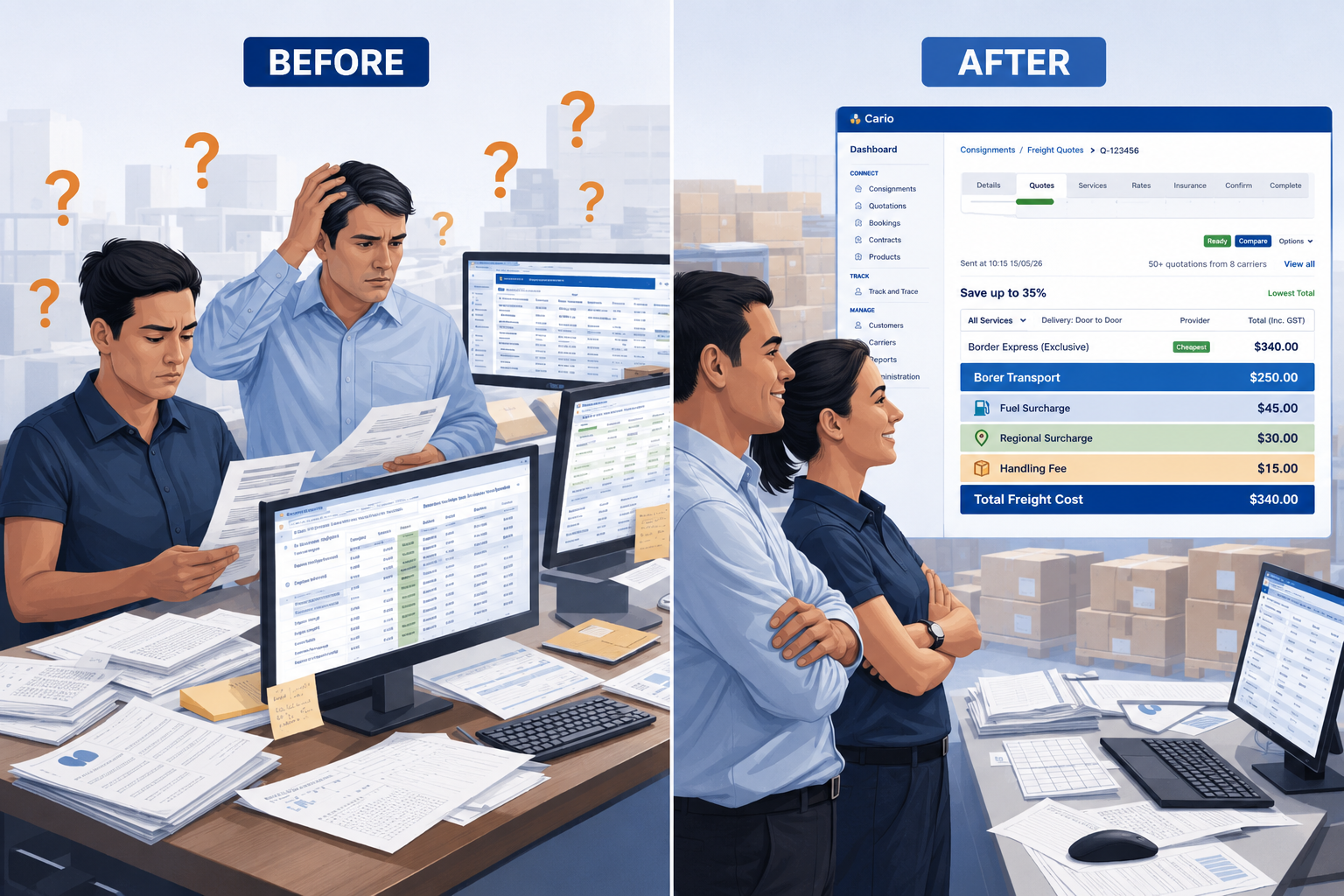
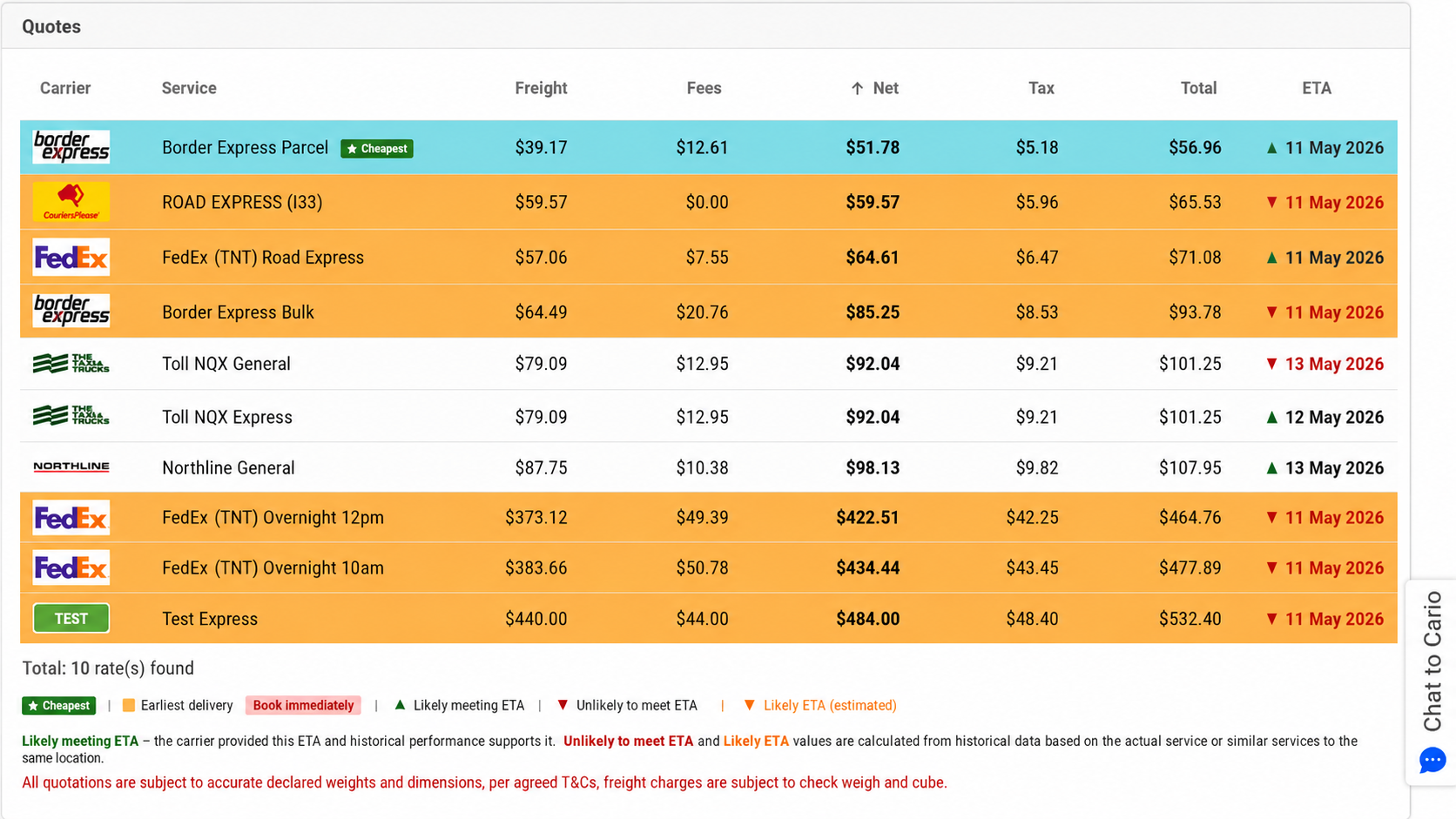
Talk to our team to see how it fits into your freight setup and where it can reduce hidden costs.

On Demand Demo
This on-demand demo walks through the major functions of Cario such as: creating, quoting and tracking consignments; Viewing a Proof of Delivery and invoice Reconciliation.