

Receiver Pays Freight: How to Handle Third-Party Carrier Billing Without Errors
30 July 2026

This article breaks down how receiver pays freight works, where it goes wrong, and how to manage it properly without adding more admin.
If you ship freight across Australia, you’ve likely run into this situation.
A customer says, “Bill it to our account.”
Your team books the job.
Then finance gets the invoice—and something doesn’t line up.
Receiver-paid freight sounds simple. In practice, it often creates confusion, manual fixes, and billing disputes.
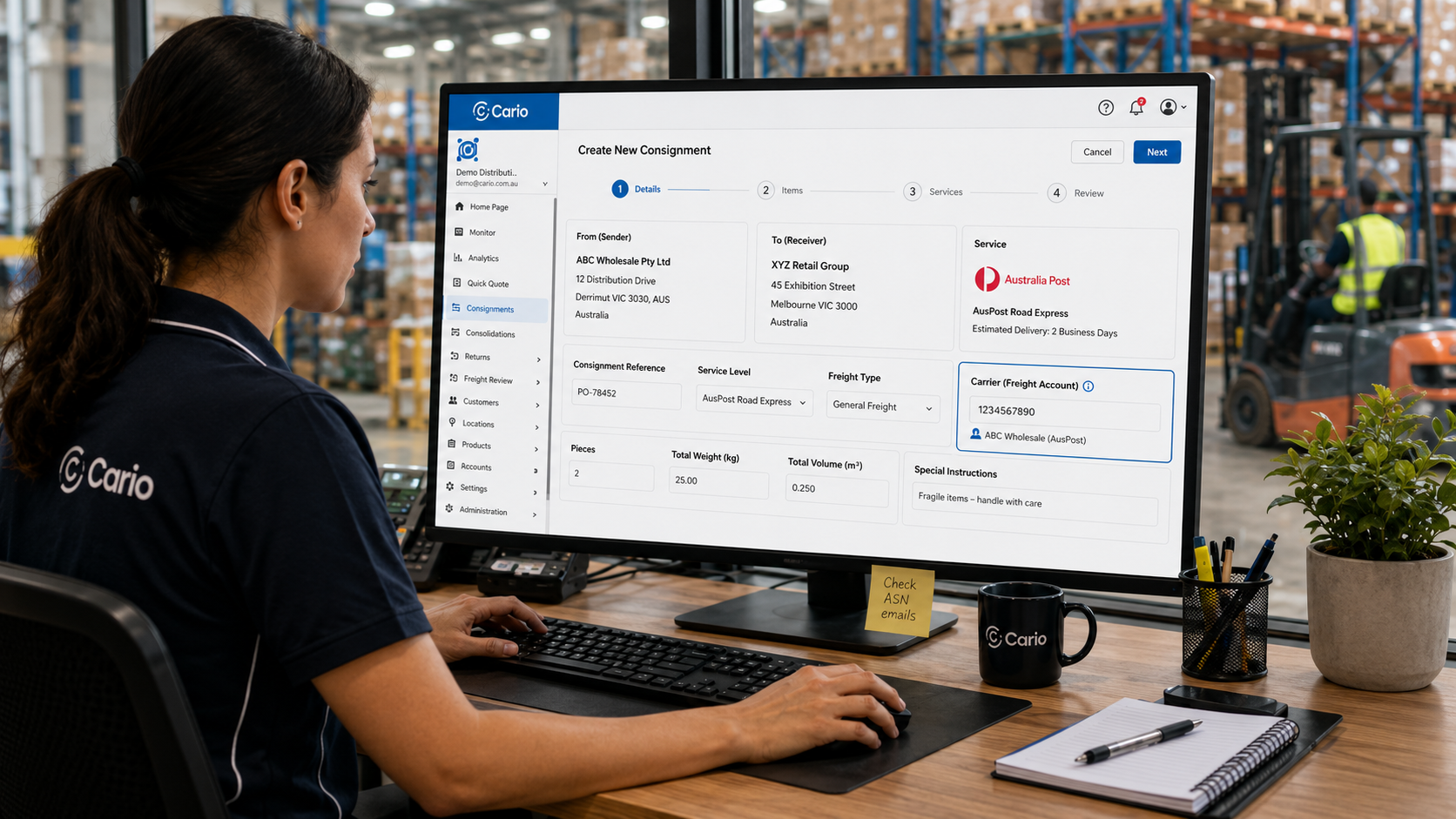
This article breaks down how receiver pays freight works, where it goes wrong, and how to manage it properly without adding more admin.
What Is Receiver Pays Freight?
Receiver pays freight means the delivery charges are billed to the receiver’s carrier account, not the sender’s.
This usually applies when:
The receiver has negotiated their own freight rates
A retailer or major customer requires shipments on their account
There are agreed commercial terms between sender and receiver
Instead of using your own carrier account, you apply theirs at the time of booking.
Why Businesses Use Third-Party Carrier Billing
In Australian freight operations, this isn’t an edge case—it’s common.
Think about:
Shipping to large retailers like distribution centres
Supplying construction sites with preferred carriers
Working with national customers who control inbound freight
In these scenarios, using the receiver’s account:
Keeps pricing aligned with their contracts
Avoids double-handling costs
Meets customer requirements
But it also introduces risk if not handled properly.
Where It Goes Wrong
This is where most teams get caught out.

From experience, the issues usually aren’t with the concept—they’re with execution.
1. Manual Entry Every Time
Teams retype carrier account numbers for each consignment.
That’s slow and easy to get wrong.
2. Incorrect or Outdated Account Details
If the account number is wrong, the carrier may still process the job—but bill the sender instead.
3. No Standard Process
Some team members apply receiver pays. Others forget.
Now you’ve got inconsistent billing across shipments.
4. Invoice Surprises
Finance only finds out there’s a problem weeks later when the invoice arrives.
5. Time Wasted Fixing It
Chasing credits, contacting carriers, explaining to customers—it all adds up.
Across a busy operation, this can quietly drain time and money.
The Real Impact on Operations and Finance
This isn’t just a booking issue. It hits multiple teams.
Operations teams lose time fixing avoidable errors
Customer service deals with billing complaints
Finance spends hours reconciling incorrect charges
And the bigger the business gets, the worse it becomes.

I’ve seen teams handling thousands of consignments a month still relying on notes in spreadsheets to track who pays for what. It works—until it doesn’t.
What Good Looks Like
A well-managed receiver pays process should be simple:
The correct billing setup is applied during booking
Carrier account details are stored and reused
Teams follow a consistent process
Finance doesn’t need to fix avoidable errors
In short, the system supports the workflow—not the other way around.
How to Manage Receiver Pays Freight Properly
Here’s a practical way to approach it.
1. Set Clear Rules at Customer Level
Not every customer uses receiver pays.
Define it upfront so your team knows when to apply it.
2. Capture Carrier Account Details Once
Avoid retyping account numbers for every shipment.
Store them against customer delivery addresses.
3. Apply Billing at the Time of Booking
Don’t leave it until later.
If it’s not set correctly upfront, it creates problems downstream.
4. Validate with the Receiver
Carrier systems may not reject invalid accounts immediately.
Always confirm details with the customer.
5. Keep Carrier Compatibility in Mind
Not all services support third-party billing.
Make sure the selected carrier can handle it.
Where Systems Usually Fall Short
Many freight setups weren’t built with this level of flexibility in mind.
You’ll often see:
ERP systems that don’t support third-party billing properly
Carrier portals that require manual overrides
Workarounds using notes, emails, or spreadsheets
This is where errors creep in.
How Cario Supports Receiver Pays Freight
Cario brings receiver-paid freight into the standard booking workflow.

Instead of relying on memory or manual steps, your team can:
Enable third-party billing for specific customers
Enter or select the receiver’s carrier account during booking
Save account details against delivery addresses
Reuse them automatically for repeat consignments
That means:
Fewer billing mistakes
Less manual entry
Cleaner reconciliation for finance
It’s a small change in process, but it removes a lot of friction across teams.
Cario supports flexible freight arrangements as part of a broader platform that connects carriers, systems, and workflows in one place
When This Matters Most
Receiver pays freight becomes critical when:
You’re dealing with high shipment volumes
You have repeat delivery locations
Customers enforce strict freight terms
Finance is spending too much time fixing invoices
If any of those sound familiar, it’s worth tightening this part of your process.