
How to Simplify Return Freight Without Slowing Down Your Operation
30 July 2026

If return freight is creating extra work in your operation, it’s worth seeing how a structured approach would fit your setup.
Returns are part of doing business. But for many Australian logistics teams, they’re where things start to fall apart.
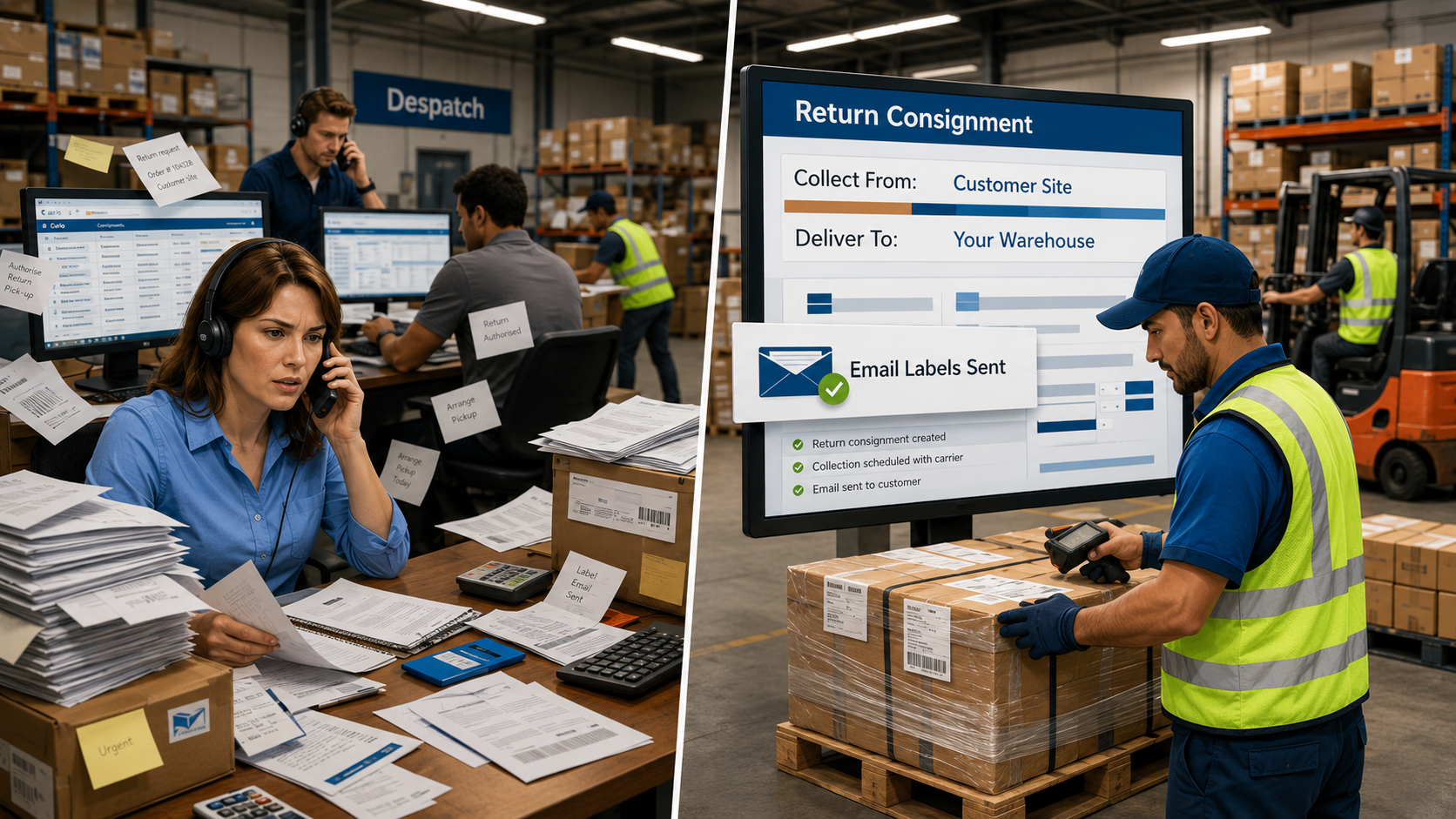
What should be a simple reverse shipment often turns into manual rework, email back-and-forth, and unnecessary delays. Customer service gets dragged in. Warehouse teams receive incorrect goods. Finance loses track of return costs.
It doesn’t need to work this way.
If your team is still rebuilding return shipments from scratch, there’s a faster and more controlled approach.
Why Return Freight Causes So Much Friction
Most freight processes are built around outbound delivery.
Returns sit outside that flow.
That creates a few common issues:
Teams manually recreate consignments
Addresses get mixed up or entered incorrectly
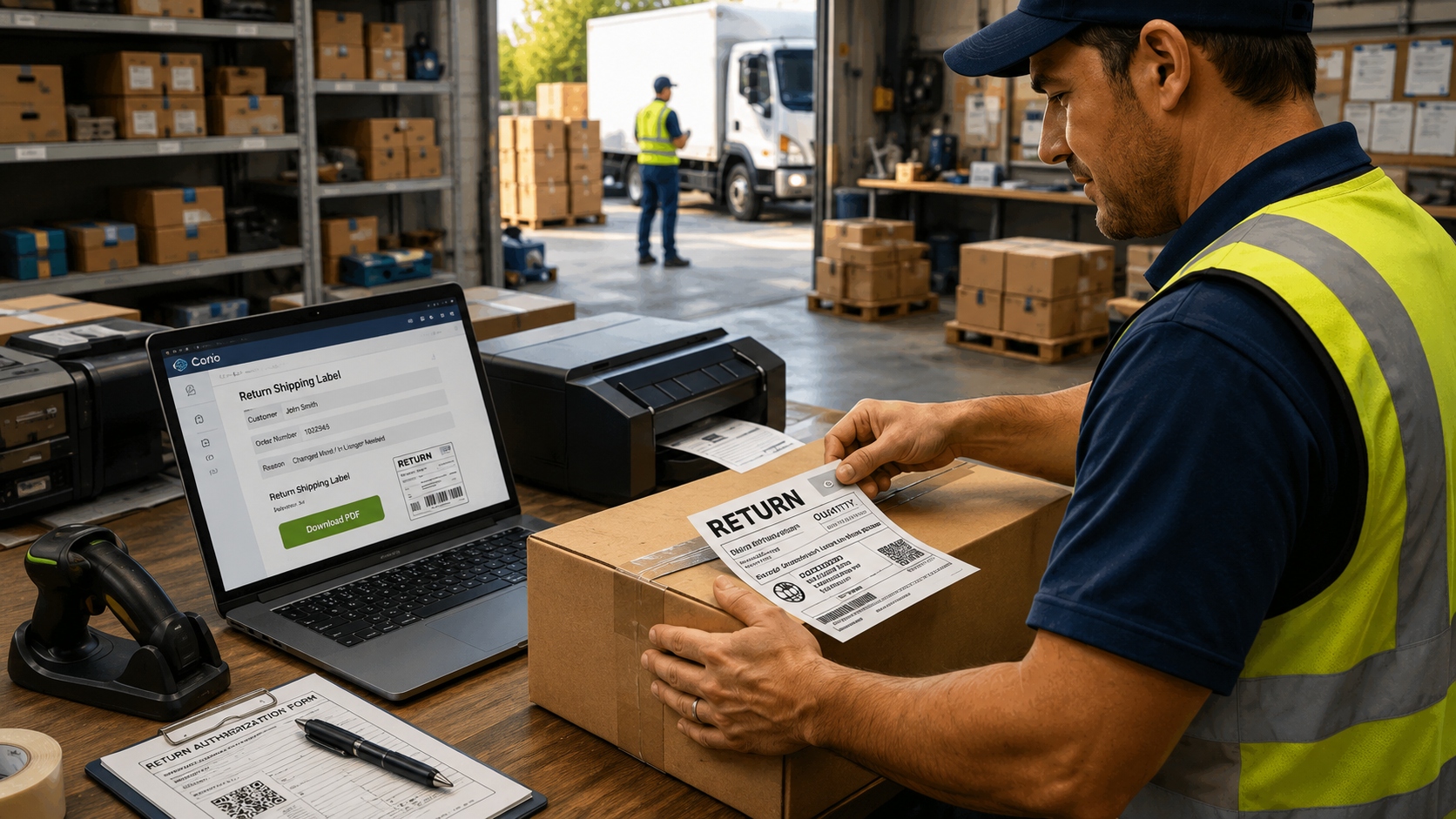
Labels need to be generated, downloaded, and forwarded
Customers are left waiting for instructions
Return shipments are harder to track and report on
I’ve seen this play out across wholesalers and distributors, especially those moving freight between metro and regional areas. One missed address or delayed label can easily add a day or two to a return.
Multiply that across hundreds of returns each month, and it becomes a real operational drag.
The Real Cost of Manual Returns
Returns don’t just add admin. They impact multiple parts of the business.
Customer service teams spend time coordinating instead of resolving
Warehouse teams deal with incorrect or unexpected returns
Logistics teams lose consistency across carriers and workflows
Finance teams struggle to track return freight costs accurately
And the biggest issue? It’s all reactive.
By the time a return is booked, something has already gone wrong.
A Better Way to Handle Return Consignments
Instead of treating returns as a separate process, leading operations treat them as part of the same freight workflow.
That means:
Using the same booking process as outbound shipments
Reusing shipment data instead of starting from scratch
Automatically reversing collection and delivery locations
Keeping returns visible alongside all other consignments
This removes the guesswork and keeps everything consistent.
What This Looks Like in Practice
Let’s take a common scenario.
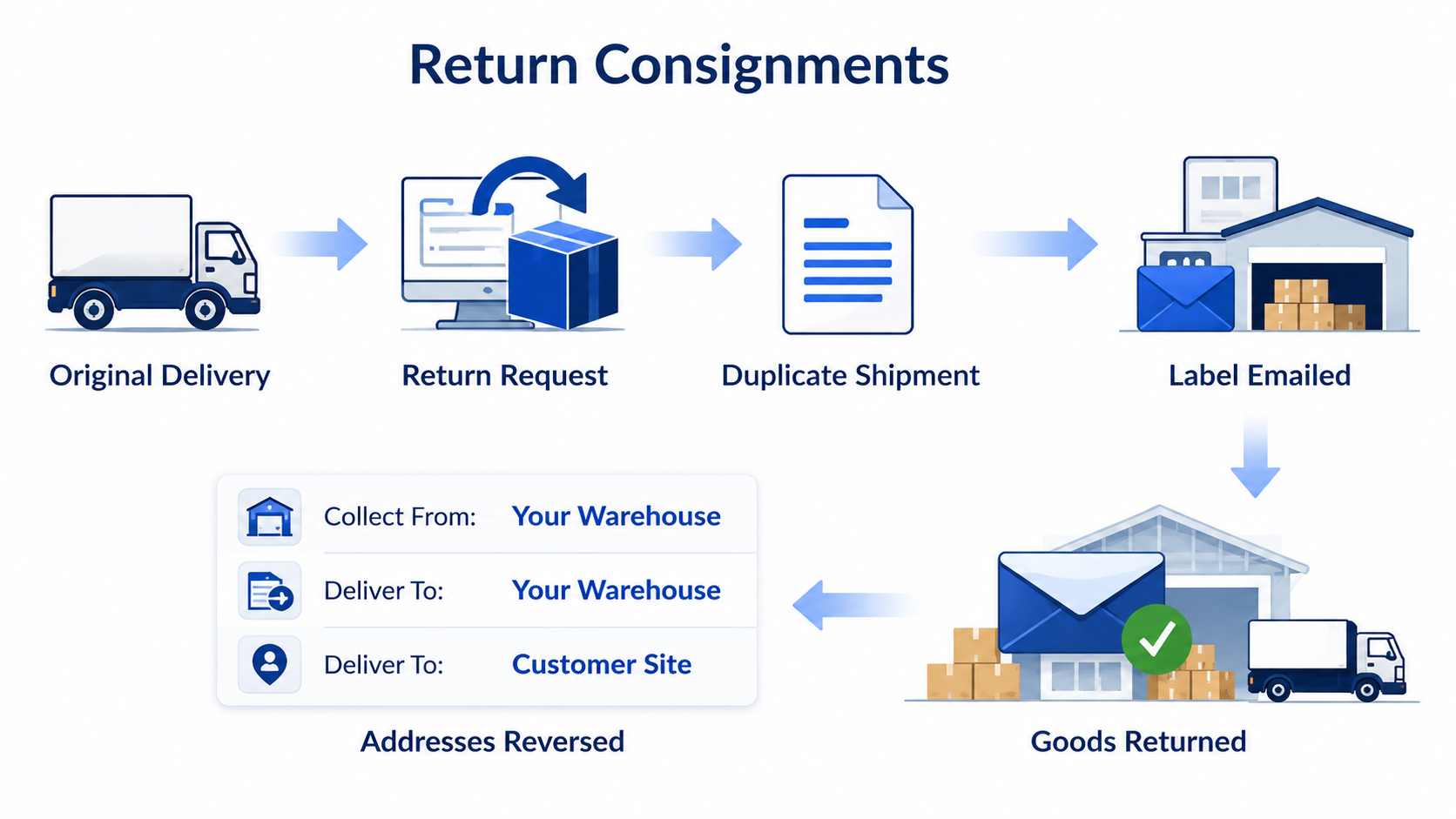
A customer receives damaged goods and needs to send them back.
Without a structured return process:
Customer service emails instructions
Warehouse manually recreates the shipment
Labels are generated and forwarded
Customer prints (or doesn’t)
Follow-ups begin
With a structured return workflow:
The original shipment is copied
Collection and delivery points are reversed automatically
Shipment details are already populated
Labels are sent directly to the customer
The return is booked and tracked like any other job
Same outcome. Far less friction.
Why Address Reversal Matters More Than It Sounds
It might seem like a small detail, but reversing “collect from” and “deliver to” correctly is where a lot of errors happen.
Get that wrong and:
Freight goes to the wrong site
Drivers can’t complete the job
Returns get delayed or lost
Automating this step removes one of the most common causes of return issues.
Speed Matters — Especially for Customer Experience
Customers don’t separate outbound and return experiences.
To them, it’s all part of the same service.
If returns are slow or confusing:
Confidence drops
Support requests increase
Repeat business is at risk
A faster return process helps close the loop properly.
Reducing Back-and-Forth with Customers
One of the simplest improvements is sending return labels directly to the customer.
Instead of:
Downloading labels
Attaching emails
Explaining next steps
You can:
Send everything in one step
Let the customer print and act immediately
It’s a small change that removes multiple touchpoints.
Keeping Returns Visible Across the Business
Returns shouldn’t sit in a separate spreadsheet or email thread.
They should be:
Trackable in real time
Visible to customer service
Included in freight reporting
Managed alongside outbound shipments
This is where many businesses fall short. Returns happen, but no one has a clear view of them.
Where This Delivers the Biggest Impact
From what I’ve seen across Australian operations, structured return workflows make the biggest difference when:
You’re handling high volumes of customer returns
You’re managing multiple carriers
Your customer service team is fielding delivery-related calls
You need consistency across multiple warehouses or sites
It’s not about adding new processes. It’s about fixing one that’s already there.
A Practical Shift, Not a Big System Change
You don’t need to redesign your entire operation to improve returns.
You just need to stop treating them as an exception.
When return consignments follow the same structure as outbound freight:
Teams move faster
Errors drop
Customers get clearer communication
Operations stay consistent
Final Thought
Returns are often where logistics operations lose time and control.
But they’re also one of the easiest areas to improve.
If your team is still manually rebuilding shipments, chasing labels, or fixing avoidable errors, it’s a sign the process needs tightening up.
A consistent return workflow won’t just save time. It will take pressure off your teams and improve the overall delivery experience.