

Warehouse Freight Booking for Packed Goods | Cario
08 July 2026

Learn how packed freight booking helps warehouse teams quote, book and hand over transport-ready pallets, cartons and cages with better control.
Warehouse Freight Booking: How to Move Packed Goods From Dispatch to Carrier Handover With Less Rework
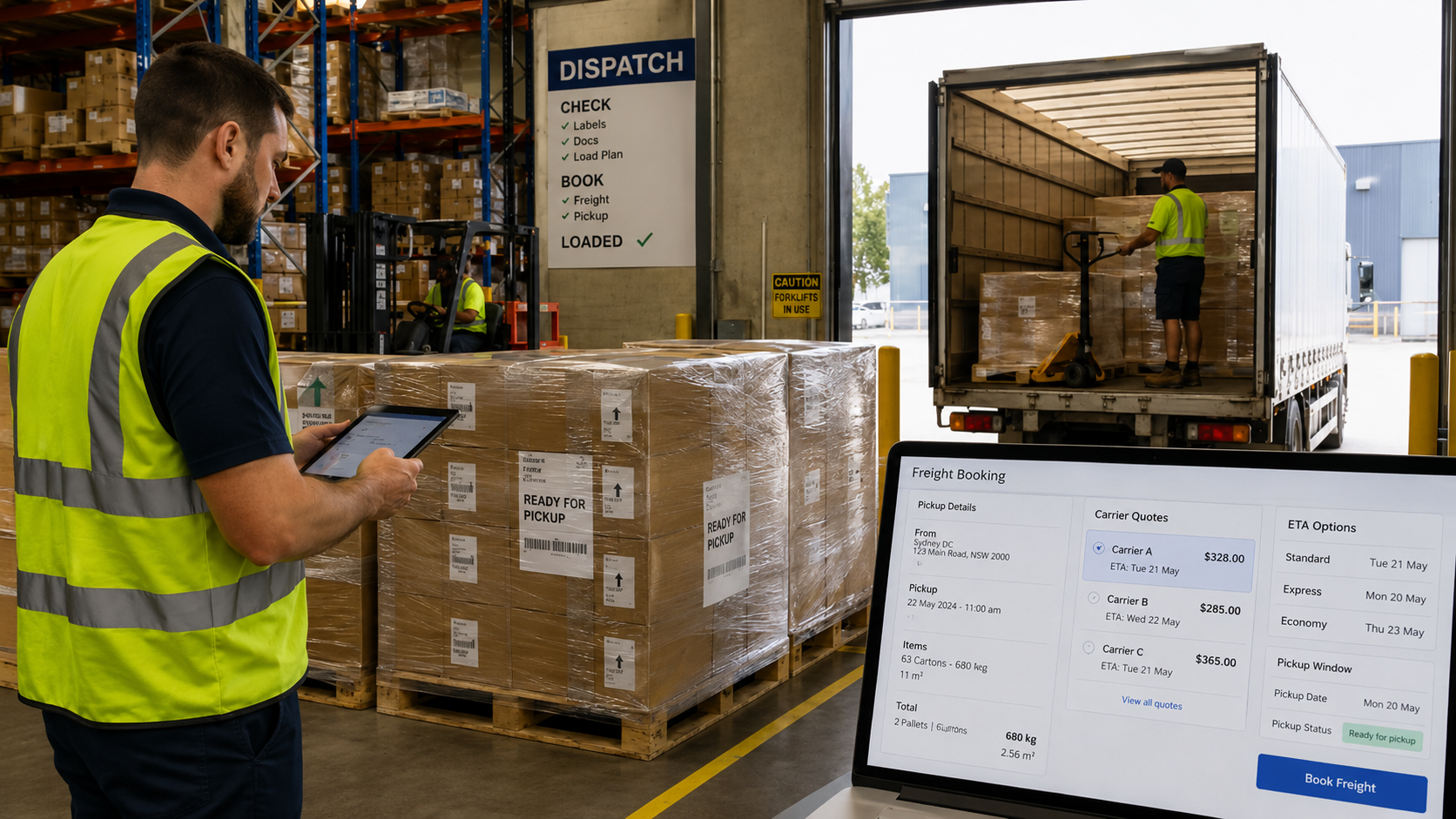
By the time freight reaches the dispatch dock, the hard work should already be done.
The goods are packed. The pallets are wrapped. The cartons are labelled. The warehouse team is ready for pickup.
Then the freight booking process slows everything down.
The team may still need to confirm the final dimensions, check the weight, enter delivery instructions, choose the right carrier, compare quotes and make sure the pickup and delivery requirements are clear. If the booking process is built around unpacked product data, the team may need to rework details that have already changed during packing.
That is where packed freight booking matters.
For Australian businesses moving pallets, cartons, cages and other transport-ready freight, the booking process needs to reflect what is actually being handed to the carrier. Cario helps teams manage this step by creating freight orders from packed transport units, comparing carrier options and preparing freight for handover from one connected platform.
Why packed freight needs a different booking process
A standard order workflow often starts before the warehouse has packed the goods. That works well for planning, but it does not always reflect the final freight profile.
Once the order is picked and packed, the freight may look different.
A group of products may become one pallet. Several cartons may be combined. The final weight may change. The cubic volume may matter more than the item count. Delivery may require a tail lift, hand unload, receiver confirmation or a booked delivery window.
If the booking does not reflect those final packed details, the team can run into issues such as:
inaccurate carrier quotes
missed delivery requirements
extra admin before pickup
delays while teams confirm freight details
avoidable back-and-forth between warehouse, logistics and customer service
cost surprises caused by incorrect declared dimensions or weight
For warehouse teams, this is where the rubber hits the road. The freight is ready, but the booking still needs to be right.
What is packed freight booking?
Packed freight booking is the process of creating a freight order from transport-ready units such as pallets, cartons, cages or other packed freight.
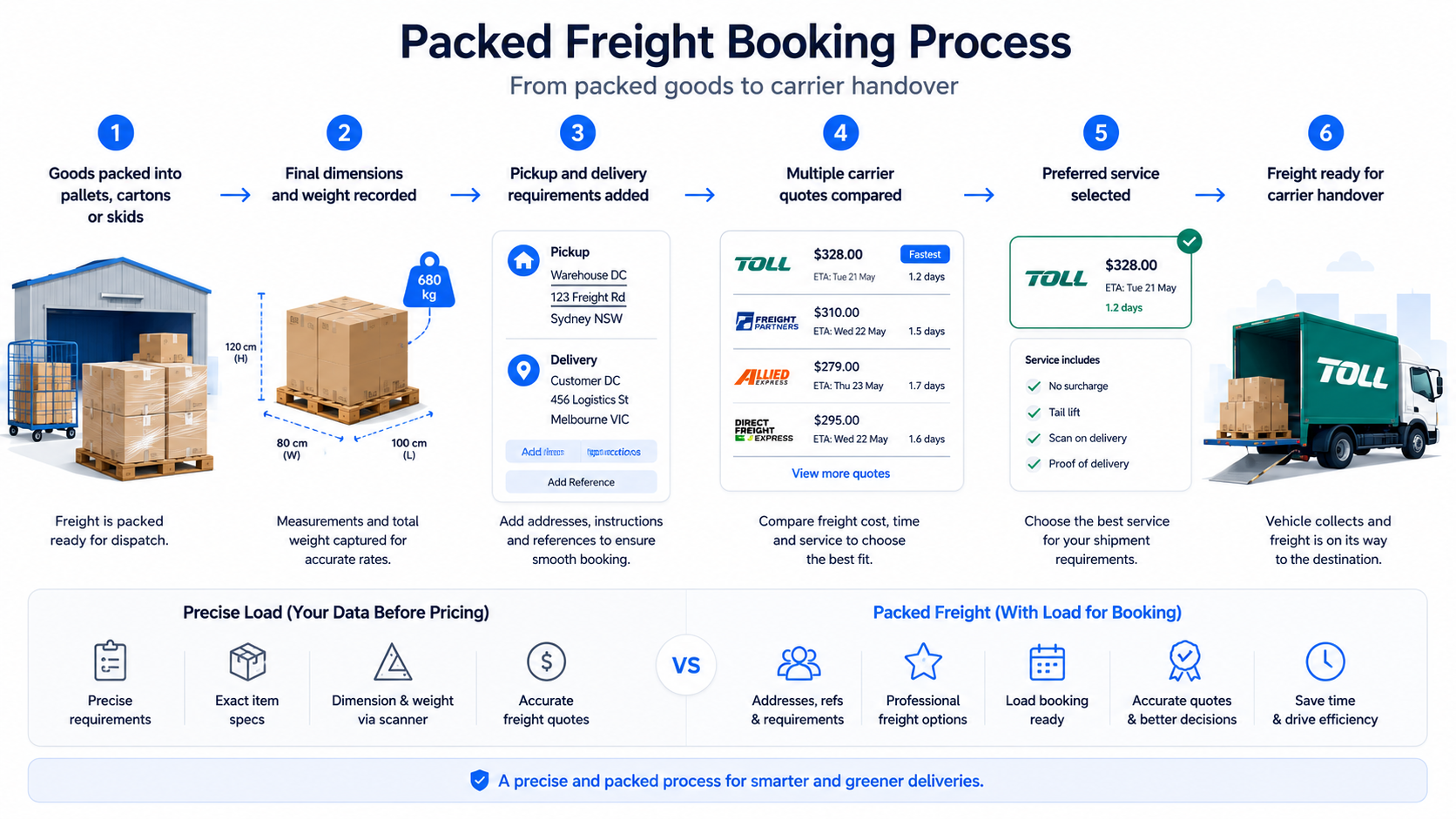
Instead of building the booking from individual product lines, the team works from the final freight being handed over to the carrier.
That includes details such as:
container type
quantity
weight
length, width and height
calculated volume
pickup details
delivery address
delivery instructions
special handling requirements
preferred carrier service
This gives warehouse and logistics teams a more accurate starting point for quoting and booking.
The problem with booking packed freight manually
Many businesses still manage this step through a mix of spreadsheets, carrier portals, emails, calls and warehouse notes.
That might get the job done for low-volume freight. It becomes harder as order volumes grow, freight types vary and teams use more carriers.
A warehouse team may pack the freight and then pass details to logistics. Logistics may re-enter the same information into one or more carrier portals. Customer service may sit outside the process until a customer asks for an ETA. Finance may only see the true cost later, once the carrier invoice arrives.
Cario’s own ICP research points to a common customer need: one system where teams can compare carrier rates and services, book shipments, track freight and avoid jumping between carrier portals.
The packed freight step is a clear example of that need.
How Cario supports packed freight booking
Cario helps warehouse and logistics teams create freight orders based on final packed transport units.
Teams can enter the packed freight details, add pickup and delivery requirements, and compare available carrier quotes before selecting the preferred service. This supports better carrier selection based on freight cost, fees, tax, total price and likely ETA.
For businesses managing multiple carriers, this helps bring more control to a busy dispatch process.
Cario’s broader freight management capability supports third-party carrier activity across quoting, booking, tracking, returns, reconciliation and reporting. It also provides access to 300+ carriers, support for existing rates and carrier accounts, real-time tracking, proof of delivery visibility, and integration with ERP, WMS and eCommerce platforms.
Why final dimensions and weight matter
Packed freight is often quoted based on the space it takes up, not just the items inside it.
A carton, pallet or cage can change the final freight profile. If the booking uses old or incomplete details, the quote may not reflect the actual freight being shipped.
For example, a warehouse in Melbourne may pack several bulky items into a pallet for delivery to regional NSW. The product data may tell part of the story, but the carrier needs the final pallet dimensions, total weight and any delivery requirements.
That information affects:
which carriers are suitable
what services are available
how pricing is calculated
whether extra handling is needed
whether the delivery can meet the customer’s timing requirements
Accurate packed freight data helps teams make better booking decisions before the freight leaves the site.
A practical warehouse example
Picture a dispatch team preparing several pallets for a customer delivery.
The goods are already packed and staged near the dock. The team needs to book a carrier, but the delivery requires a tail lift and receiver confirmation. The customer also needs the freight delivered on a specific date.
In a manual process, the warehouse team may email the details to logistics. Logistics may check several carrier portals. Someone may need to confirm the dimensions, then ask the warehouse for the weight. The quote may be selected before all delivery requirements are added.
That creates room for mistakes.
With packed freight booking in Cario, the team can work from the final transport units, add delivery requirements and compare carrier options before finalising the order. The booking reflects the freight that is actually going out the door.
What teams gain from a packed freight workflow
Warehouse teams get a cleaner dispatch process
Warehouse teams can work from pallets, cartons, cages and other packed units. This cuts down on double entry and helps dispatch teams prepare freight with the right information upfront.
Logistics teams can compare carrier options
Logistics teams can review available carrier services before booking. Cost, fees, total price and likely ETA can be assessed before the team selects a service.
Customer service teams get better delivery context
Customer service teams benefit when delivery instructions, receiver details and ETA information are captured early. This makes it easier to respond to customer questions after dispatch.
Finance teams get cleaner freight data
Finance teams benefit when freight is quoted from declared packed dimensions and weights. This helps reduce uncertainty around freight costs and supports better cost control.
Operations teams get more consistency
Operations leaders can standardise how packed freight is prepared for booking across sites, teams and freight types.
Where packed freight booking fits in the freight process
Packed freight booking sits between warehouse packing and carrier handover.
A simple flow looks like this:
The warehouse packs the goods.
The team confirms the packed transport units.
Pickup and delivery details are captured.
Delivery and handling requirements are added.
Carrier quotes are compared.
The preferred service is selected.
The order is prepared for booking and handover.
This keeps the process practical. It does not ask the team to rebuild the order from product data after the goods are already packed.
When should businesses use packed freight booking?
Packed freight booking is useful when the final shipment details matter.
It is a good fit for businesses that:
ship pallets, cartons, cages or mixed freight
quote freight after goods have been packed
compare carrier options before booking
need to add delivery or handling requirements
manage high dispatch volumes
use multiple carriers across metro and regional deliveries
need better control between warehouse packing and carrier pickup
This is common across wholesale, distribution, retail, manufacturing and logistics operations.
Packed freight booking and Australian freight reality
Australian freight often involves a mix of metro, regional and interstate delivery requirements. A simple parcel process may not be enough for businesses shipping pallets, bulk freight, dangerous goods or multi-leg consignments.
Cario’s platform is built for this type of operating environment, bringing freight management and transport management into one connected environment for quoting, booking, tracking, optimisation and reporting.
Packed freight booking supports that broader need. It helps teams handle the practical details that can affect cost, carrier choice and delivery success.
What to look for in warehouse freight booking software
A packed freight workflow should help teams move faster without losing control.
Look for software that can support:
packed transport units such as pallets, cartons and cages
final dimensions, weight and volume
multi-carrier quote comparison
pickup and delivery requirements
delivery instructions and special instructions
ETA visibility
carrier service selection
integration with existing operational systems
visibility for warehouse, logistics, customer service and finance teams
The goal is simple: give teams one place to manage the freight booking process, from packed goods to carrier handover.
Why this matters
Packed goods should not create extra admin.
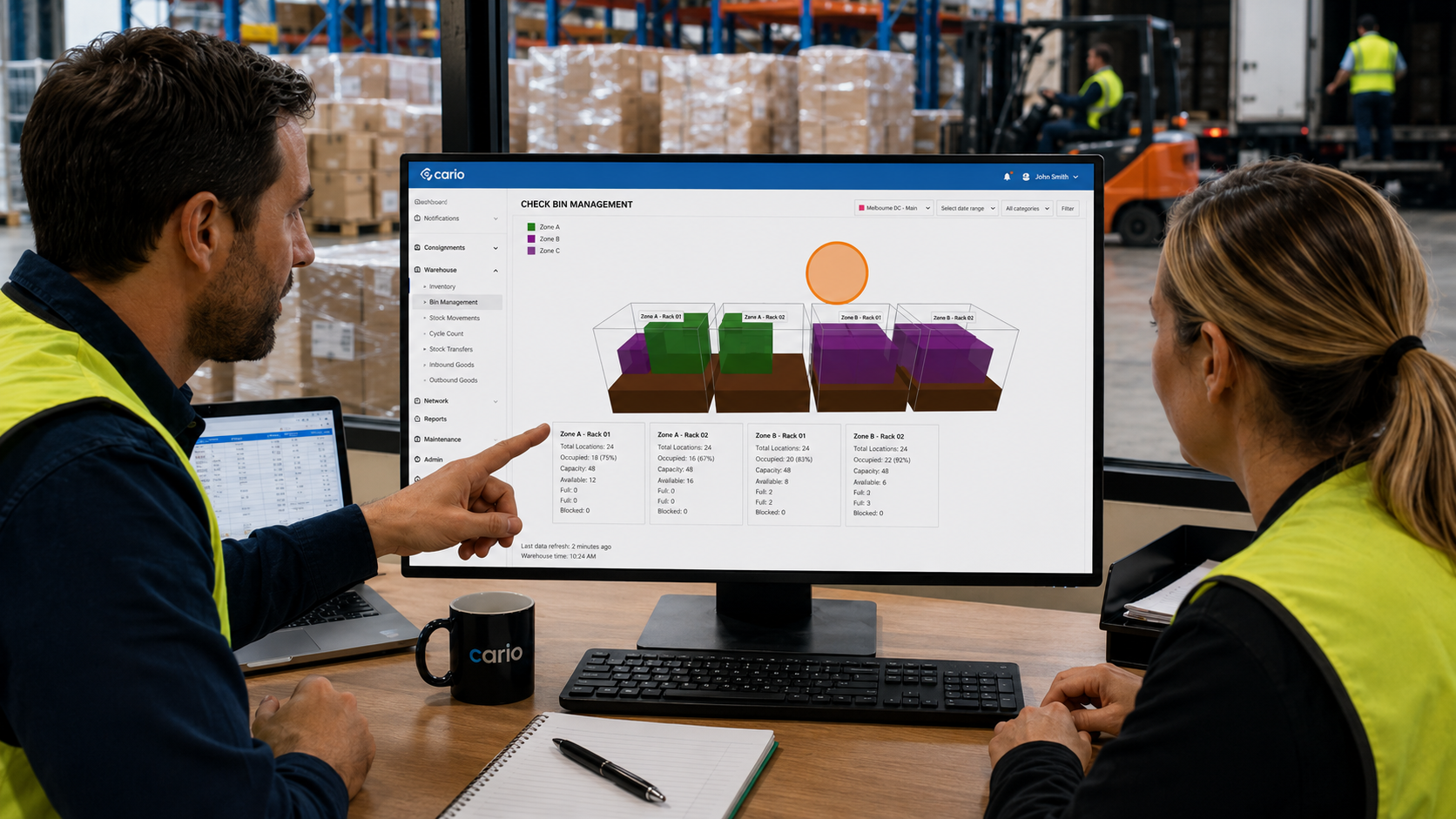
Once freight is ready to leave the warehouse, teams need a booking process that reflects the real shipment. That means using final packed dimensions, adding delivery requirements, comparing carriers and selecting the right service before handover.
Cario helps businesses manage that process with more control. Warehouse teams can prepare freight based on what is physically packed. Logistics teams can compare services. Customer service teams get better delivery context. Finance teams get cleaner freight data.
For businesses managing growing freight volumes, this is one more way to reduce manual work and create a more consistent delivery process.
Book a demo
See how Cario helps warehouse and logistics teams book packed freight, compare carrier options and manage handover from one connected platform.
Book a demo and Cario’s team will walk through your freight workflow, carrier setup and dispatch process to show where packed freight booking could fit.
FAQ
What is packed freight booking?
Packed freight booking means creating a freight order from goods that are already packed into transport-ready units such as pallets, cartons or cages.
How is packed freight booking different from standard order creation?
Standard order creation often starts before goods are packed. Packed freight booking uses the final transport units that are ready for carrier handover.
Why do packed dimensions matter?
Carrier quotes can depend on the declared weight, dimensions and volume of the packed freight. Accurate details help teams compare services with more confidence.
Can Cario compare carrier quotes for packed freight?
Yes. Cario supports carrier quote comparison so teams can review cost, fees, tax, total price and likely ETA before selecting a service.
Who uses packed freight booking?
Warehouse, dispatch and logistics teams are the main users. Customer service, finance and operations teams also benefit from better freight data and delivery visibility.
Is packed freight booking useful for pallets?
Yes. It is useful for pallets, cartons, cages and other packed freight units where final dimensions and handling requirements matter.
Does Cario support multiple carriers?
Yes. Cario supports access to 300+ carriers in one connected environment, based on the source product positioning.