

Freight Consolidation: A Simple Way to Reduce Duplicate Bookings and Freight Admin
29 July 2026

See how freight consolidation helps logistics and operations teams reduce duplicate bookings, compare freight options and improve dispatch efficiency with Cario.
Freight Consolidation: Reduce Duplicate Carrier Bookings
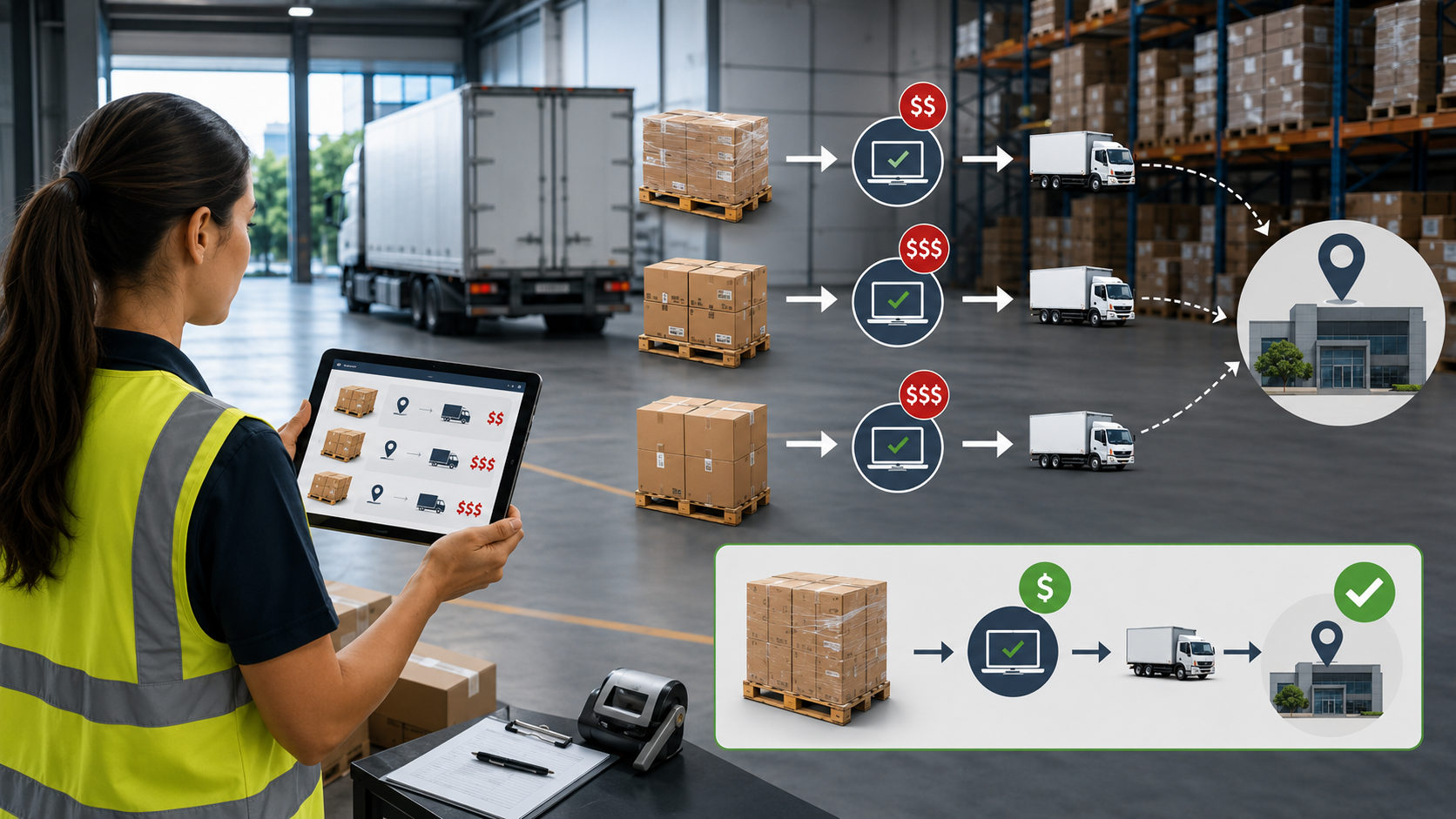
Freight costs do not only rise because carrier rates increase.
They also rise because small operational decisions happen hundreds or thousands of times across the business.
One common example is sending multiple consignments to the same delivery address as separate carrier bookings, even when those shipments could have been grouped together.
For a busy warehouse or dispatch team, this is easy to miss. Orders come through at different times. Pick slips are released in batches. Customer requirements change. Carrier cut-offs loom. The team focuses on getting freight out the door.
But over time, separate bookings to the same destination can create extra cost, more paperwork, more tracking references, and more handling than the business really needs.
That is where freight consolidation helps.
The Hidden Cost of Separate Freight Bookings
Many Australian freight operations deal with repeat delivery locations.
A wholesaler may send several orders to the same retail customer. A manufacturer may ship separate pallets to the same branch. A distributor may have multiple cartons going to one worksite or customer DC.
If each consignment is booked separately, the business may end up with:
multiple carrier bookings to the same address
more labels, manifests and references
extra handling for warehouse teams
more carrier pickup activity
less efficient freight pricing
more delivery information for customer service to track
None of this usually happens because the team is careless.
It happens because freight teams are under pressure. They are working across sales orders, warehouse releases, carrier rules, service levels and dispatch deadlines. When systems do not make consolidation visible, teams often default to processing each consignment on its own.
That may get freight moving, but it can also leave money on the table.
What Freight Consolidation Means in Cario
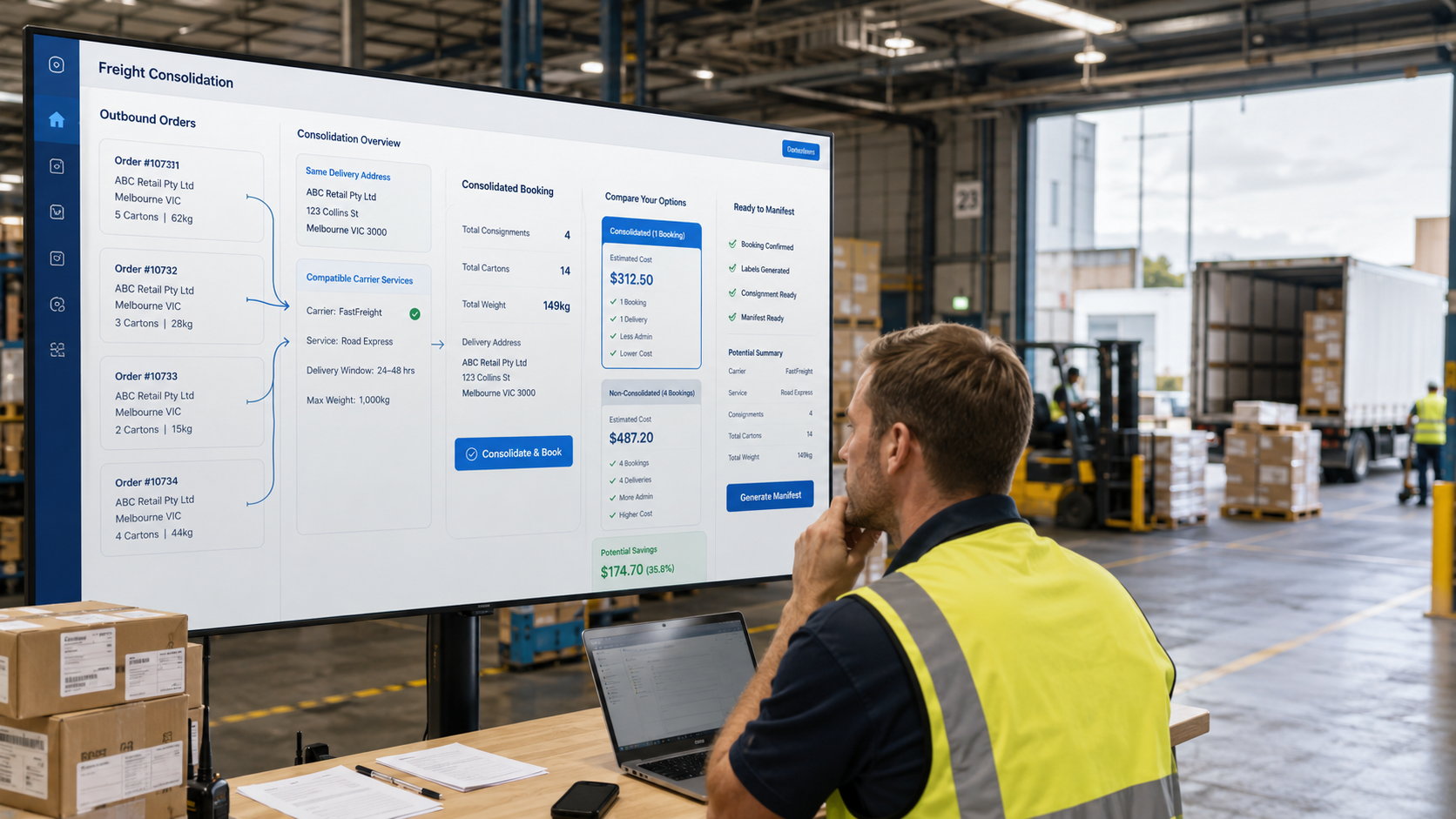
In Cario, consolidation allows compatible consignments to be grouped into one carrier booking before manifesting.
This applies when consignments share the same delivery address and carrier details. If those conditions match, the team can review whether consolidation makes sense before the freight is finalised.
The key point is choice.
Cario does not force every consignment into a consolidated shipment. Instead, it gives users visibility of the available options, including consolidated services and non-consolidated alternatives.
That means teams can compare the freight outcome before they commit.
For logistics and operations managers, this creates a more controlled way to manage high-volume dispatch. For warehouse teams, it helps reduce unnecessary duplication. For finance, it supports better freight cost control because booking decisions become clearer before charges are locked in.
Why This Matters for High-Volume Freight Teams
Freight consolidation is not a flashy feature.
It is a practical one.
In high-volume operations, the biggest improvements often come from removing repeat manual effort. A few separate bookings may not look like much on one day. Across weeks and months, they can add unnecessary admin and cost to the freight process.
Think about a distributor sending multiple orders to the same customer in Melbourne. One order is picked at 9am. Another is released at 11am. A third comes through after lunch. If each one becomes a separate carrier booking, the team may create three movements where one grouped shipment could have been considered.
That creates extra work for dispatch and more delivery references for customer service. It may also affect the freight price, depending on the carrier service and shipment profile.
With consolidation visible inside the booking process, the team can make a better call.
Consolidation Helps Teams Compare Cost Before They Book
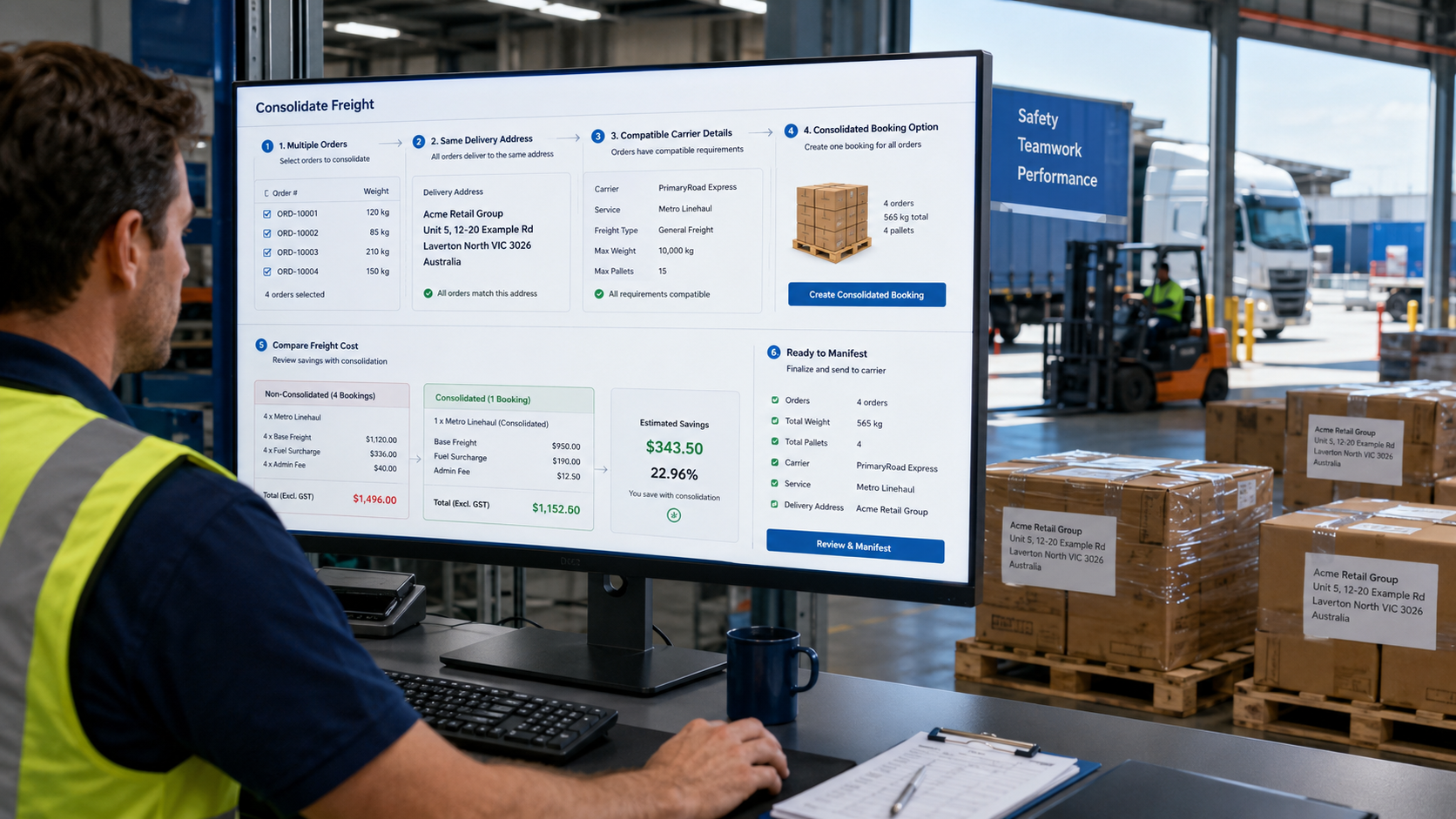
One of the most useful parts of consolidation is the ability to compare.
Cario separates consolidated service options from non-consolidated options, so users can see the difference before choosing how to proceed.
This matters because consolidation is not always the right answer.
A shipment may be urgent. It may need a different service level. It may require separate billing or a separate customer reference. It may need to go through a direct courier or immediate booking service.
In those cases, keeping the consignment separate may be the better operational decision.
But when consignments are compatible, consolidation gives the team a chance to reduce duplicate bookings and make a more informed freight choice.
That is the kind of control logistics teams need when they are balancing cost, speed and service.
Where Consolidation Makes the Biggest Difference
Freight consolidation is especially useful for businesses that ship repeat orders to the same destination.
That may include wholesalers, distributors, manufacturers, retailers, suppliers to store networks, or businesses sending freight to branches, depots, customer sites or distribution centres.
It is particularly relevant when teams handle:
multiple orders to the same customer, separate cartons or pallets going to one site, high-volume daily outbound freight, or repeat deliveries to known locations.
In these environments, freight decisions happen quickly. A system that helps identify consolidation opportunities before manifesting can reduce avoidable admin without slowing the team down.
The Benefits Across the Business
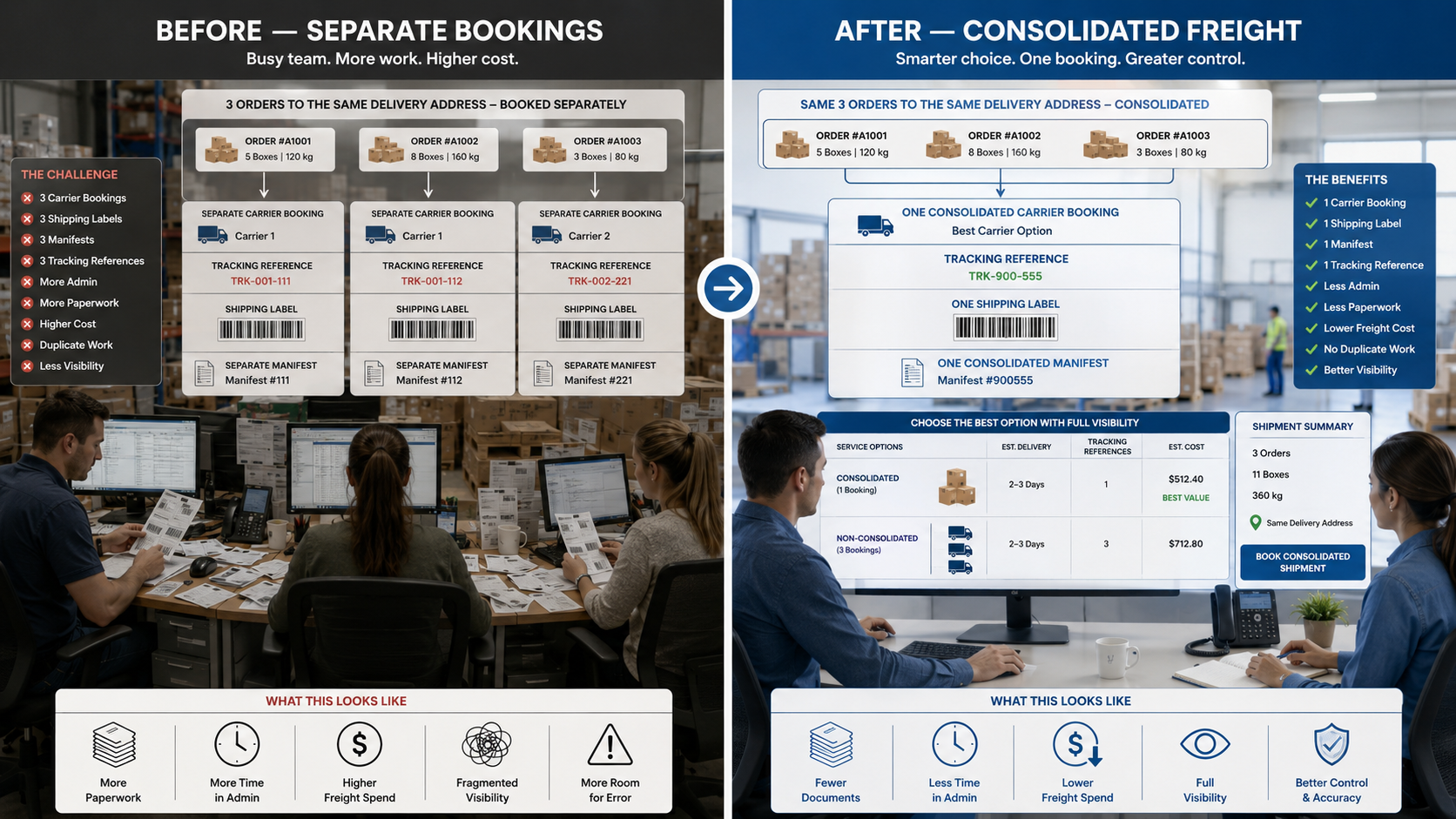
For logistics managers, consolidation supports better carrier booking decisions. Instead of relying on manual checks or team memory, users can identify when compatible consignments may be grouped.
For operations managers, it helps reduce unnecessary handling and dispatch noise. Fewer duplicate bookings can mean a cleaner process, especially during busy outbound periods.
For warehouse teams, it can reduce paperwork and make pickup coordination easier when several items are going to the same location.
For finance teams, it supports better freight cost control. Consolidated versus standalone pricing gives the business clearer information before the carrier booking is confirmed.
For customer service teams, fewer separate consignment references can make delivery conversations easier when a customer asks about multiple orders going to the same site.
A Better Way to Handle Repeat Deliveries
Consolidation is a small part of freight management, but it solves a real problem.
It helps teams avoid treating every consignment as a separate movement when there may be a better option. It gives users visibility before manifesting. It allows them to compare pricing. It gives them the flexibility to consolidate where it makes sense and keep shipments separate where the business needs to.
For Australian businesses managing multiple carriers, high outbound volumes and repeat customer deliveries, that level of control matters.
Freight costs are shaped by carrier rates, service levels and network decisions. They are also shaped by everyday booking habits.
Cario helps bring those decisions into one platform, so teams can manage freight with more visibility, less manual work and better control over the details that affect cost.