

Freight Reporting for Operations Teams | Improve Logistics Visibility
10 July 2026
Struggling with manual freight reporting? Learn how operations teams can improve visibility, reduce admin, and track performance faster with centralised reporting.
Why Freight Reporting Slows Down Operations, And How to Fix It
I’ve worked with a lot of operations teams over the years, and there’s one pattern that shows up again and again. The day doesn’t slow down because of freight volume.
It slows down because of reporting.
You’ve got shipments moving, carriers running, warehouses dispatching, but when someone asks for a performance update, everything pauses.
Because pulling the data isn’t simple.
Where Operations Teams Get Stuck
Most logistics teams don’t have a reporting problem.
They have a data access problem.
You’re dealing with:
Multiple carriers, each with their own system
Shipment data sitting in spreadsheets
Delivery updates scattered across portals
Exception tracking handled manually
So when you need to answer something like:
“Which carrier is underperforming?”
“What caused yesterday’s delays?”
“Are we hitting delivery targets?”
You’re not analysing. You’re gathering.
Why This Gets Worse as You Scale
At low volume, you can get away with it. At scale, it becomes a bottleneck.
More shipments = more data
More carriers = more systems
More sites = more complexity
What used to take 20 minutes now takes hours.
And worse — by the time you’ve pulled the report, it’s already out of date.
What Better Looks Like
The strongest operations teams don’t build reports every time they need them.
They work from:
Pre-structured reporting across shipments and deliveries
Consistent data across every site and carrier
Automated reporting that’s ready when needed
Instead of reacting to issues late, they see them early.
How Cario Helps Operations Teams
Cario brings reporting into the same platform where freight is managed.
That means:
Shipment, delivery, and exception data are already structured
Reports are available on demand
Performance tracking doesn’t require manual effort
You’re no longer chasing information across systems.
You’re working from one operational view of what’s actually happening.
This aligns with Cario’s core role — giving logistics teams visibility across freight activity in one connected platform
Real Impact in Day-to-Day Operations
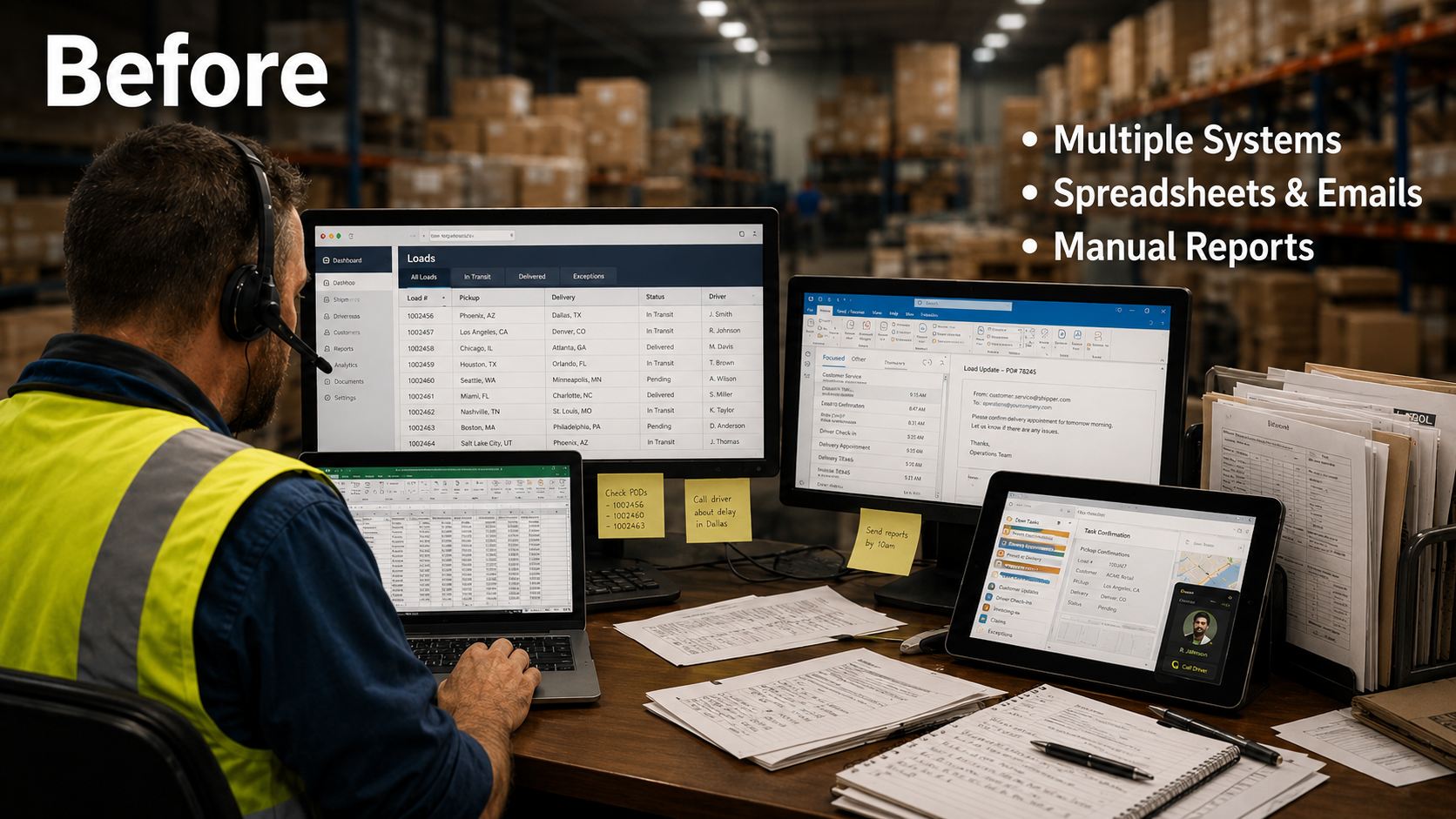
Before:
Pull data from multiple systems
Cross-check spreadsheets
Build reports manually
React to issues after they happen
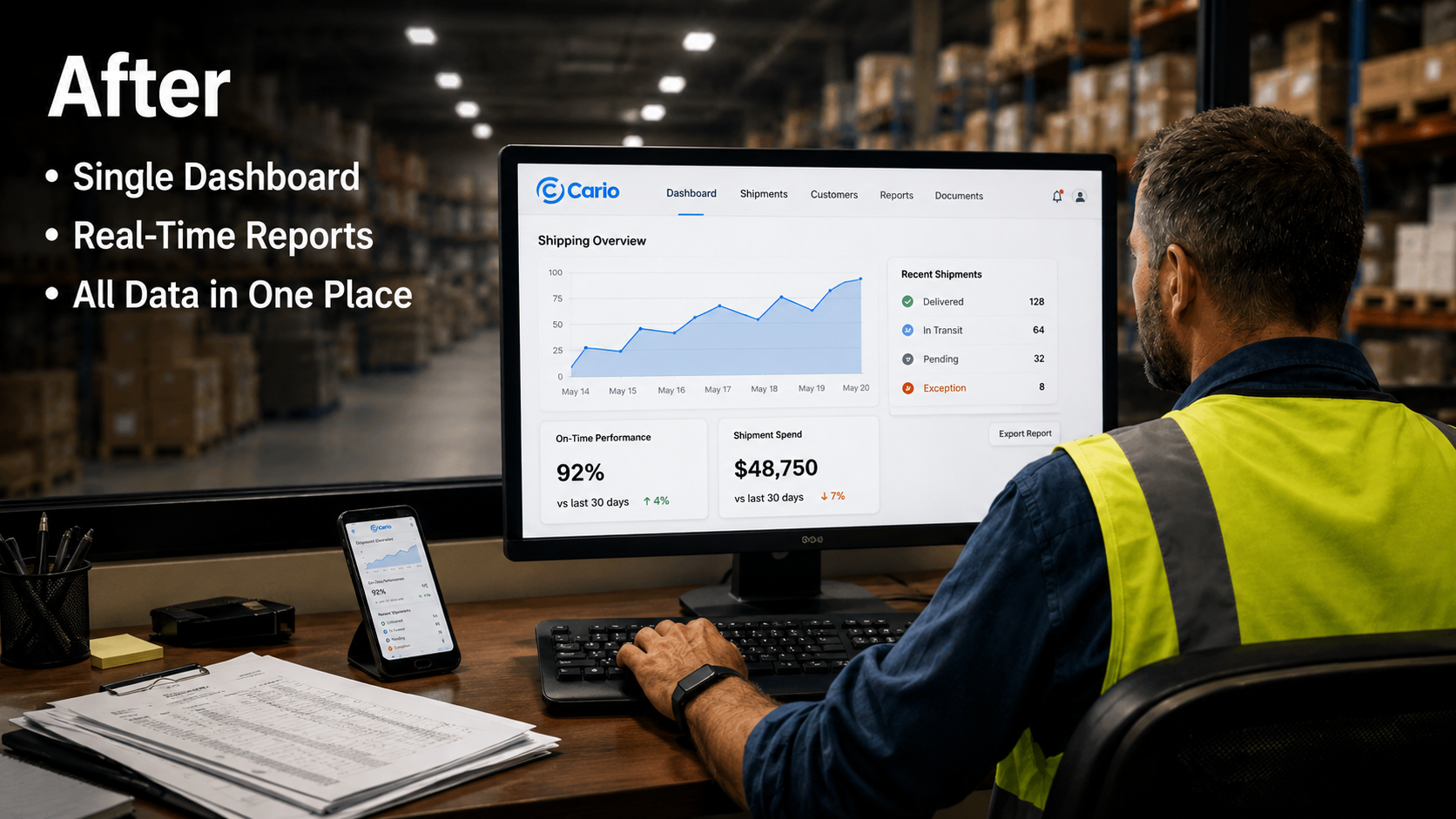
After:
Access reports instantly
See issues as they develop
Share consistent data across teams
Spend time improving operations, not reporting on them
What Changes for Your Team
Less admin work
Faster issue identification
Better carrier performance tracking
More confidence in operational decisions
If your team is still spending hours pulling freight reports, it’s worth seeing how a centralised approach changes day-to-day operations.
Book a demo to see how Cario supports operational reporting at scale.