

How Integrated Freight Platforms Save CFOs Time and Money
23 July 2026

Cario is not just a logistics tool.
It’s a freight spend visibility software platform designed to give finance teams control over one of their largest cost categories.

Month-End, 7:42 PM — and Freight Still Doesn’t Reconcile
Sarah Patel, CFO of a $200M FMCG distributor, is reviewing month-end numbers.
Revenue is on track.
COGS is within tolerance.
But freight?
Up 8% this quarter.
There’s no clear explanation.
Logistics says volumes increased.
Procurement says rates went up.
Finance sees invoices that don’t match expectations.
Three different answers. No single source of truth.
Meanwhile:
Accruals are estimates, not facts
Variances are discovered too late
Board reporting requires explanations that don’t exist
And freight — one of the largest cost lines in the business — remains a blind spot.
If this feels familiar, it’s because for many CFOs, freight isn’t just a logistics problem.
It’s a financial control problem.
Freight: The Most Under-Managed Cost Line in the P&L

In logistics-intensive businesses, freight typically represents 8–15% of COGS.
For a $200M company, that’s:
👉 $16M–$30M annually
Yet compared to payroll, procurement, or inventory, freight is often:
Poorly tracked
Weakly controlled
Retrospectively analysed
Rarely forecasted accurately
Why?
Because freight sits across disconnected systems:
ERP holds orders and financials
Carriers hold pricing and delivery data
Logistics teams manage execution
Finance only sees the invoice — weeks later
The result:
👉 Freight becomes a “black box” in financial reporting
Where CFOs Lose Millions Without Realising It
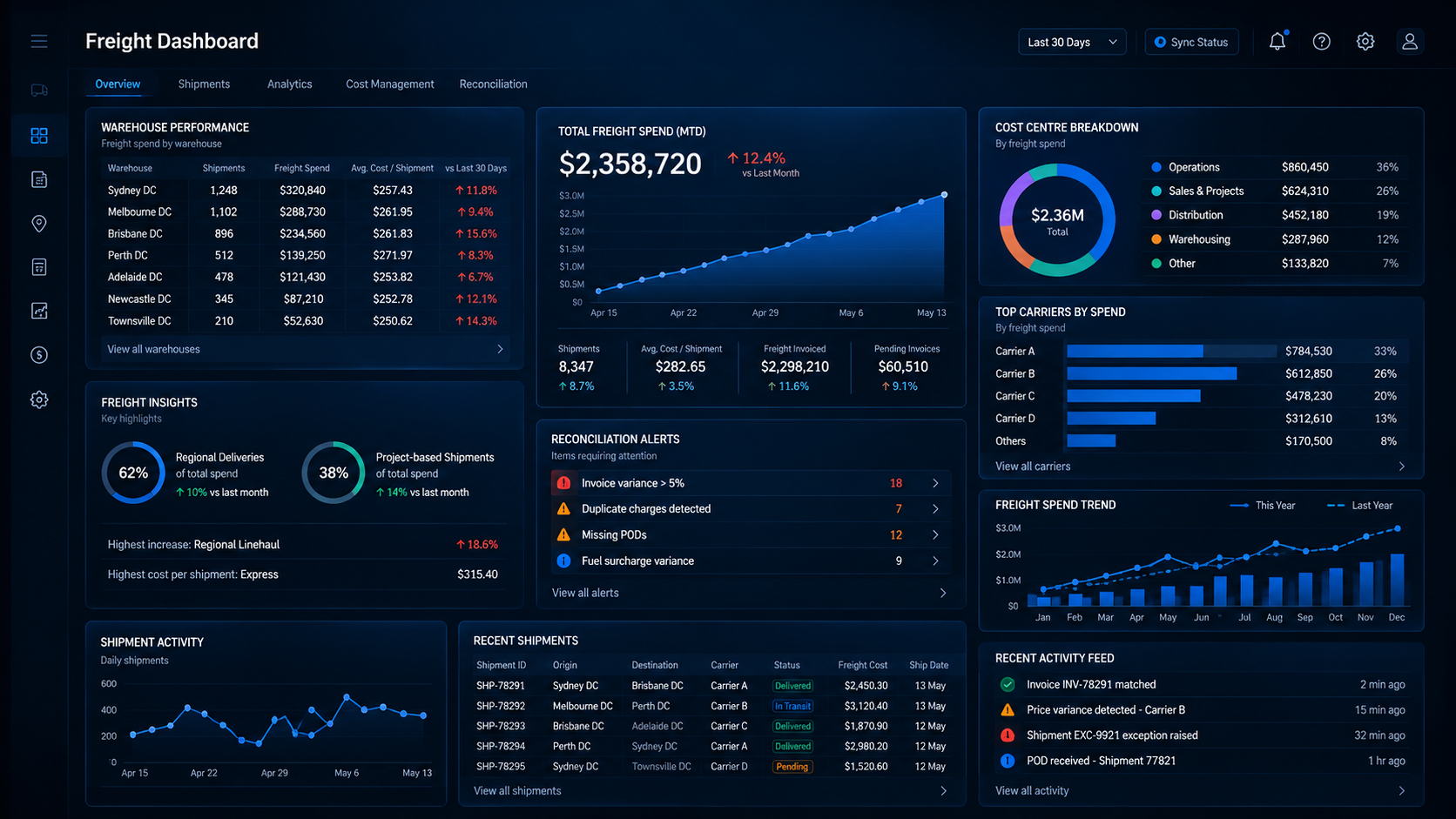
Freight cost inflation isn’t the only issue.
The real problem is uncontrolled leakage.
1. Hidden Accessorial Charges
Fees such as:
Tailgate delivery
Residential surcharges
Time-slot penalties
Redelivery fees
These are often:
Not quoted upfront
Not validated post-delivery
Across a national network, this can quietly add 5–12% to freight spend.
2. Overcharges and Missed Credits
Without proper freight invoice reconciliation automation, businesses rely on:
Manual checks
Spot audits
Reactive dispute processes
Most companies recover less than 50% of eligible credits.
That’s not inefficiency — that’s lost margin.
3. Inefficient Carrier Allocation
When logistics teams manually select carriers:
Decisions are based on habit, not data
Cheapest option isn’t always chosen
Service vs cost trade-offs aren’t visible
Even a 3–5% inefficiency in carrier selection can mean:
👉 $500K–$1.5M annually in unnecessary spend
4. No Cost-to-Serve Visibility
Finance teams struggle to answer:
Which customers are unprofitable due to freight?
Which regions drive disproportionate delivery cost?
Which products erode margin once logistics is included?
Without cost-to-serve analysis in logistics, pricing and strategy decisions are incomplete.
5. Freight Inflation Without Control
Carrier rates increase 5–10% annually.
Without a freight cost reduction strategy for CFOs, businesses absorb increases rather than offset them.
The outcome:
👉 Margin compression — quarter after quarter.
What CFOs Actually Need (But Rarely Have)
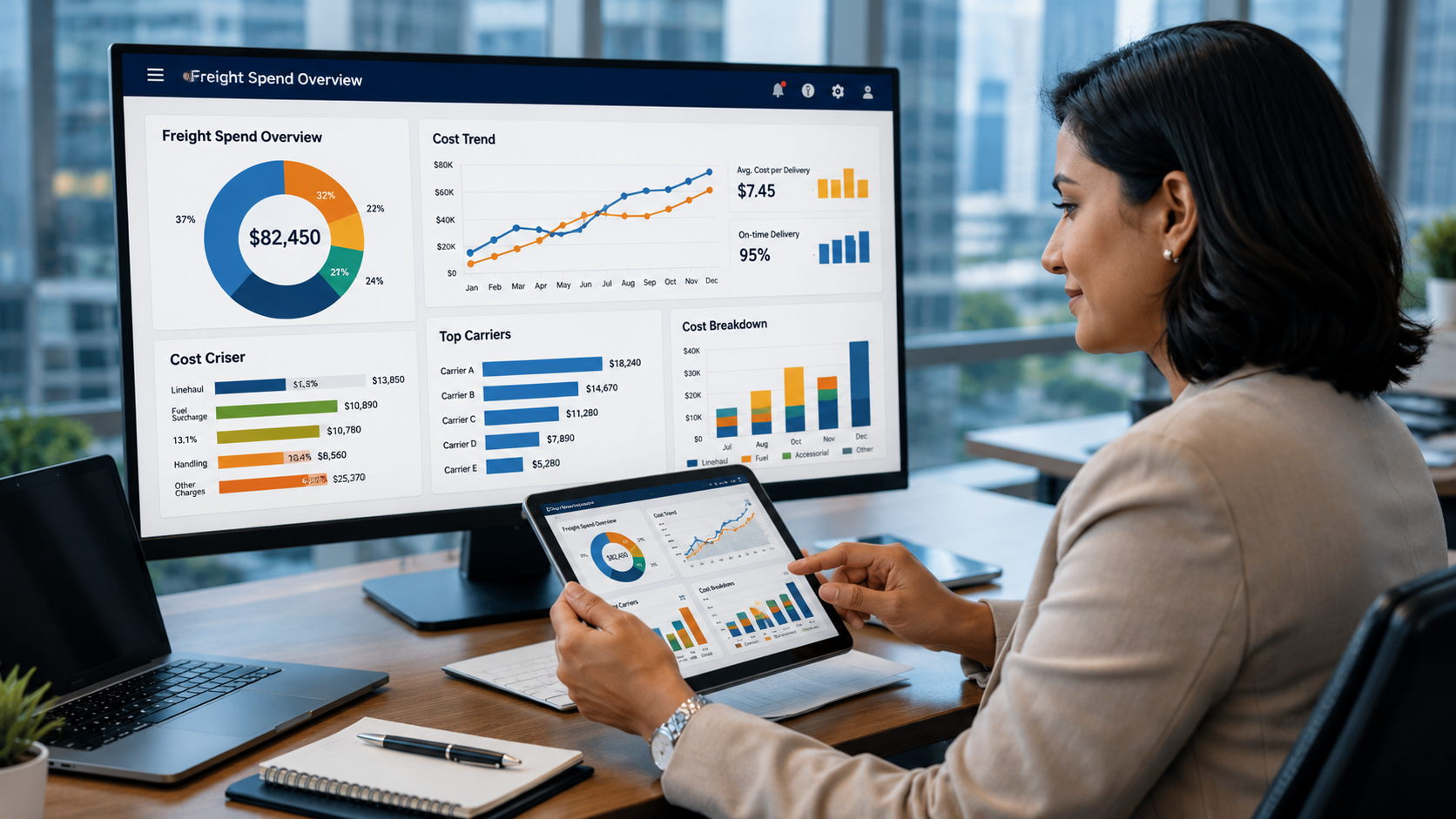
To control freight effectively, CFOs don’t need more reports.
They need better data.
Specifically:
Real-Time Freight Spend Visibility
Not weeks later. Not at invoice stage.
👉 At the moment decisions are made.
Cost Attribution
Freight costs must be linked to:
Customers
Products
Channels
Regions
Only then can finance drive profitable growth.
Predictive Forecasting
Traditional freight budget forecasting tools rely on historical averages.
Modern finance teams need:
Scenario modelling
Volume-based projections
Rate change impact analysis
Audit-Ready Validation
Every invoice should be:
Automatically checked
Matched against expected charges
Flagged if discrepancies exist
Without manual intervention.
System Integration
Freight data must flow into:
ERP
Financial reporting tools
BI dashboards
Because freight is not an operational metric.
👉 It’s a financial one.
Freight Is Not a Logistics Problem — It’s a Data Problem
The core issue isn’t carriers.
It’s fragmentation.
When freight data lives across multiple systems:
Decisions are delayed
Insights are incomplete
Control is reactive
This is why more CFOs are turning to integrated freight platforms.
What Is an Integrated Freight Platform?
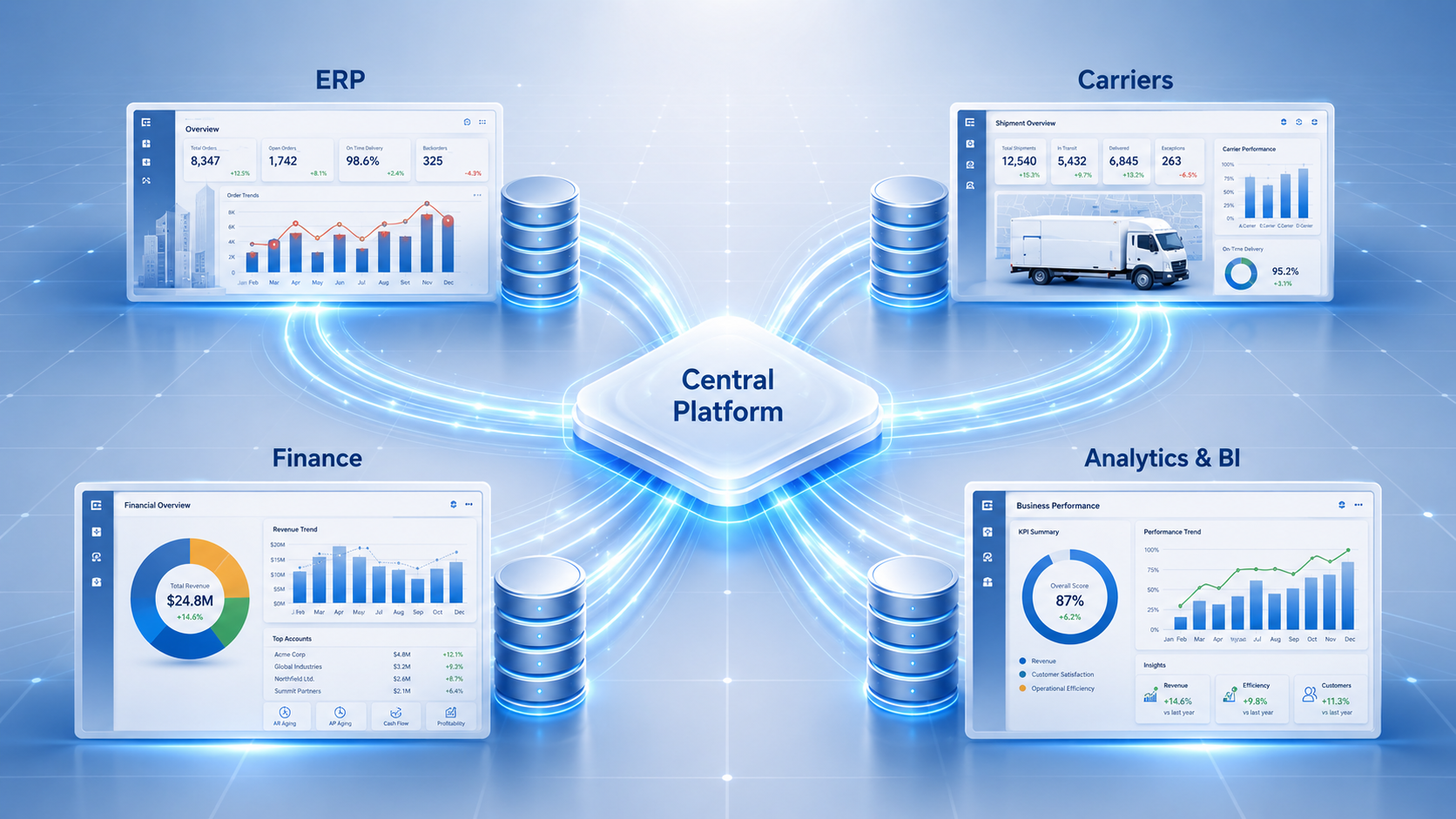
An integrated freight platform connects:
ERP systems
Carrier networks
Operational workflows
Financial reporting
Into a single, unified data layer.
This enables:
Real-time cost visibility
Standardised decision-making
Automated validation
Accurate reporting
Instead of managing freight after the fact, businesses can:
👉 Control it as it happens.
Introducing Cario: A Financial Control Layer for Freight Spend

Cario is not just a logistics tool.
It’s a freight spend visibility software platform designed to give finance teams control over one of their largest cost categories.
Key capabilities include:
Real-Time Freight Cost Visibility
Track freight costs as they occur — not weeks later.
Freight Invoice Reconciliation Automation
Automatically validate carrier invoices against expected charges.
Reduce manual audit time. Recover lost margin.
Freight Analytics for Finance Teams
Access dashboards that provide:
Cost trends
Carrier performance
Spend breakdowns
All structured for financial decision-making.
Rules-Based Cost Optimisation
Automatically select carriers based on:
Cost
Service level
Delivery requirements
Removing manual bias and inefficiency.
ERP Integration
Seamlessly integrates with systems such as:
NetSuite
SAP
Microsoft Dynamics
Ensuring freight data feeds directly into financial workflows.
Exception Reporting
Identify:
Overcharges
Delays
Service failures
Before they impact financial outcomes.
Carbon Reporting for ESG
Track freight emissions to support:
Scope 3 reporting
ESG disclosures
Board-level sustainability metrics
How Cario Translates Freight Operations into Financial Outcomes
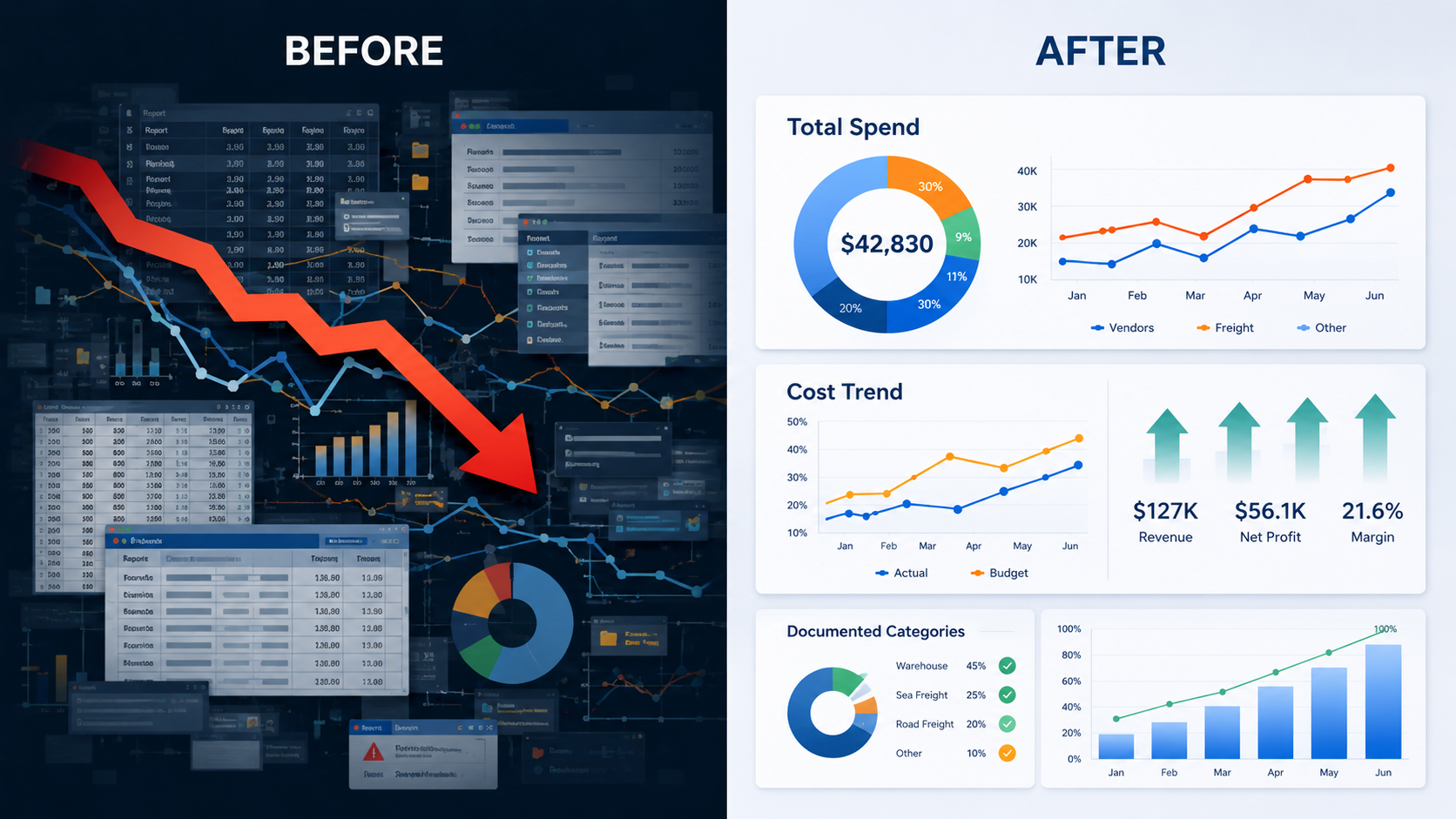
Lack of visibility
→ Budget overruns
→ Real-time freight analytics
→ Accurate forecasting & financial control
Invoice discrepancies
→ Margin leakage
→ Automated invoice validation
→ Reduced overpayments & faster reconciliation
Manual carrier selection
→ Inefficient spend
→ Rules-based optimisation
→ Lower cost per shipment
Disconnected systems
→ Delayed reporting
→ ERP integration
→ Faster, more reliable financial close
No cost-to-serve insight
→ Poor pricing decisions
→ Granular analytics
→ Improved margin management
Strategic Benefits for CFOs
When freight becomes transparent and controlled, the financial impact is immediate.
Reduce Freight Spend by 10–25%
Through:
Better carrier selection
Elimination of overcharges
Improved negotiation leverage
Improve Budget Predictability
Move from reactive variance explanations to proactive control.
Accelerate Month-End Close
Eliminate manual reconciliation delays.
Enable faster, cleaner reporting.
Strengthen Audit Compliance
Ensure:
Invoice accuracy
Traceable cost data
Reduced financial risk
Enable Cost-to-Serve Analysis
Understand true profitability at:
Customer level
Product level
Regional level
Support ESG Reporting
Accurately track freight emissions for:
Scope 3 disclosures
Sustainability reporting
Enhance Board Reporting
Provide:
Clear freight cost drivers
Data-backed decisions
Strategic insights
Executive Summary: How Integrated Freight Platforms Save CFOs Time and Money
Cost Reduction: Eliminate inefficiencies and recover hidden costs
Visibility: Real-time insight into freight spend across the business
Automation: Reduce manual reconciliation and reporting effort
Risk Reduction: Minimise overcharges and financial inaccuracies
Strategic Decision-Making: Enable data-driven cost optimisation
This is not just operational improvement.
👉 It’s financial transformation.
Freight Is Becoming a Strategic Financial Lever

In an environment of rising costs and margin pressure, freight can no longer be managed reactively.
The CFOs who lead in the next decade will be those who:
Treat freight as a controllable cost
Demand real-time visibility
Use data to drive decisions
Because when freight is visible, measurable, and optimised:
👉 It stops being a cost centre
👉 And becomes a competitive advantage
For Sarah — and for finance leaders like her — the question is no longer:
“Why are freight costs increasing?”
It’s:
“Why don’t we have control over them yet?”