

Rules-Based Carrier Selection How to Guide Better Freight Quotes Before They Become Cost Problems
26 June 2026

Learn how rules-based carrier selection helps freight teams avoid poor-fit services, oversized charges and manual quoting errors across multi-carrier operations.
The cheapest freight quote is not always the best freight choice.
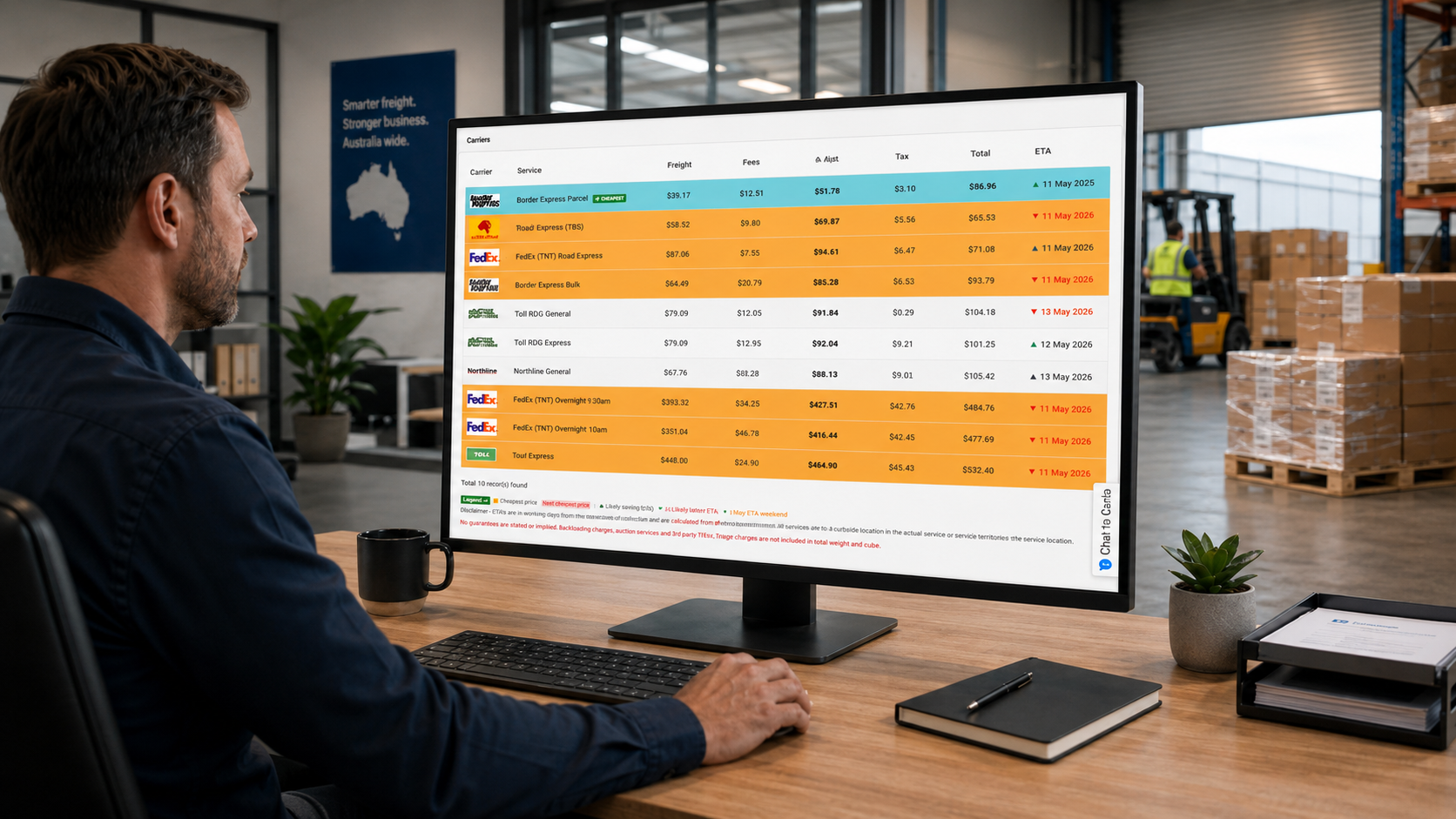
That is a lesson most logistics teams learn the hard way. A service may look cost-effective at the point of quoting, but the final cost can change once the freight size, location, pallet count or handling requirement is taken into account.
A shipment may attract oversized charges. A regional delivery may go with a carrier that is better suited to metro work. A large pallet movement may be booked with a service that works well for small freight but performs poorly once volume increases.
This is where rules-based carrier selection can help.
In Cario, Rule Sets help control which carrier services appear during Quick Quote or consignment creation. They apply agreed business rules in the background, so users are guided to carrier services that better fit the shipment.
For Australian businesses managing multiple carriers, sites, freight types and delivery locations, this can make quoting more consistent and reduce avoidable freight issues before they reach operations, finance or customer service.
Why Carrier Selection Needs More Than the Lowest Rate
Freight quoting can look simple on the surface.
Enter the shipment details. Compare the carrier services. Pick the cheapest or fastest option. Create the consignment.
In real operations, the decision is rarely that clean.
A logistics coordinator may need to consider:
Is the freight oversized?
Is the delivery going to a metro, regional or remote location?
Does the site need a tail lift?
Is this a residential delivery?
Is the order over a pallet threshold?
Does this branch have a preferred carrier?
Does this customer account use a specific carrier service?
Does this carrier handle this freight type well?
If the user has to remember all of that manually, errors can creep in.
That creates a familiar problem: the quote looks right at booking, but the freight outcome is wrong later.
Common Problems Rule Sets Can Help Reduce
Rules-based carrier selection is useful when your team has known freight scenarios that need consistent handling.
Here are common examples.
1. Oversized freight defaults to a cheaper carrier service
A user quotes a bulky item. The cheapest carrier appears in the results. The user selects it.
Later, the shipment attracts extra charges because the freight exceeds the carrier’s standard size or handling threshold.
The issue is not always the user’s fault. The quote screen showed the option, and the base price looked good. But the carrier service was not the best fit for the job.
A Rule Set can help by applying logic such as:
If the freight exceeds an agreed size, weight or cubic threshold, show the approved oversized freight carrier service.
This helps reduce the risk of users choosing a service that looks cheap upfront but may lead to higher costs later.
2. A certain location or suburb needs a preferred carrier
Many Australian freight teams know that certain carriers perform better in certain suburbs, regions or lanes.
One carrier may be better for a specific industrial area. Another may have stronger regional coverage. Another may be the preferred option for a customer delivery zone.
Without rules, users need to remember that local knowledge every time they quote.
A Rule Set can help by applying logic such as:
If the delivery suburb or postcode matches the agreed location rule, show the preferred carrier service.
This is useful for businesses that want to guide users to the right carrier for known delivery areas, without relying on memory, spreadsheets or verbal instructions.
3. More than 10 pallets should use a better-rated carrier
Some carriers work well for smaller pallet movements. Others may offer better pricing, equipment or service fit for larger pallet volumes.
For example, a business may know that shipments over 10 pallets should go with a specific carrier because that carrier has better rates or stronger handling capability for larger movements.
A Rule Set can help by applying logic such as:
If the pallet count is greater than 10, show the preferred bulk pallet carrier service.
This supports better decision-making at the point of quote. It also helps finance teams when larger shipments are booked using services that better match the expected cost profile.
4. Regional freight should not be booked with a metro-focused service
Australian freight often changes as soon as a shipment leaves the metro network.
A service that works well around Sydney, Melbourne or Brisbane may not be the best option for regional or remote deliveries.
A Rule Set can help by applying logic such as:
If the delivery postcode falls inside a configured regional postcode range, show approved regional carrier services.
This helps reduce the need for manual postcode checks and supports more consistent carrier selection across metro and regional freight.
5. Tail lift or residential deliveries need the right service
If a delivery site has no forklift, the shipment may need a tail lift. If the delivery is residential, the carrier service may need to support that requirement.
If users select a standard service without the right handling capability, the freight may be delayed, rebooked or charged differently.
A Rule Set can help by applying logic such as:
If tail lift or residential delivery is selected, show carrier services that support that requirement.
This gives warehouse and logistics teams a better chance of booking the right service the first time.
How Rule Sets Work in Cario
Rule Sets sit behind the quoting process.
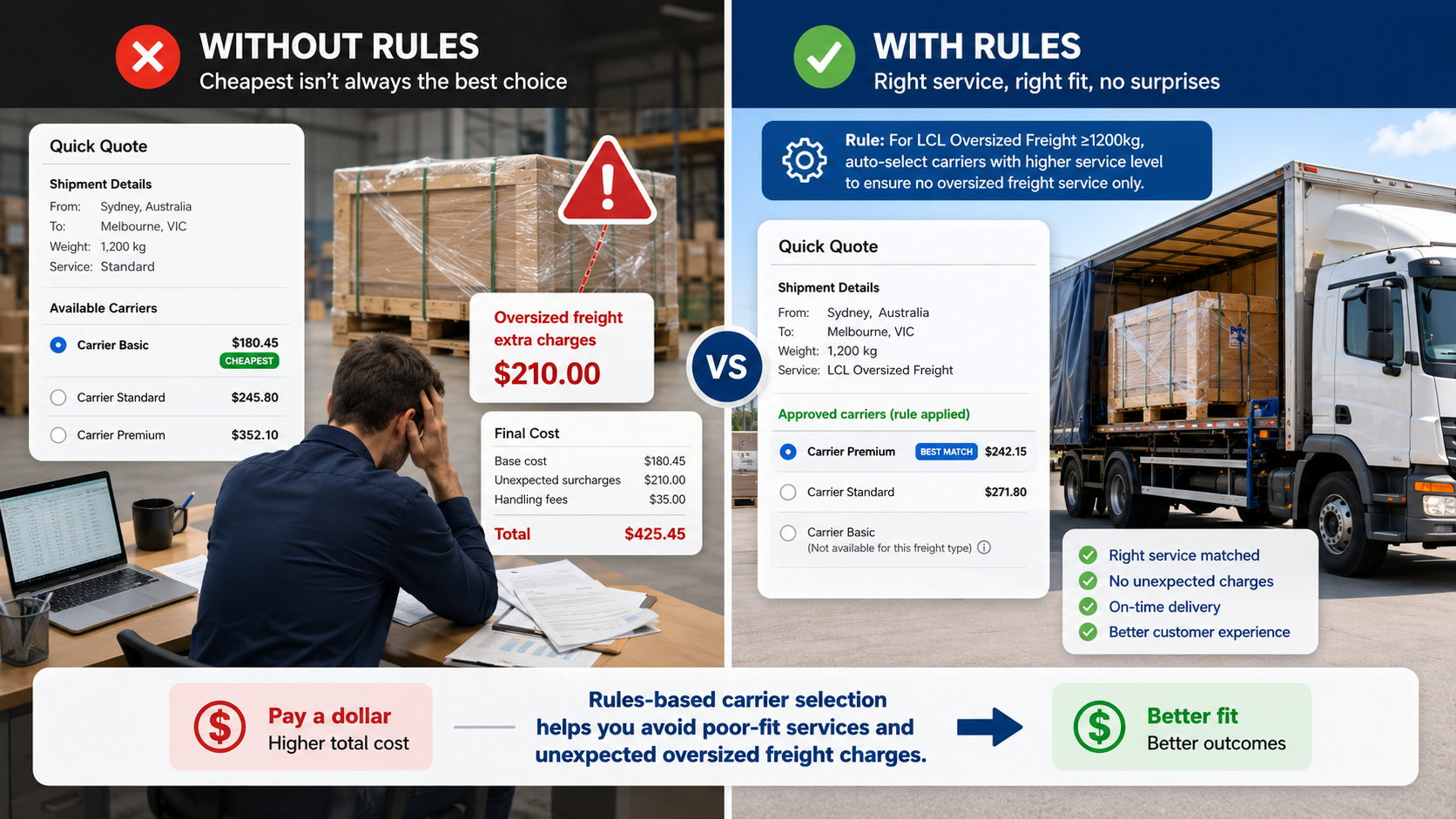
When a user submits a quote, Cario checks the active Rule Set assigned to the customer, site or branch. The platform then compares the shipment details against the configured rules.
A rule may check details such as:
Container type
Pallet count
Weight
Cubic volume
Delivery suburb
Postcode range
Customer account
Site or branch
Handling requirement
If a condition matches, Cario returns the carrier service or services linked to that rule.
If no condition matches, Cario can return all valid services available for the selected lane.
The user still follows a normal quoting workflow. The difference is that the available service options are guided by agreed freight logic.
Example Rule Set Scenarios
Freight scenario | Sample rule | Pain point solved |
Oversized freight | If freight exceeds agreed dimensions or cubic volume, show the approved oversized freight service | Helps reduce surprise oversized charges |
Preferred suburb carrier | If delivery suburb matches the configured rule, show the preferred carrier | Helps apply local carrier knowledge consistently |
More than 10 pallets | If pallet count is greater than 10, show the preferred bulk pallet carrier | Helps larger pallet movements use a better-fit service |
Regional delivery | If postcode falls within a regional range, show approved regional services | Helps avoid metro-focused services being selected for regional freight |
Tail lift required | If tail lift is selected, show services that support tail lift delivery | Helps reduce failed pickups, failed deliveries or rebooking |
Branch-specific carrier rules | If quote is created under a certain branch, show that branch’s preferred services | Helps multi-site teams keep freight rules consistent |
Product or container type | If container type matches the configured rule, show linked carrier services | Helps reduce incorrect service selection for specific freight types |
Customer account rule | If the shipment belongs to a specific customer account, show agreed carrier services | Supports account-specific freight requirements |
Why This Matters for Multi-Carrier Freight Operations
Cario supports businesses that manage freight across multiple carriers, freight types and operating models. The platform brings freight management and transport management together in one connected environment, helping teams quote, book, track and report across delivery operations.
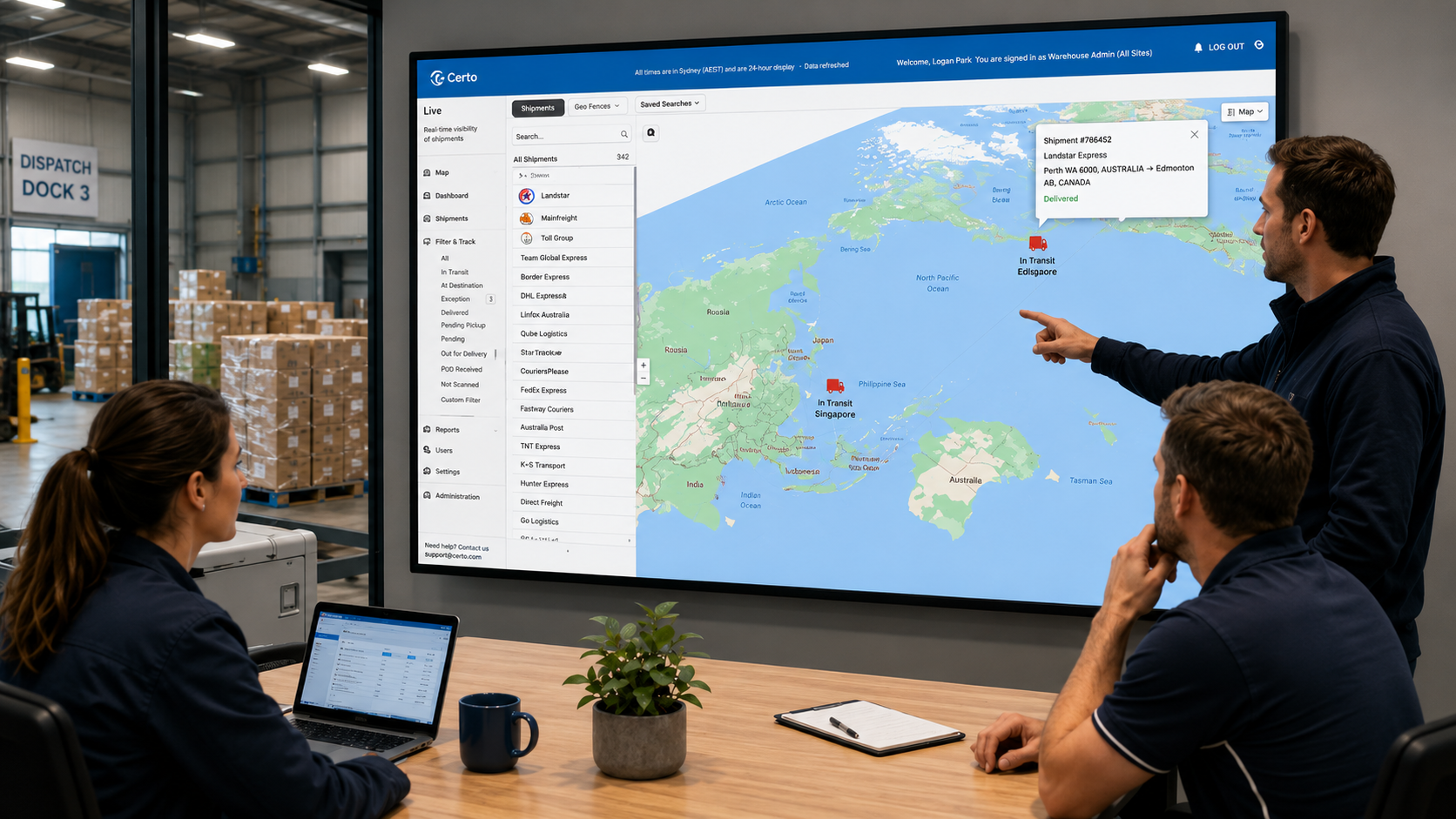
In multi-carrier freight, the problem is not only access to carrier services. It is knowing which service should appear for each job.
A large business may have different rules by:
Branch
Site
Carrier account
Customer group
Freight type
Delivery lane
Postcode range
Pallet quantity
Weight or cubic threshold
Without system-based rules, those decisions often live in spreadsheets, emails or the heads of experienced staff.
That can work for a small team. It becomes harder as freight volumes grow, new staff join, branches expand or customer requirements change.
Rules-based carrier selection helps turn that knowledge into a more consistent quoting process.
Benefits by Role
Logistics Managers
Logistics managers can reduce manual carrier decision-making and guide users to better service options during quoting. This supports more consistent freight bookings across teams and sites.
Supply Chain Directors
Supply chain leaders can apply agreed carrier logic across the business. This is useful when the organisation has multiple branches, high freight volumes or different service requirements by location.
Warehouse Teams
Warehouse teams can quote and create consignments with less back-and-forth. The system helps narrow service options based on shipment details, so users do not need to check every scenario manually.
Finance Leaders
Finance teams benefit when freight is booked using services that better match the shipment. This can help reduce cost surprises caused by poor service selection, oversized freight charges or avoidable rebooking.
Customer Service Teams
Customer service teams benefit when fewer deliveries run into issues caused by incorrect carrier selection. Better service selection at the start can reduce follow-up calls and delivery queries later.
IT Stakeholders
IT teams can reduce reliance on disconnected spreadsheets, manual instructions or custom workarounds. Freight rules can be managed as part of the freight management process rather than sitting outside it.
Signs Your Freight Team May Need Rule Sets
Your business may benefit from rules-based carrier selection if:
Users often select the cheapest carrier, even when it is not the best fit
Oversized freight regularly attracts unexpected charges
Large pallet movements need different carrier treatment
Certain suburbs or postcodes should use specific carriers
Regional freight needs different carrier options from metro freight
Branches have different carrier preferences
Customer accounts have agreed carrier rules
Finance sees frequent differences between quoted and invoiced freight costs
Warehouse teams rely on spreadsheets or notes to choose carriers
New staff need help following freight rules during quoting
If the same freight selection issue keeps happening, it is usually a sign that the rule should sit inside the quoting process.
What to Provide When Requesting a Rule
Cario’s Onboarding or Support Team can configure Rule Sets based on your operational requirements.
When requesting a new rule or change, it helps to provide:
The freight scenario you want to control
The container type or freight type involved
Weight, cubic or dimension thresholds
Pallet count thresholds
Pickup or delivery suburbs
Postcode ranges
Preferred carrier or service
Services you want to exclude
Example quote or consignment scenarios
The business reason for the rule
A clear example helps the support team understand the outcome you need.
For example:
“When an order is more than 10 pallets from our Melbourne warehouse to Brisbane metro, we want Carrier A to appear because they have better rates for larger pallet movements.”
That is more useful than:
“Please make Carrier A show more often.”
The clearer the business rule, the easier it is to configure and test the expected quoting behaviour.
Rule Sets Are Not Just About Cost
Cost is important, but Rule Sets are not only about finding the cheapest carrier.
They can also help with:
Service fit
Location suitability
Freight type requirements
Branch rules
Handling needs
Customer account rules
Operational consistency
Reduced manual checking
In freight, the best choice is often the service that matches the job. A slightly cheaper service can become expensive if it creates rework, delays, extra charges or customer complaints.
Rules-based carrier selection helps teams make better choices before freight is booked.
FAQ
What are Rule Sets in Cario?
Rule Sets are configured rules that help control which carrier services appear during Quick Quote or consignment creation. They guide users to services that match agreed shipment conditions.
Do customers create Rule Sets themselves?
No. Rule Sets are configured by Cario’s Onboarding or Support Teams based on the customer’s operational requirements.
Can Rule Sets help avoid oversized freight charges?
They can help reduce the risk by guiding oversized freight to approved carrier services when agreed size, weight or cubic thresholds are met.
Can a Rule Set default to a carrier for a suburb?
Yes. A rule can be based on suburb, postcode or postcode range where a preferred carrier should be shown.
Can Rule Sets apply when there are more than 10 pallets?
Yes. A rule can use a pallet count threshold, such as showing a preferred carrier when the shipment is greater than 10 pallets.
What happens if no rule applies?
If no conditions match, Cario can return all valid carrier services available for the selected lane.
Can Rule Sets apply at branch or site level?
Yes. Rule Sets can be assigned at the customer or site level, depending on the required setup.
Are Rule Sets only used for carrier filtering?
They can be used to guide which services appear based on agreed freight rules. This may include filtering, prioritising or returning specific services for certain scenarios.
Who benefits most from Rule Sets?
Logistics, warehouse, operations, finance and customer service teams can all benefit. The main value is more consistent carrier selection during quoting.
Bring More Control to Freight Quoting
Carrier selection should not depend on memory, guesswork or the person creating the quote.
With Cario, Rule Sets help guide users to carrier services that match the freight task, whether the decision is based on freight size, pallet count, delivery location, branch rules or account requirements.
For businesses managing high freight volumes across multiple carriers, that control can make a real difference to quoting consistency, freight cost control and day-to-day operations.
Talk to Cario about how rules-based carrier selection can support your freight operation.