

Why Uncontrolled Freight Returns Are Costing You More Than You Think
03 July 2026

Returns don’t just create extra freight. They create confusion.
In many Australian operations, returns sit outside the main freight process. They’re handled through emails, spreadsheets, or quick fixes in the warehouse.
It works — until volume increases.
Then things start slipping. Items go missing. Customers chase updates. Finance questions credits. And no one has a clear answer.
This is where controlled returns make a real difference.
The Hidden Cost of Uncontrolled Returns
Most businesses don’t realise how much time and money returns actually consume.
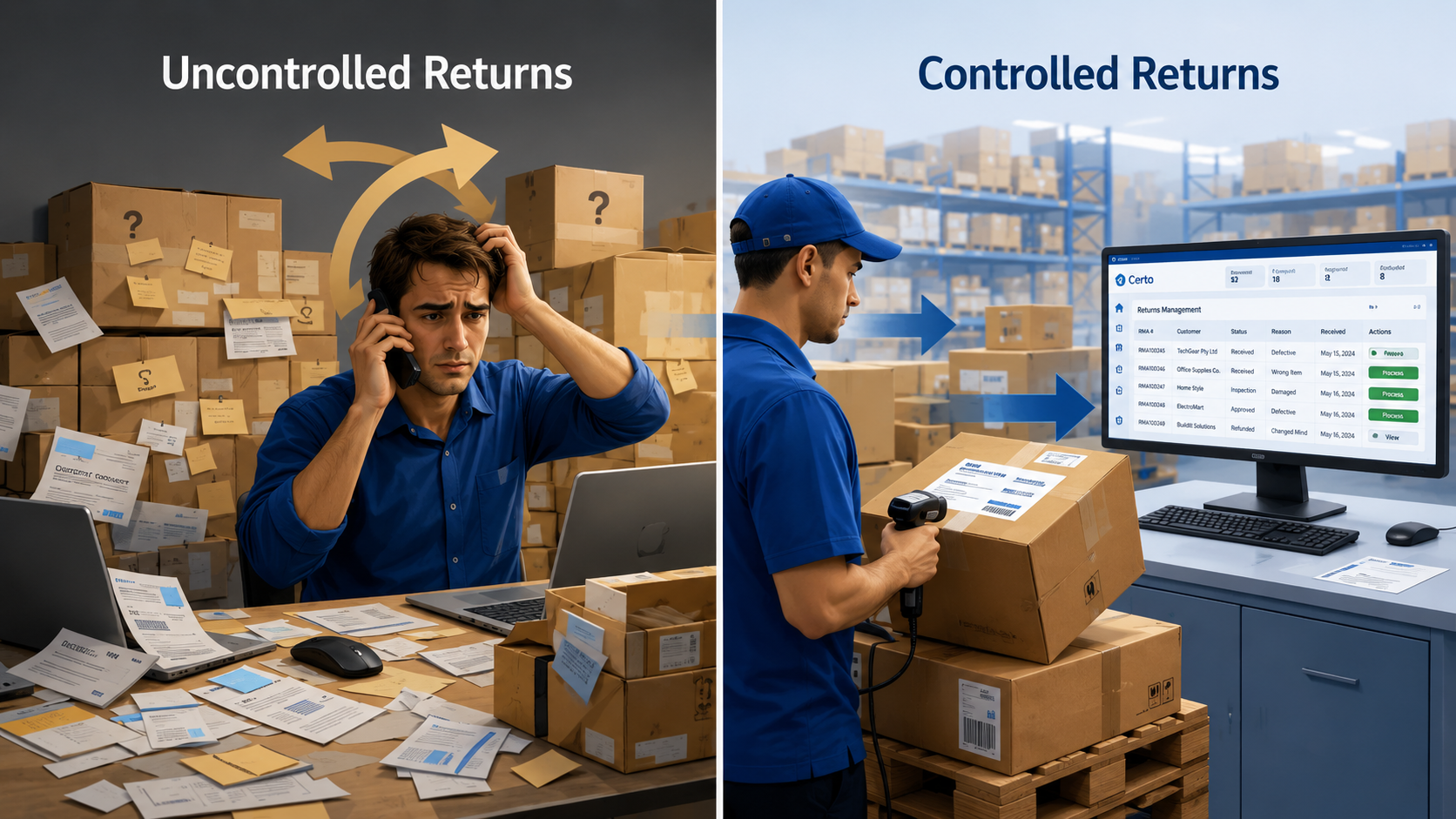
From what I’ve seen across warehouse and distribution environments, the issues usually show up like this:
A customer says they returned two items — but only one arrives
The warehouse receives goods with no clear reference
Customer service spends hours chasing status updates
Finance disputes credits because there’s no clear record
No one is doing anything wrong. The process just isn’t structured.
And when returns aren’t structured, they become hard to manage at scale.
Why Returns Break Down as You Grow
Handling returns manually might work when volumes are low.
But once you’re moving hundreds or thousands of consignments each week, the cracks appear quickly.
A few common pressure points:
1. No Link Between Outbound and Return Shipments
Returns often sit outside the original delivery record. That makes it hard to track what’s coming back and why.
2. No Clear Ownership
Is it warehouse? Customer service? Transport?
Returns end up bouncing between teams.
3. Limited Visibility
Without proper tracking, teams rely on phone calls or emails to find updates.
4. Inconsistent Data
Return reasons, quantities, and outcomes are rarely recorded the same way every time.
This makes reporting almost impossible.
What Controlled Returns Actually Means
Controlled returns aren’t about adding more steps.
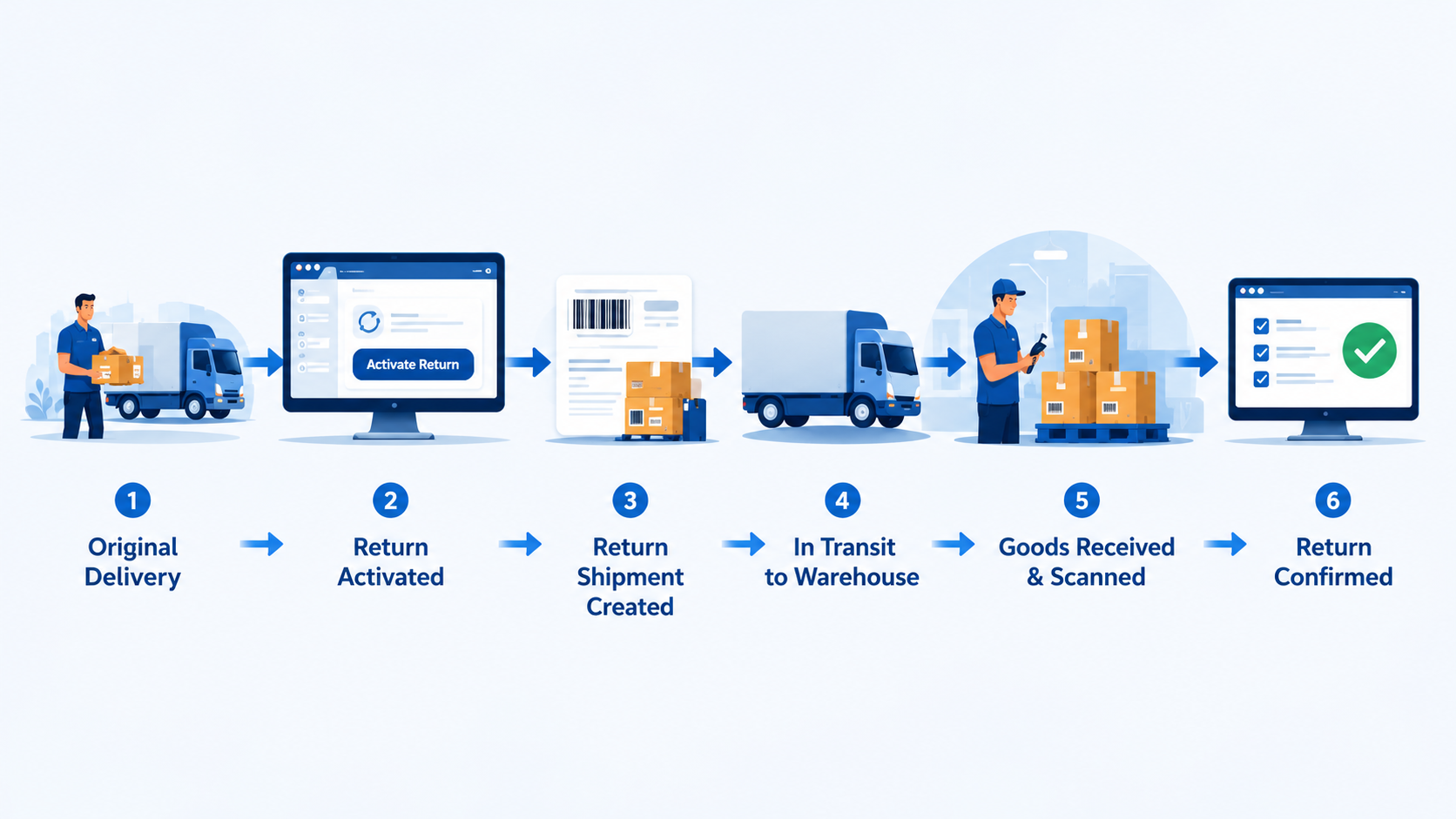
They’re about putting structure around something that already happens every day.
Instead of handling returns informally, the process becomes:
Triggered against an existing shipment
Tracked like a normal consignment
Defined with clear reasons and actions
Confirmed when physically received
Everything connects back to the original delivery.
That’s where the control comes from.
How a Controlled Returns Process Works in Practice
In a typical operation using Cario, the flow looks like this:
A return is activated against the original consignment
Return details are confirmed (items, quantities, reason)
A return shipment is created and tracked
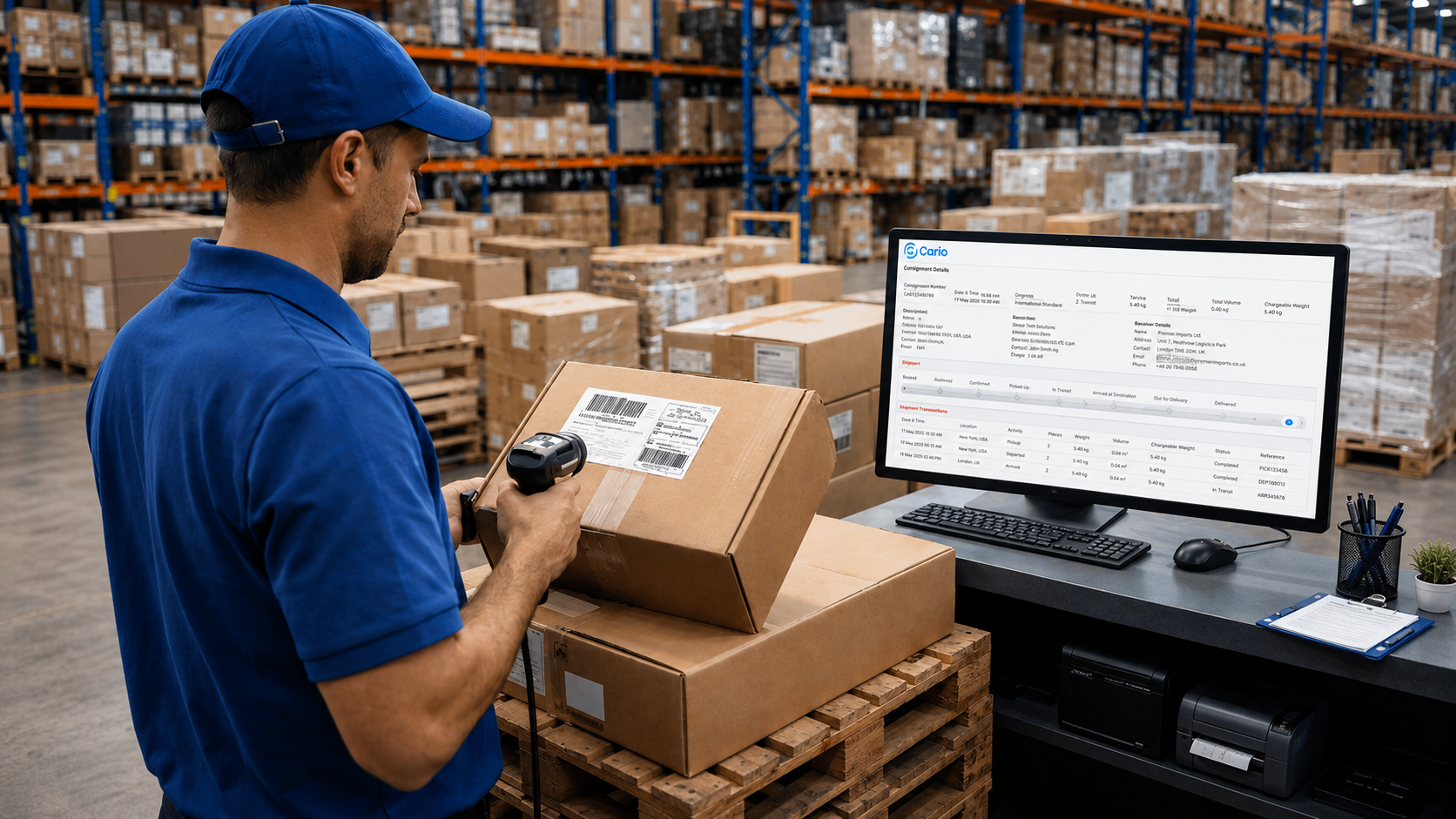
The warehouse receives and records what actually arrived
Outcomes are captured (accepted, rejected, replacement required)
No guesswork. No missing steps.
Just one clear record from start to finish.
What This Changes for Your Team
Once returns are structured properly, the impact shows up across the business.
Logistics & Operations
Clear visibility of return movements
Less time chasing missing freight
More consistent processes across sites
Warehouse
Know what’s arriving before it shows up
Record discrepancies immediately
Reduce manual checking and rework
Customer Service
Answer return questions without calling the warehouse
Provide accurate updates to customers
Reduce back-and-forth on return issues
Finance
Reliable data for credits and reconciliation
Fewer disputes between teams
Better reporting on return volumes and trends
A Quick Example
A distributor shipping across NSW and Queensland was handling returns manually.
Customer service logged return requests in a spreadsheet. The warehouse received goods with handwritten notes. Finance matched credits at month-end.
It worked — until volumes increased.
They started seeing:
Missing items
Disputed quantities
Delays in issuing credits
By introducing a controlled return process, every return was tied to the original shipment and recorded at receipt.
The biggest change wasn’t speed.
It was clarity.
Why This Matters More Than Ever
Returns are increasing across most industries.
More deliveries. More expectations. More pressure on customer experience.
If returns aren’t handled properly, they create friction across every team:
Operations lose visibility
Customer service loses confidence
Finance loses accuracy
And that cost adds up quickly.
Final Thought
Returns will always be part of freight.
The difference is whether they’re controlled — or left to chance.
If your team is still relying on emails, spreadsheets, or manual processes to manage returns, it’s worth stepping back and asking:
Do we actually know what’s coming back, why, and what happened when it arrived?
If the answer isn’t clear, there’s an opportunity to fix it.
Take control of your returns process
See how Cario helps you manage returns with full visibility from activation through to receipt.